South Asia’s two nuclear-armed rivals, India and Pakistan, are simultaneously acquiring state-of-the-art missile systems from Western defense manufacturers — a development that takes place just five months after their most recent military confrontation and amid renewed tensions over Afghanistan-based militancy.
The two countries that fought the largest aerial dogfight in recent history during the May 7-10 conflict, are once again at loggerheads. Afghanistan-centered tensions
A series of events unfolded on Wednesday and Thursday in an indication of fragile peace in South Asia including a major militant attack on Pakistani troops, Pakistani defense minister’s warning to Kabul on providing safe havens to anti-Pakistani TTP militants on its soil, and India and Pakistan striking deals to acquire latest technology-powered missiles.
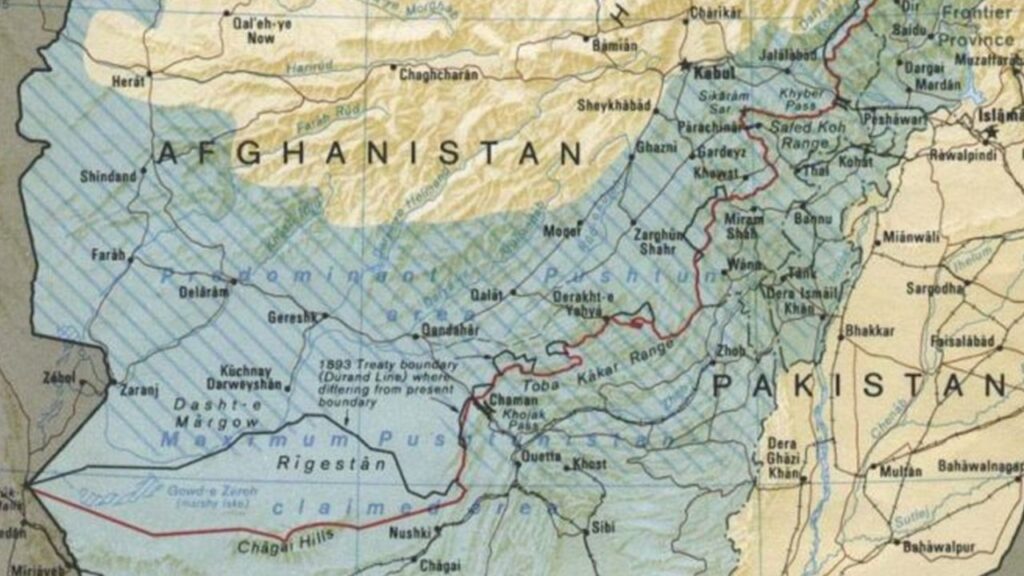
Pakistan’s worsening challenge on the Afghan border
Amid Indian threats against Pakistan, Pakistani troops have come under repeated attacks from Afghanistan-based militants, which Islamabad says, are backed by India. New Delhi denies the charge but has vowed to confront Pakistan, alleging its backing for unrest in Kashmir. Islamabad denies the charge of enflaming Kashmir militancy.
Pakistan on Thursday warned Afghanistan of heavy price it would have to pay for granting safe havens to members of banned Pakistan Tereek -e- Taliban terrorist (TTP) group.
Pakistani military said the forces conducted an intelligence-based operation in Orakzai district in the northwest against terrorist operating as Indian proxy Fitna Al Khawarij (TTP) and killed 19 of the militants
“Enough is enough. our patience has run thin,” Defense Minister Khawaja Asif said in the Parliament after a militant attack killed 11 Pakistani soldiers including officers.
Asif indicated that Pakistani actions against TTP that operates out of Afghanistan, could result in collateral damage.
“Anyone giving safe haven, everyone, will have to suffer, not just the area of safe haven but those who provide them the safe haven. Either you are with them (TTP) or with us (Pakistan).”
Earlier, Pakistan’s Army Chief Field Mashal Asif Munir, reacting to inflammatory rhetoric by Indian Prime Minister Narendra Modi and BJP leaders, said any Indian action would get a stern Pakistani response.
Hours after the defense minister’s remarks, Pakistan reportedly carried out airstrikes in Kabul, Afghanistan. Some unconfirmed reports said Pakistani fighter jets were seen over the Kabul skyline.
On the same day, Afghanistan’s Taliban Foreign Minister was visiting India.
Afghan authorities reported an explosion in the Afghan capital of Kabul late on Thursday night.
Afghan Taliban spokesperson Zabeehullah Mujahid said in a post on X: “The sound of an explosion was heard in the city of Kabul. However, no one should worry, it is all well and good, the investigation of the incident is underway, no report of any damage has been given so far,” he claimed in a post, according to Dawn newspaper’s translation of the post.
UK-India missile deal
The United Kingdom on announced a US$469 million defense agreement with India during British Prime Minister Sir Keir Starmer’s official visit to Mumbai. The deal will see the Indian Army equipped with Lightweight Multirole Missiles (LMMs) produced by French defense giant Thales at its Belfast facility in Northern Ireland.
The UK’s Ministry of Defense (MoD) said the highly versatile LMMs — also being supplied to Ukraine — are designed for air defense and are capable of targeting drones, light vehicles, and low-flying aircraft.
Our deal with India means:
More investment in the UK.
Thousands of new jobs across the country.
More money for you and your family. pic.twitter.com/jPZoijkNjA— Keir Starmer (@Keir_Starmer) October 9, 2025
The agreement also lays the foundation for a broader, long-term partnership between the British and Indian defense industries, including in emerging technologies such as electric propulsion for naval vessels.
“I am hopeful that this will pave the way for a deeper relationship between our two defence industries,” said UK Defense Secretary John Healey. His remarks came as Prime Minister Starmer led a delegation of 125 senior executives and officials aimed at deepening strategic and economic ties with India.
Separately, a £250 million deal was announced to co-develop electric-powered engines for India’s navy, further strengthening maritime collaboration between the two countries.
Pakistan to bolsters air capabilities with US-made missiles
This week, the U.S. Department of Defense disclosed that Pakistan is acquiring a new batch of Raytheon’s Advanced Medium-Range Air-to-Air Missiles (AMRAAMs) for its F-16 fighter fleet. The $41.6 million contract modification brings the total value of Raytheon’s AMRAAM production program to $2.5 billion and includes advanced C8 and D3 variants — some of the most sophisticated versions of the missile to date.
The work will be completed in Tucson, Arizona, by May 2030. The U.S. confirmed that the contract supports foreign military sales to several key allies, now including Pakistan alongside countries such as the UK, Israel, Japan, and Saudi Arabia.
Pakistan had previously procured 700 AMRAAMs in 2007, the largest foreign purchase of the missile system at the time. The new acquisition, analysts say, signals Islamabad’s intent to modernize its air force and reaffirm strategic ties with Washington.
Notably, these are the same missile systems reportedly used by the Pakistan Air Force during Operation Swift Retort in 2019, when Pakistani jets downed two Indian aircraft over Kashmir — a dramatic flashpoint that brought the region to the brink of full-scale war.
Strategic recalibrations in a volatile region
The timing of these parallel missile deals is significant. With U.S.–Pakistan relations warming since President Donald Trump’s return to office and his mediating the Pakistan-India conflict, the two countries have resumed high-level security cooperation.
Following a meeting between Trump, Pakistani Prime Minister Shehbaz Sharif, and Army Chief General Asim Munir, the U.S. has praised Pakistan for its counterterrorism efforts and role in diffusing regional tensions.
Islamabad, in turn, has made moves to attract U.S. investment, including opening its energy and digital markets. But behind the diplomatic optics, the acceleration of high-tech arms transfers to both India and Pakistan presents a stark reminder: South Asia remains one of the world’s most dangerous nuclear flashpoints.
With defense ties deepening on both sides — India with Western Europe, and Pakistan with the U.S. — the risk of another arms race intensifying in a region already scarred by conflict is growing. Both Islamabad and New Delhi cite their own set of challenges to justify massive expenditures on defense deals.
Trump praises Pakistan for recognition of his effort to stop conflict with India
Experts warn that without robust confidence-building measures and sustained diplomatic engagement the introduction of next-generation missile systems could reduce the margin for error in any future crisis.
Pakistan, which is armed with Chinese defense weapons, embarrassed India in the May conflict, downing at least six Indian fighter jets. India uses Russian, Israeli and French defense technologies to beef up its military capabilities.
Meanwhile, the Kashmir dispute – an underlying cause for India-Pakistan rivalry – and Afghanistan-based militancy remain unresolved challenges and continue to push the region into further instability.
At a time when miscalculation could have catastrophic consequences, the world cannot afford to overlook the escalating security dynamics in South Asia — where decades-old rivalries over unresolved disputes are being supercharged by cutting-edge weaponry and geopolitical alliances.
Follow for more: Twitter (X) | Facebook | Instagram | LinkeIn

Muhammad Luqman is Associate Editor at Views News Now. He writes on wide-ranging issues including economy, South Asia, the Middle East, agriculture, economy and innovation. Luqman has worked some of the leading news organizations and won acclaim for his original and research-based works.