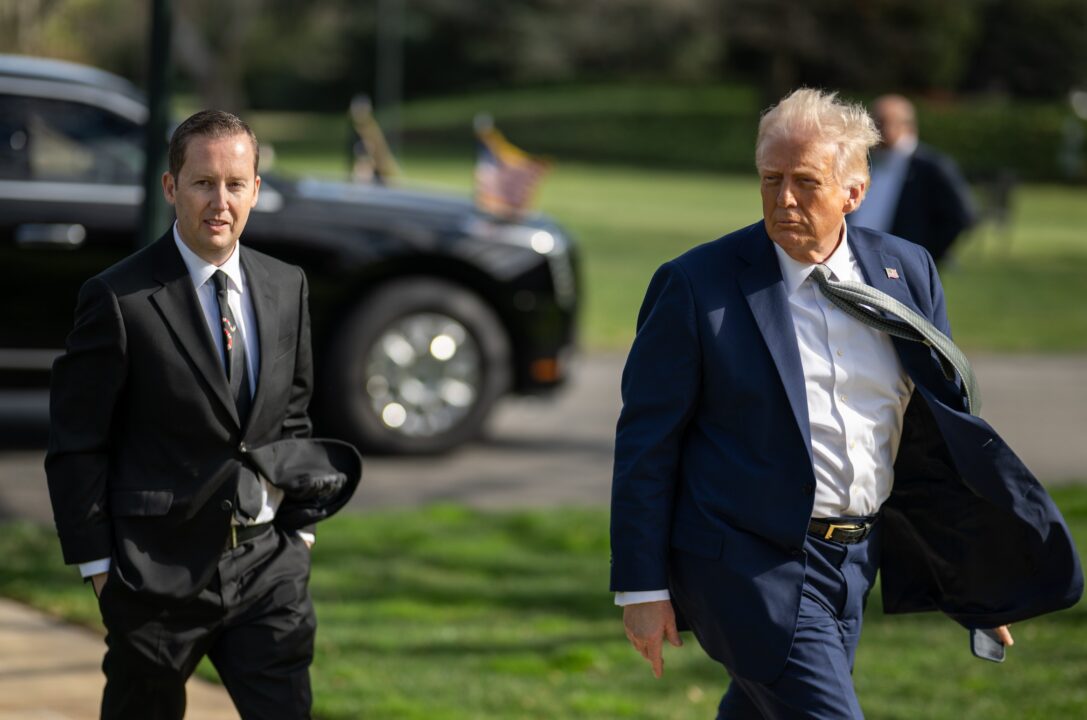
In an unexpected diplomatic move, President Donald Trump has tapped Sergio Gor, 38, his longtime personnel chief, to serve simultaneously as U.S. Ambassador to India and Special Envoy for South and Central Asian Affairs — a title newly created for this appointment. The Man with Two Hats
The nomination underscores an evolving U.S. strategy in a region that spans from New Delhi to Kabul, and from Dhaka to the five “-stan” republics of Central Asia. The move is both bold and unusual, giving a single political operative influence a…
From Tashkent to the West Wing
Born in Tashkent, Uzbekistan, Gor was raised in Malta before moving to the United States. His global upbringing gave him early exposure to the geopolitics of Central Asia and Europe. He earned his degree at George Washington University, where he became active in conservative circles, working with College Republicans and Young America’s Foundation. His political ascent was steady: he served as spokesperson and deputy chief of staff for Senator Rand Paul, worked in Republican fundraising networks, and co-f…

In January 2025, Gor was named Director of the White House Presidential Personnel Office, a critical role overseeing appointments across the executive branch. Known as a loyal gatekeeper, he vetted candidates for ideological alignment and became one of Trump’s most trusted aides. That close bond now translates into an extraordinary diplomatic promotion. The Man with Two Hats
Why a Dual Role Matters
Few diplomats have risen so directly from domestic political roles to international assignments of this magnitude. Gor’s dual hat — ambassador to India and regional envoy — centralizes power in ways that blur the lines between the White House, the State Department, and embassies across South Asia. Traditionally, regional policy was the responsibility of the Assistant Secretary for South and Central Asian Affairs at the State Department, a Senate-confirmed post. Ambassadors, meanwhile, focused on bilatera…
Supporters argue that Gor’s proximity to the President will mean India and the broader region have a direct line to the Oval Office. That could prove decisive at a moment when U.S.–India relations are strained by trade disputes, technology restrictions, and New Delhi’s energy dealings with Moscow.
Critics caution, however, that assigning one envoy to oversee both India and its neighbors risks returning to a “hyphenated” South Asia approach, where India and Pakistan are seen as inseparable. For decades, I…
Strategic Logic Behind the Appointment
The administration’s logic is threefold: speed, coordination, and symbolism.
Every single day US watches closely what happens between India and Pakistan – Rubio
First, Gor can cut through bureaucratic delays. From trade tariffs and semiconductor cooperation to intelligence-sharing and defense technology, South Asia requires nimble diplomacy. With his direct access to Trump, Gor can bypass layers of State Department clearance.
Second, the region is interconnected in ways that demand coordination.
The fallout from Afghanistan, the challenge of transnational terrorism, China’s Belt and Road advances, energy transit through Central Asia, and the C5+1 framework linking Washington with Kazakhstan, Kyrgyzstan, Tajikistan, Turkmenistan, and Uzbekistan — all require a figure capable of shuttling across capitals. The SRAP (Special Representative for Afghanistan and Pakistan) role once played this function, but its remit was narrower. G…

Third, the symbolism is unmistakable. By placing the envoy in New Delhi, Washington is underscoring India’s centrality to its Indo-Pacific strategy. It conveys to allies and rivals alike that the U.S.–India partnership will be the anchor of American engagement in the region. At the same time, it reassures Indian policymakers that the U.S. is investing senior political capital in the relationship.
The Pakistan Angle
While Gor’s appointment dominates headlines, events in Pakistan highlight the complexities of regional diplomacy. Since Ambassador Donald Blome’s departure in January 2025, the U.S. embassy in Islamabad has been led by Chargé d’Affaires Natalie A. Baker. A career Foreign Service Officer, Baker has a long track record in challenging posts across the Middle East and South Asia. In Pakistan, she has quietly reinforced alliance ties at a delicate moment. Her outreach to universities, civil society, and provi…
Baker’s steady stewardship has earned her admiration both within diplomatic circles and among sections of the Pakistani-American community. Many observers believe she could be an excellent candidate for permanent ambassador, offering continuity, professionalism, and regional expertise at a time when stability in the relationship is essential.
Challenges Ahead
If confirmed, Gor will face daunting challenges. Trade tensions with India loom large: Trump’s tariffs have unsettled New Delhi, which seeks better access to U.S. markets while resisting pressure on its energy imports from Russia. Defense cooperation, particularly around co-production of fighter jet engines, drones, and maritime technology, will require deft negotiation.
US says Pakistan has been a ‘phenomenal’ counterterrorism partner
Pakistan remains a persistent flashpoint. Washington wants Islamabad to remain engaged in counterterrorism, prevent instability from spilling over Afghanistan’s borders, and maintain a working relationship with the IMF. Managing these issues while seated in New Delhi will be politically delicate. Balancing India’s sensitivities with Pakistan’s realities is no small task.
Central Asia is another arena where Gor’s envoy role could prove significant. As Russia’s war in Ukraine disrupts traditional supply chains, the U.S. and its allies are eyeing Central Asia as a potential corridor for energy and transit projects. China has invested heavily in the region through its Belt and Road Initiative, giving Washington added incentive to reassert its presence. Here, Gor’s own roots in Uzbekistan could provide a subtle advantage.
Confirmation Hearings and Political Hurdles
Gor’s confirmation hearings are likely to be contentious. Senators will probe his lack of traditional diplomatic experience, question his ability to remain neutral in regional disputes, and examine whether one individual can effectively manage such a wide brief. Supporters will argue that his political skills, loyalty, and presidential backing outweigh these concerns, pointing to envoys like Richard Holbrooke who reshaped diplomacy through sheer force of personality.
US sees risks in transferring modern defense capabilities to India
Conclusion: A Bold Experiment in U.S. Diplomacy
Sergio Gor’s nomination combines raw political trust with geographic breadth, embedding one of Trump’s most capable operators in a region of growing global importance. If successful, this experiment could accelerate U.S. influence, allowing Washington to maneuver quickly on trade, security, and strategic partnerships. Yet risks abound: alienating India, overlooking Pakistan, overloading one envoy, and sidelining traditional State Department channels.
Immediately after Gor’s appointment was announced, the reactions in New Delhi have been muted. Although the Modi government has not issued any official statements yet, some foreign policy experts have viewed the development with a degree of caution.
If Gor is confirmed as ambassador to India and also serves in the special envoy role, then it would appear that India-Pakistan hyphenation is back. Another view: The US is signaling the importance of ties w/India by having the special envoy for two key regions be posted in Delhi. https://t.co/cQxLWJH0FC
— Michael Kugelman (@MichaelKugelman) August 22, 2025
Kanwal Sibal, a former Indian Foreign Secretary who also served as Ambassador to Turkey, Egypt, France, and Russia, wrote on X that this was the first time a U.S. ambassador to India had also been designated Special Envoy for South and Central Asian Affairs.
“This means he will have a much wider mandate covering the jurisdiction of the Bureau of South and Central Asian Affairs in the State Dept. Ipso facto he will be supervising India’s relationship within this region. With Pakistan and our other neighbors. This means he will be consulting and coordinating with other US ambassadors in the region to develop a more integrated approach. This is a new form of ‘hyphenating’ India and Pakistan again, amongst other things,” Sibal argued.
These observations highlight the delicate balance Washington must strike. While the U.S. may see efficiency in centralizing its South Asia strategy, Indian policymakers remain sensitive to any framework that places their country on equal footing with Pakistan. That tension will shadow Gor’s tenure in New Delhi.
Beyond grateful to @realDonaldTrump for his incredible trust and confidence in nominating me to the be his next U.S. Ambassador to India and Special Envoy for South and Central Asian Affairs! Nothing has made me prouder than to serve the American people through the GREAT work of…
— Sergio Gor (@SergioGor) August 22, 2025
Meanwhile, in Islamabad, Natalie Baker’s measured and professional leadership reminds us of the value of career diplomacy. She exemplifies the continuity and depth that political appointees often lack. As Washington debates the future of its South Asia strategy, it would be wise to consider strengthening its hand in Pakistan by making Baker’s appointment permanent.
Together, Gor and Baker illustrate two distinct but complementary faces of American diplomacy — the bold political envoy and the seasoned career diplomat. How these approaches are balanced will shape Washington’s influence from New Delhi to Tashkent, and from Islamabad to Kabul, for years to come.
Follow for more: Twitter (X) | Facebook | Instagram | LinkeIn

Imran Igra is a political analyst and international affairs strategist based in Washington, D.C. He is the president of the Overseas Pakistanis Society and founder of Horus Strategies.