Global oil prices surged past $100 a barrel on Thursday for the first time since May, as escalating attacks by Yemen’s Houthi rebels on Red Sea shipping heightened fears that the US-Iran proxy conflict could choke off critical Middle East energy routes.
Brent crude, the international benchmark, jumped more than 6% to $100.60 a barrel, extending a rally fueled by the collapse of a temporary US-Iran truce. West Texas Intermediate (WTI), the US gauge, tracked those gains, trading near $91.
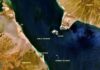
The latest price spike came after the Iran-backed Houthi militia claimed responsibility for missile and drone strikes on Saudi oil tankers in the Red Sea, threatening to impose a naval blockade around the Bab al-Mandeb Strait—a choke point through which nearly 10% of global seaborne oil passes. The attacks have renewed scrutiny on both the Red Sea corridor and the Strait of Hormuz, as Saudi Arabia increasingly relies on the former to bypass the latter amid heightened tensions.
Compounding the supply risks, Iran’s Islamic Revolutionary Guard Corps reported that three tankers aborted attempts to traverse the Strait of Hormuz after an explosion set one vessel ablaze, intensifying fears of a simultaneous disruption at the world’s two most vital oil transit arteries.
NBC News: Oil surges to $100 per barrel after Red Sea attacks
Oil prices rose Thursday to their highest level since early June after the latest Iran war escalation threatened severe new disruption to global supplies.https://t.co/wIInEz7kIc
— Politics & Poll Tracker 📡 (@PollTracker2024) July 23, 2026
The widening conflict has effectively torpedoed diplomatic efforts. US Secretary of State Marco Rubio stated this week that Iran’s leadership was “not ready to make a deal,” while President Donald Trump warned Tehran of “major military punishment” if attacks on commercial shipping persist.
“The conflict has entered a decidedly more dangerous phase,” warned analysts at RBC Capital Markets, cautioning that a full-scale regional war could push prices toward $150 a barrel.
Brent crude has now soared roughly 40% since the conflict’s escalation, raising the specter of stubbornly high fuel costs. The US average for regular gasoline has climbed to $4.09 per gallon, while diesel prices—a key input for logistics—have risen even more sharply. The energy shock has also lifted natural gas, with Britain’s benchmark wholesale price rising to 150 pence per therm, from around 98 pence in late June.
The International Energy Agency warned that protracted shipping disruptions pose a “significant threat” to global energy security, with Executive Director Fatih Birol calling for urgent de-escalation to stabilize markets. Economists at Oxford Economics project Brent will stay above $85 a barrel through year-end, citing the growing likelihood of persistent supply chain friction.
The rally weighed on equities, with London’s FTSE 100 falling nearly 1% in afternoon trading. Energy giants Shell and BP, however, outperformed the broader market as investors priced in higher near-term profitability from the surging crude price.

Muhammad Luqman is Associate Editor at Views News Now. He writes on wide-ranging issues including economy, South Asia, the Middle East, agriculture, economy and innovation. Luqman has worked some of the leading news organizations and won acclaim for his original and research-based works.