The cost of the Strait of Hormuz crisis is mounting far beyond the battlefield. The United States has spent tens of billions of dollars on its military campaign against Iran, while Tehran has suffered billions in lost oil revenues and mounting economic damage from sanctions, disrupted exports and trade restrictions.
Across the Middle East, governments are grappling with soaring energy and shipping costs, while the rest of the world is paying through higher oil prices, rising freight rates and renewed inflationary pressures as one of the world’s most strategic maritime chokepoints remains at the center of the conflict.
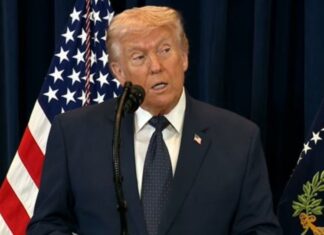
Those costs continue to rise as the military standoff in the Gulf deepens. President Donald Trump is contemplating more powerful strikes against Iran, and Tehran has been retaliating by targeting commercial ships and energy structure in neighboring Gulf countries.
However, economic and financial implications of the crisis have been uneven, with the United States escaping the worst, Europe being able to withstand the energy costs so far, and the Middle Eastern countries losing in both production and exports.
The cost of the war in military terms has remained relatively low as the Pentagon estimates of $37 billion show. That is primarily because the United States has resisted the temptation to launch a ground invasion.
Economically, the rising oil cost did hurt everyday American consumers for a few months but record oil and gas sales by the United States and massive sales by Venezuela have helped avert the worst scenario.
Similarly, the continuing American AI boom has kept the stock markets steady.
The United States Central Command (CENTCOM) reported that it has redirected 30 commercial vessels during its ongoing naval blockade of Iranian ports, disabled two ships, and boarded two others to enforce compliance. Nearly 30 humanitarian vessels were allowed to pass. The statement underscores a campaign that has intensified since the blockade was reinstated in mid-July.
I feel people forget what could happen if the Strait of Hormuz is permanently shut off to other countries.
Oil prices in a great portion of EU and Europe could soar up to 150 dollars a barrel. This could force a massive recession or even a depression in situations. https://t.co/OaLlUzsSCh
— SpectrumofTruth (@Dontbelieveliez) July 31, 2026
Washington maintains that the Strait of Hormuz remains an open international waterway.
Iranian officials and the Islamic Revolutionary Guard Corps Navy insist they control passage through the strait and that transit requires their coordination or approval.
Those competing claims continue to inject uncertainty into global shipping and energy markets.
Although no authoritative institution has yet produced a definitive estimate of the total global cost of the conflict because the situation remains fluid and the economic impact continues to evolve, the losses are already measured in tens of billions of dollars and are expected to climb much higher if the disruption persists.
The United Nations Development Program has estimated that the conflict could cost Arab economies between $120 billion and $194 billion alone, while the International Monetary Fund has warned that the disruption to energy markets and trade through the Strait of Hormuz is slowing global growth, fueling inflation and imposing significant costs on energy-importing nations.
Taken together with the United States’ military expenditure, Iran’s mounting economic losses, and the wider impact on global trade and shipping, the ultimate economic toll is widely expected to run into the hundreds of billions of dollars if the crisis continues.
If the stock markets fluctuate in values are taken into account, the numbers could add up to trillions, according to experts. Economist Atif Mian noted that Pakistan’s diplomatic intervention to halt U.S.–Iran standoff contributed to a significant positive shift in global markets, estimating that the resulting stabilization may have added trillions of dollars in global value.
Pakistan’s Mediation in US–Iran Ceasefire Adds $3 Trillion to Global Markets — Economist
The Shipping Hub Becomes Financial Chokepoint
The Strait of Hormuz is one of the world’s most strategically important maritime corridors.
According to Middle East Eye, it normally carries roughly one-fifth of global seaborne oil trade—around 20 million barrels of crude and petroleum products a day before hostilities escalated in 2026—along with a substantial share of the world’s liquefied natural gas exports, particularly from Qatar.
Traffic has fallen well below pre-war levels for much of the year. Although the U.S. blockade targets vessels calling at Iranian ports rather than imposing a formal closure of the strait, the practical consequences have included lower shipping volumes, sharply higher war-risk insurance premiums and frequent rerouting of commercial vessels. Iran’s repeated assertions of control, coupled with attacks and security warnings in the area, have further discouraged commercial traffic.
The result is not a complete shutdown but a narrow waterway operating under constant tension. Every redirected tanker adds time, fuel costs and insurance expenses. Every conflicting instruction from rival naval forces raises the risk of miscalculation.
🚫 CLAIM: Once again, the Iranian government claims it has closed the Strait of Hormuz. This is FALSE.
✅ FACT: The Strait of Hormuz remains open for commercial vessel transit. Iran does not control it. Thousands of ships have sailed through the international waterway over the… pic.twitter.com/sdDJ08MLHo
— U.S. Central Command (@CENTCOM) July 31, 2026
Oil and Gas Markets Remain Mixed
Global energy markets have experienced repeated bouts of volatility since the conflict began. Oil prices surged above $100 a barrel earlier this year before retreating during periods of reduced tensions, but they remain well above pre-war levels.
The International Energy Agency has warned that prolonged disruption in the Strait of Hormuz poses a serious threat to global energy supplies.
Strategic petroleum reserve releases by IEA member countries have helped stabilize markets, but inventories continue to decline. LNG exports, particularly those supplying Asian power producers and industrial users, remain vulnerable to prolonged disruption.
Why the Iran War Hasn’t Caused the Biggest Energy Crisis in History Like We Were Told — Yet | Jake Bittle, Grist
This story was originally published by Grist. Sign up for Grist’s weekly newsletter here.
When the Strait of Hormuz first closed at the start of the 2026 Iran war,… pic.twitter.com/k1C4V13jNL
— Owen Gregorian (@OwenGregorian) August 1, 2026
South Asia and the Middle East Bear the Immediate Burden
Oil-producing Gulf states—including Saudi Arabia, the United Arab Emirates, Kuwait and Iraq—have seen export volumes constrained despite relying increasingly on pipelines and alternative shipping arrangements. Exporters face lower sales volumes, while importing countries across the region are confronting higher fuel costs and inflation.
South Asia remains particularly exposed to the Middle East instability. India has diversified its crude suppliers in recent years, but significant volumes of oil and liquefied natural gas still depend on Gulf shipping routes. Bangladesh and several other import-dependent economies face rising import bills and increased risks to energy security.
IMF Predicts Economic Slowdown for Energy-Rich Middle East Amid Iran War
Pakistan sits among the countries most vulnerable to prolonged disruption. The country imports most of its oil and a substantial portion of its LNG through Gulf supply routes. Higher shipping costs and rising crude prices quickly feed into domestic fuel prices, inflation and pressure on Pakistan’s balance of payments. Economists have warned that an extended Hormuz crisis during the autumn and winter demand season could further strain households, industry and public finances.
According to the United Nations, the soaring energy costs will hurt the most vulnerable economies including the low-income countries.
Broader Ripples Across the Global Economy
The economic consequences extend well beyond the Gulf.
Freight rates, marine insurance premiums, fertiliser supplies and manufacturing costs have all come under pressure. Higher energy prices function as an additional tax on consumers and businesses, particularly in fuel-importing economies. Emerging markets with limited financial buffers remain especially vulnerable, while advanced economies face renewed inflationary pressures and slower economic growth.
UN warns Iran war could push 45 million more people into hunger
Washington argues that the Strait of Hormuz remains open under international maritime law. Tehran maintains that it controls passage through the waterway. Between those competing positions are commercial ship operators, insurers and governments attempting to balance security risks against growing economic costs.
Looking Toward Autumn
As temperatures fall across Europe, North Asia and North America, demand for heating fuels will increase while industrial activity typically strengthens after the summer period. If vessel diversions, elevated insurance costs and security risks continue, seasonal demand will collide with a supply corridor already operating under severe strain.
The global economy has so far adapted through emergency stock releases, alternative shipping routes where available and reduced consumption.
Middle East Conflict Forces Developing Nations to Choose Between Fuel and Futures
Those measures, however, cannot fully offset prolonged disruption to one of the world’s most important energy corridors.
Until the dispute over access to the Strait of Hormuz is resolved in practice rather than through competing claims, governments, businesses and consumers around the world will continue paying the price—not only in dollars per barrel, but also in higher living costs and slower economic growth.

Kiran Asim is a writer who covers the U.S., Europe, South Asia, and the Middle East. Her reports and analyses look at the geostrategic issues and contemporary developments and their economic and political implications. She also writes about society and education.