The United Nations has warned that rising global food and fuel costs linked to the conflict involving the United States, Israel and Iran could drive up to 45 million additional people into acute hunger, while severely disrupting humanitarian operations worldwide.
“If the Middle East conflict continues through June, an additional 45 million people could be pushed into acute hunger by price rises,” World Food Program (WFP) Deputy Executive Director Carl Skau told reporters in Geneva.
The surge in costs is already straining vulnerable, import-dependent regions. The UN cautioned that millions of families—particularly across sub-Saharan Africa and parts of Asia—risk being priced out of basic food staples.
The WFP warned the war could trigger the most serious disruption to life-saving aid efforts since the COVID-19 pandemic. Supply chains are under mounting pressure due to longer shipping times, rising fuel costs and ongoing instability, with Skau saying they are “on the brink of the most severe disruption since COVID and the Ukraine war in 2022.”
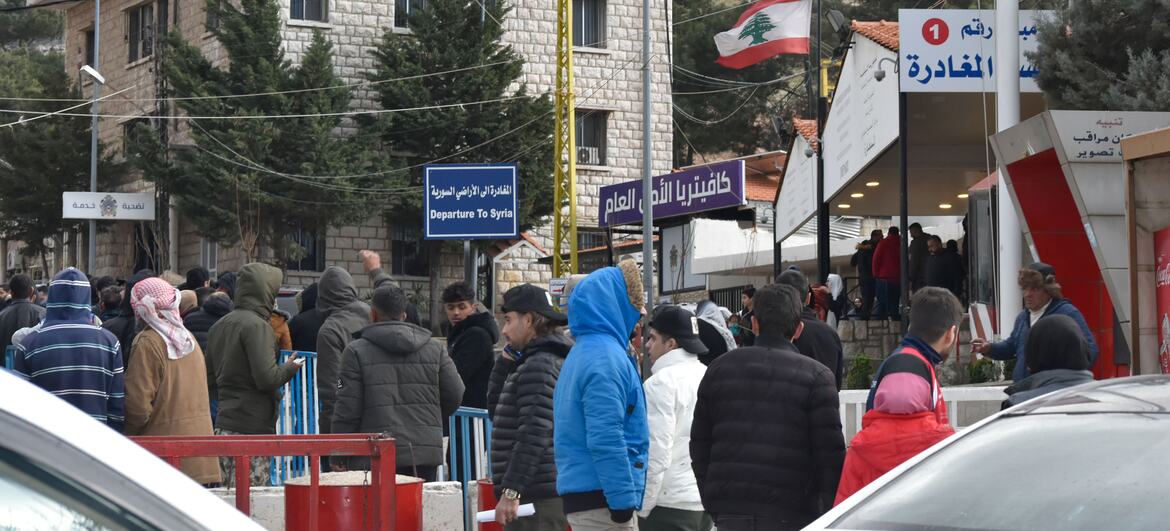
“Beyond the immediate fallout in Lebanon, the conflict has also caused major knock-on effects on global humanitarian operations; we are really feeling the pain,” he said.
Higher costs are already forcing difficult trade-offs. “We can buy less food or provide less cash to beneficiaries,” Skau noted, adding that rations have been cut for people facing famine in Sudan, while only one in four acutely malnourished children in Afghanistan can currently be reached.
Another major concern is the disruption of global fertilizer supplies at a critical moment. Around a quarter of the world’s fertilizer passes through the Strait of Hormuz, which Skau said is now “at a virtual standstill,” just as planting season begins in sub-Saharan Africa.
UN Secretary-General Antonio Guterres renewed his call for an end to the widening conflict, stressing that “the war in the Middle East must stop,” according to a statement issued by his spokesperson.
He also urged full implementation of all relevant Security Council resolutions, including resolution 2817 calling for an end to Iran’s attacks on neighboring states.
Meanwhile, the humanitarian toll in Lebanon—one of the conflict’s epicenters—continues to worsen sharply.
Imran Riza, the UN’s top aid official in the country, said air traffic disruptions have effectively halted a key humanitarian lifeline. “The air bridge is no longer there,” he said, noting that assistance from Gulf countries that had flowed during the 2024 Israel-Lebanon conflict has largely stopped.
Mass displacement is accelerating. About 132,700 people are currently sheltering in 622 collective sites, but the total number forced from their homes is believed to exceed one million—nearly 20 per cent of Lebanon’s population of roughly 5.5 million.
The majority of those displaced—around 70 per cent—are not in formal shelters, complicating efforts to deliver aid. Access is further hindered by ongoing military operations, particularly for vulnerable groups such as elderly residents who are unable or unwilling to leave their homes.
“They’re very vulnerable people that are remaining behind,” Riza said, noting that some fear losing their homes and communities if they flee.
Evacuation orders now cover large swathes of the country, including southern Lebanon, Beirut’s southern suburbs and parts of the Bekaa Valley.
The UN human rights office has raised alarm over the legality and impact of these measures. Spokesperson Thameen Al-Kheetan warned that the expanding displacement orders—now extending between the Litani and Zahrani rivers—“may amount to forced displacement,” which is prohibited under international humanitarian law.
He also highlighted the growing civilian toll, saying Israeli airstrikes have destroyed entire residential buildings in densely populated areas, often killing multiple members of the same family, including women and children.
Israel says it is targeting members of Hezbollah group, which is believed to be aligned with Iran, and has not commented specifically on each of the recent attacks.
Displaced people sheltering in tents along Beirut’s seafront have also been hit, while at least 16 medical workers have reportedly been killed in recent days.

Iftikhar Ali is a veteran Pakistani journalist, former president of UN Correspondents Association, and a recipient of the Pride of Performance civil award