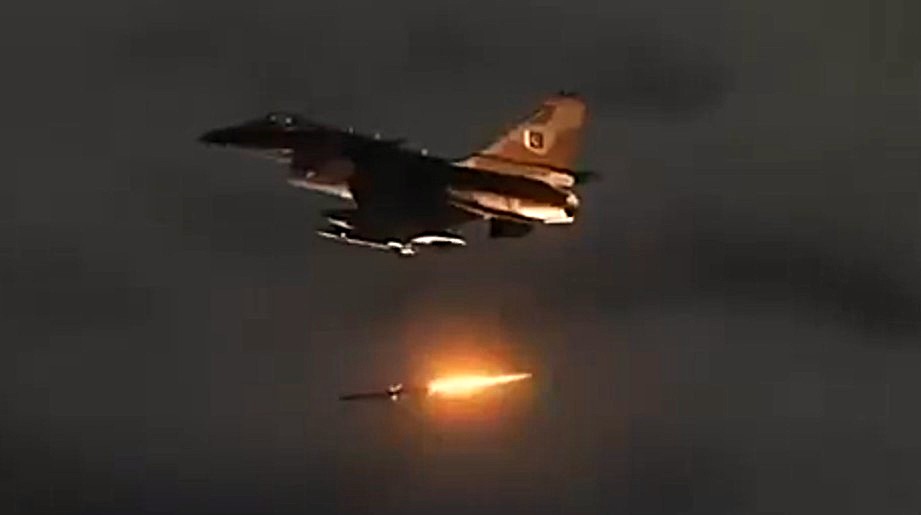
Pakistan carried out targeted aerial and drone strikes on 10 locations inside Afghanistan early Thursday, responding to what it described as a deliberate violation of its airspace by drones launched from Afghan territory the previous day.
Information Minister Attaullah Tarar announced the action, framing it as a measured exercise of self-defense against an unlawful incursion.
The Immediate Trigger
According to Tarar, Pakistan’s air defense systems detected, tracked, and neutralized eight drones that crossed into Pakistani airspace from Afghanistan on September 23. Security sources indicated that four of the drones were brought down near the Torkham border area, while the other four were intercepted in mountainous terrain near Kohat. None of the drones reached their intended targets.
In a statement posted on X, Tarar said: “In exercise of its sovereign right to self-defense, Pakistan conducted precision aerial and drone strikes against 10 locations in Afghanistan used for launching and storing these drones. The strikes were deliberate, precise, calibrated and proportionate and strictly limited to identified military objectives directly linked to the attempted attacks against Pakistan.”
BREAKING NEWS 📍
Pakistan has officially released thr footage of its airstrikes on terror infrastructure inside afghanistan, mainly targeted drone launched facilities, weapon storage facilities & terrorists training infrastructure. pic.twitter.com/K5PhvQjQV0
— Pakistan Strategic Forum (@ForumStrategic) September 24, 2026
He described the September 23 drone flight as a “blatant violation” of Pakistan’s sovereignty and territorial integrity and a “grave and unacceptable act of aggression.” Tarar added that the Afghan Taliban regime had chosen to escalate the situation through hostile drone operations rather than dismantling terrorist networks operating from its soil. “Any violation of Pakistan’s sovereignty will be met with an immediate and decisive response,” he stated.
In a follow-up post, Tarar noted that the strikes comprehensively destroyed terrorist hideouts and support infrastructure, including drone launching and storage sites, at the 10 locations under Afghan Taliban control. He emphasized that Pakistan would continue to defend its territory and citizens against externally sponsored threats.
Recent Cross-Border Violence
The latest exchange followed a deadly sequence of attacks inside Pakistan. On September 20, a blast at a mosque in the Police Lines area of Kohat during Friday prayers killed 23 people, including 15 police personnel. Eight attackers were killed in the subsequent clearance operation.
The group Ittihadul Mujahideen Pakistan, led by Afghanistan-based Hafiz Gul Bahadur, claimed responsibility.
The next day, six Pakistani personnel, including a captain and a lieutenant, were killed in an exchange of fire in Hangu district. On September 21, Pakistan responded with calibrated air strikes and intelligence-based ground operations near the Afghan border.
Those actions killed a total of 37 terrorists. Ground operations in Kohat and Hangu eliminated nine members of what Pakistani officials called the Indian proxy group Fitna al-Khawarij. Precision strikes also destroyed three targets, including a suicide bomber training center, killing 28 terrorists and several suicide bombers while destroying large quantities of weapons and ammunition.
Longstanding Concerns Over Afghan Soil
Pakistan has repeatedly raised alarms about terrorist sanctuaries and support networks operating from Afghanistan. Tarar said Islamabad had for years conveyed these concerns to the Afghan Taliban regime and its interlocutors. Instead of taking credible action, he argued, the regime had allowed hostile drone operations against Pakistan.
“Pakistan condemns in the strongest possible terms the deliberate and unlawful incursion into Pakistan by drones on September 23, launched from Afghan territory,” Tarar said. He warned that Pakistan would not tolerate attacks launched from Afghan soil “whether by terrorist groups or by the Afghan Taliban regime itself.” He called on Kabul to cease all hostile activity and take effective, concrete, verifiable, and sustained action against terrorist entities. “Afghan territory must not be used to launch attacks or conduct hostile operations against Pakistan,” he added.
Pakistan has released footage showing its airstrikes on terrorist infrastructure inside Afghanistan, including drone-launch sites, weapons storage facilities and training centres.
Targets in Paktia, Paktika, Khost and Kandahar are shown being destroyed. Pakistani security… pic.twitter.com/IXq4EzkJCN— Sajjad Tarakzai (@SajjadTarakzai) September 24, 2026
Tarar stressed that Pakistan does not seek escalation and remains committed to regional peace, dialogue, and constructive engagement, but that this commitment should not be mistaken for weakness or unlimited tolerance of hostile actions.
Earlier Drone Incidents and Official Statements
This was not the first time drones from Afghanistan had entered Pakistani airspace. On July 1, Pakistani forces shot down four rudimentary drones launched from Afghanistan into Balochistan on June 30. The military accused the Afghan Taliban of supporting terrorist groups and warned of a strong response to further provocations.
In March, armed forces intercepted several rudimentary drones launched by the Afghan Taliban in what officials called a failed attempt to harass civilian populations. Debris from the intercepted drones injured civilians: two children in Quetta and one person each in Kohat and Rawalpindi. All received medical care and were reported stable.
On September 23, Deputy Prime Minister and Foreign Minister Ishaq Dar, speaking to the OIC Contact Group on Afghanistan on the sidelines of the UN General Assembly in New York, called for “concrete and verifiable” action to prevent Afghan soil from being used for terrorism against neighboring countries, particularly Pakistan. Following the Kohat mosque attack, Pakistani officials stated that the country possessed the “will and capability” to eliminate terror threats “wherever they are” and urged the international community to press the Afghan Taliban to act decisively against groups such as the banned Tehreek-e-Taliban Pakistan.
International Analyses and Broader Context
A United Nations Security Council report has formally linked the banned Balochistan Liberation Army and other terrorist entities operating from Afghanistan, noting tactical collaboration and shared operational logistics. Member-state reporting indicated that BLA members trained alongside TTP fighters at facilities in Afghanistan and described growing operational links among various groups across the border. A 2023 UN report had already highlighted the TTP’s establishment of a new base and close ties between the TTP and the Afghan Taliban, as well as between the TTP and anti-Pakistani groups and Al Qaeda. Khyber-Pakhtunkhwa province saw a sharp rise in militant violence last year, with more than 500 attacks reported—a 50 percent increase from the previous year.
Cross-border fighting that began in October has killed scores of people on both sides, with Afghan casualties higher according to available accounts. Islamabad accuses the Afghan Taliban of harboring militants who attack Pakistan; Kabul denies the charge and describes the militancy as Pakistan’s internal problem.
Operation Ghazab Lil Haq was launched around the end of February after renewed border clashes in which Afghan Taliban forces fired on multiple locations, prompting Pakistani retaliation. The fighting intensified after Afghanistan responded to earlier Pakistani air strikes. The two sides agreed to a week-long ceasefire on the eve of Eidul Fitr on March 18, following mediation requests from Türkiye, Saudi Arabia, and Qatar.
In April, during peace talks in Urumqi, China, Pakistan presented three core demands: that Kabul formally declare the Tehreek-e-Taliban Pakistan a terrorist organization, dismantle its infrastructure, and provide verifiable proof of those actions. Pakistani sources indicate these demands remain the basis of Islamabad’s negotiating position amid ongoing security concerns. Pakistan continues to insist that Afghan territory must not serve as a launchpad for attacks against it, while stating it prefers dialogue over further escalation.

Kiran Asim is a writer who covers the U.S., Europe, South Asia, and the Middle East. Her reports and analyses look at the geostrategic issues and contemporary developments and their economic and political implications. She also writes about society and education.