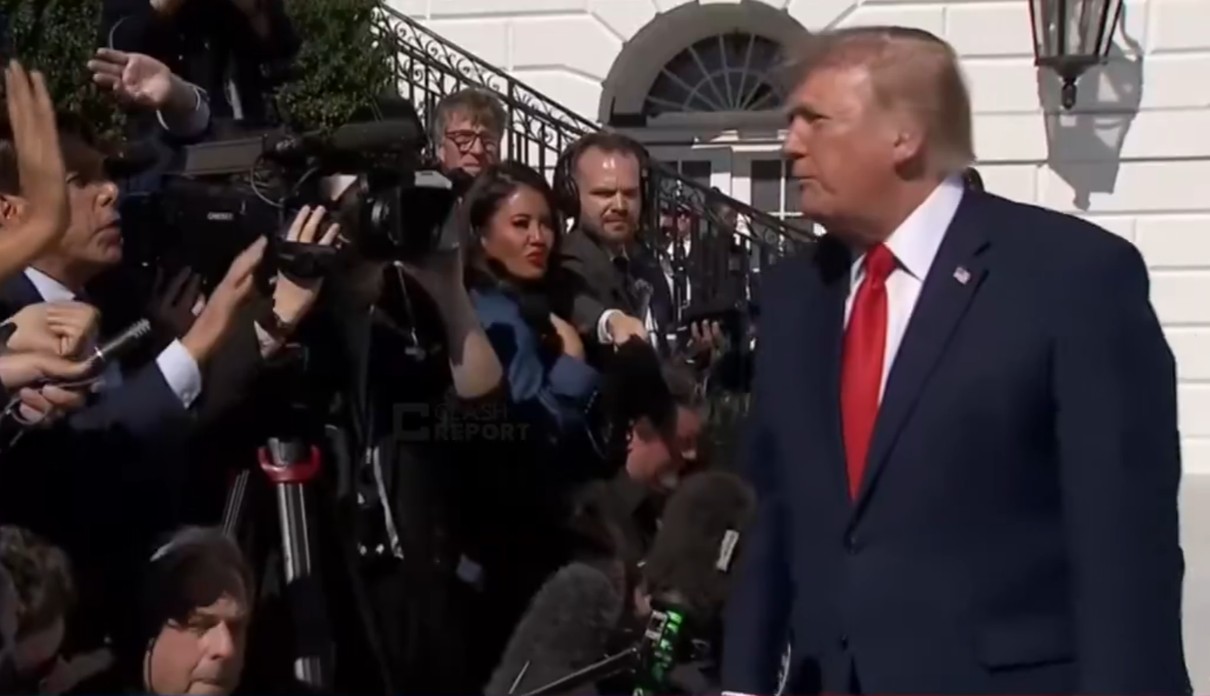
U.S. President Donald Trump welcomed Pakistani and Turkish military support for Saudi Arabia under the Makkah Alliance, as Islamabad confirmed its troops are already stationed in the Kingdom to help confront missile and drone attacks from Yemen’s Iran-aligned Houthi movement.
“I think they want to help Saudi Arabia, and I think that’s great,” Trump told reporters at the White House on Wednesday when asked about the decision by Pakistan and Türkiye to support Saudi Arabia under the Makkah Joint Defense Agreement.
Islamabad’s confirmation comes days after Saudi Arabia, Pakistan and Türkiye agreed to activate their collective-defense commitments and take steps toward the rapid deployment of agreed military forces and capabilities in the Kingdom.
Q: Türkiye and Pakistan agreed to send military forces to Saudi Arabia as part of the Mecca Alliance.
Trump: I think they want to help Saudi Arabia, and I think that’s great. https://t.co/4jgsNkfzIz
— Clash Report (@clashreport) October 7, 2026
Pakistan forces with multiple capabilities in Saudi Arabia
Pakistan’s military spokesman, Lieutenant General Ahmed Sharif Chaudhry, confirmed to CNN that Pakistani forces are already deployed in Saudi Arabia, operating across “multiple capabilities” and domains.
Chaudhry stressed that Pakistan’s military presence in the Kingdom predates the Makkah agreement, with Pakistani troops having served there for decades. The current deployment, he said, operates across “multiple capabilities” and domains.
In an emergency meeting in Riyadh, Saudi Arabia, Pakistan and Türkiye agreed to immediately begin implementing their collective-defense commitments and to take the necessary steps to ensure the rapid deployment of agreed forces and capabilities, in accordance with the national laws of the three countries.
🇵🇰🇸🇦 Pakistan confirmed its troops are already on the ground in Saudi, operating across several military roles.
Pakistan, Saudi and Türkiye have now activated the Makkah defense pact, which treats an attack on one member as an attack on all three and calls for rapid deployment of agreed forces to the kingdom.
Around 8,000 Pakistani troops, fighter jets and an air-defense system had already been deployed to Saudi Arabia under an earlier bilateral agreement.
Writer: Sol
https://t.co/hxWCsNOJck— Mario Nawfal (@MarioNawfal) October 7, 2026
The Makkah Joint Defense Agreement was signed by the three countries in August. Its core provision stipulates that an armed attack against one member will be treated as an attack against all three.
The agreement is now moving from a newly established framework toward practical implementation, as Saudi Arabia confronts renewed missile and drone attacks attributed to the Houthis.
Türkiye’s next step is Parliament
Türkiye is now seeking parliamentary approval of the trilateral pact.
Omer Çelik, spokesman for President Recep Tayyip Erdoğan’s ruling Justice and Development Party, said on Wednesday that the Makkah Defense Agreement would be submitted to Parliament within days, setting the stage for a ratification process that could determine the scope of Türkiye’s future military role in Saudi Arabia.
Ankara is already providing Saudi Arabia with defensive and technical support, including military equipment, intelligence and weapons systems.
According to Reuters, Turkish assistance includes air-defense capabilities, drone operators, logistical support, and intelligence, surveillance and reconnaissance (ISR) capabilities.
NEW: Turkish government will submit the Mecca Defense Pact treaty to the parliament for ratification in “a few days”, ruling party spokesperson Çelik says https://t.co/CVcErcU6AF
— Ragıp Soylu (@ragipsoylu) October 7, 2026
Türkiye, however, has not formally deployed troops under the Makkah Alliance, as the pact still requires parliamentary ratification.
Çelik described the arrangement as a regional security framework rather than an alternative to NATO or Türkiye’s other alliances, and indicated the mechanism could eventually be expanded to include other countries.
The Yemen and Houthi backdrop
The immediate security backdrop to the alliance’s activation is the renewed conflict in Yemen and the escalation of Houthi attacks against Saudi Arabia.
The Houthis seized Yemen’s capital, Sanaa, in 2014 and later extended their control over large parts of the country. Saudi Arabia intervened militarily in 2015 at the head of a coalition backing Yemen’s internationally recognized government.
A UN-backed truce in 2022 brought a prolonged period of relative calm, but the wider conflict was never formally resolved. Fighting has since intensified again, with Saudi-backed Yemeni government forces engaged in renewed operations against the Houthis.
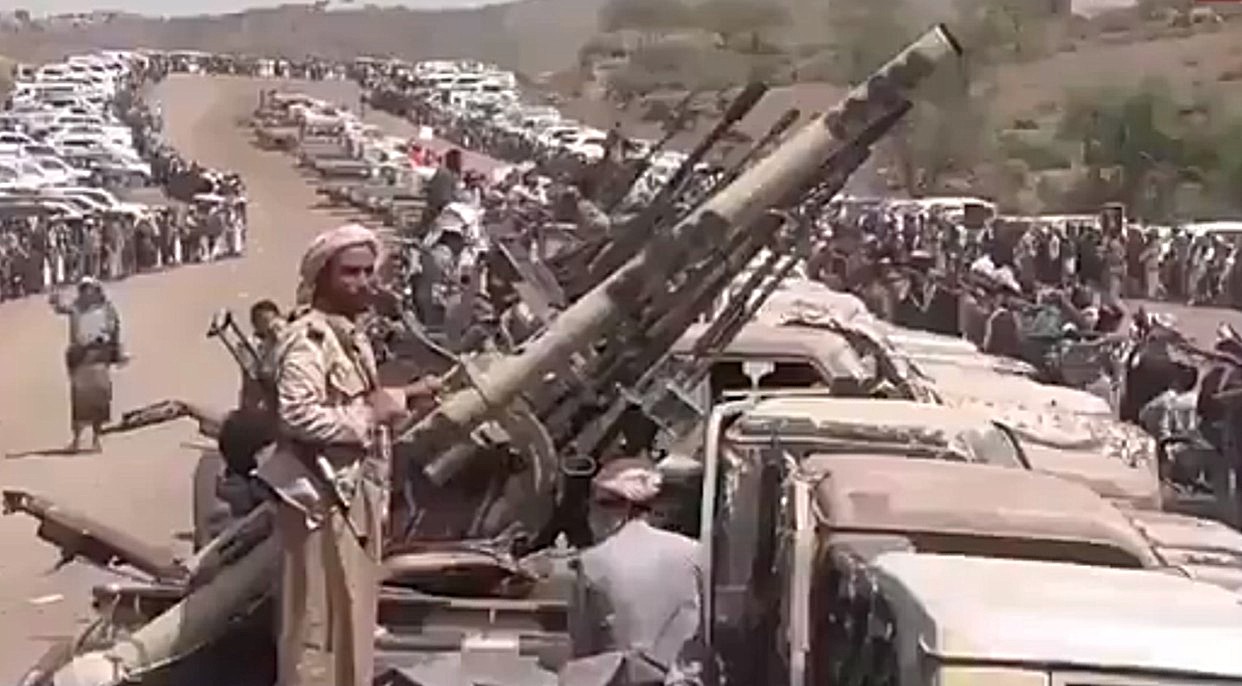
The escalation has also revived concerns around the Red Sea and the Bab al-Mandab Strait, a strategically important maritime passage connecting the Red Sea with the Gulf of Aden.
he Houthis have carried out missile and drone attacks against Saudi targets, including airports and other strategic infrastructure. Saudi authorities have also reported attempts to target areas near the holy cities of Makkah and Madinah, prompting condemnation from Saudi Arabia and other Arab and Muslim countries.
The renewed attacks have given the Makkah Alliance an immediate security challenge as the three members begin putting their collective-defense commitments into practice.
Saudi Arabia, Pakistan and Türkiye have said their cooperation is intended to strengthen deterrence and protect the Kingdom. Türkiye has also stressed the importance of pursuing diplomatic avenues to address regional conflicts—even as the alliance moves toward practical military implementation

Ali Imran is a Washington-based journalist, who has worked for leading world news organizations as a correspondent, expert and in editorial positions. He is a published author and poet.