A new assessment from the Congressional Research Service says the U.S. military has lost or sustained damage to 81 aircraft since it launched operations against Iran in late February.
The figure covers fixed-wing aircraft, helicopters and drones and draws on Defense Department statements, the Pentagon inspector general, U.S. Central Command accounts and open-source reporting.
The tally is nearly double the 42 aircraft listed in an earlier CRS assessment in May. But the increase should not be read as 39 additional aircraft being lost in the intervening months. The latest total reflects newly reported incidents as well as additional information that has entered the public record.
The situation remains fluid, CRS cautions, and some aircraft listed as damaged may already have returned to service.
Unmanned Aircraft Account for More Than Half the Tally
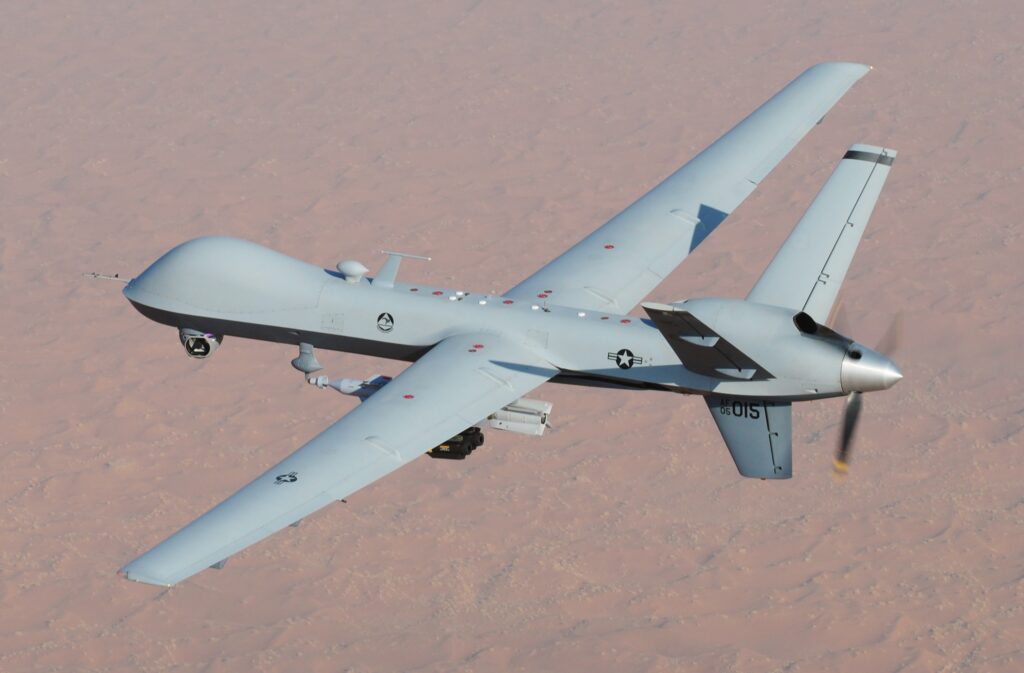
Drones make up the largest share of the reported attrition. Forty-five MQ-9 Reapers appear on the CRS list.
The Reaper has played a central role in U.S. operations, providing intelligence, surveillance and reconnaissance as well as strike and other battlefield support missions. Air Force Chief of Staff Gen. Kenneth Wilsbach told lawmakers earlier this year that the aircraft was the military’s “most valuable player” in the campaign against Iran.
The scale of the losses has broader implications because the Reaper fleet was already substantially smaller than it once was. By May, the Air Force had about 135 MQ-9s, according to reporting cited in the assessment, while production of the aircraft had ended and restarting the line was expected to take years.
A September analysis from the Atlantic Council described the loss rate as “alarming” and noted that the Air Force had lost roughly 35 percent of its MQ-9 inventory since 2004.
Other unmanned aircraft on the list include three MQ-1-series aircraft and one MQ-4C Triton.
Losses Extend to Scarce Manned Platforms
The damage is not confined to unmanned systems. The CRS accounting includes several of the Pentagon’s more specialized and limited aircraft fleets.
One F-35A Lightning II was damaged by ground fire over Iran. An E-3 Sentry — the distinctive four-engine aircraft topped by a large radar dome — was hit on the ground at a U.S. base in Saudi Arabia.
The E-3 fleet is aging and limited in number. CRS specifically raises the possibility that losses involving high-demand aircraft such as the E-3 could create capability gaps or increase risks in other theaters.
The accounting also includes 12 F-15E Strike Eagles. Four were lost earlier in the conflict: three in a friendly-fire incident over Kuwait in early March and another over Iran the following month.
Iran Launches Missiles at US Bases in Jordan After Larak Island Strike
Eight additional F-15Es sustained light damage during an Iranian strike on Muwaffaq Salti Air Base in Jordan in September. Those aircraft have since returned to service, according to the report.
Other aircraft appearing in the accounting include two A-10 Thunderbolt IIs, seven KC-135 Stratotankers, two MC-130J Commando IIs and several helicopters, including an AH-64 Apache, AH-6 Little Birds, an HH-60W Jolly Green II and an MH-60 Sea Hawk.
The incidents span several different causes. Some aircraft were damaged on the ground during Iranian missile and drone attacks on bases in Saudi Arabia and Jordan. Others were lost in combat, crashes or friendly-fire incidents. In some cases, U.S. forces deliberately destroyed damaged aircraft during rescue operations when recovering them was not considered feasible.
The Cost Goes Beyond the Aircraft
The Congressional Budget Office has estimated that replacing equipment lost in the conflict through August 1 could cost between $1.9 billion and $3.3 billion, depending on decisions made by the Defense Department about what equipment to replace and with which systems.
The estimate is broader than the 81-aircraft tally and should not be treated as the replacement cost of those aircraft alone. It covers equipment losses more generally, including aircraft and other military equipment.
CBO separately estimated that the Defense Department had incurred about $38 billion in operational, logistical and sustainment costs through August 1. That figure is distinct from the equipment-replacement estimate.
he broader war-cost estimates also do not necessarily capture all damage to U.S. military infrastructure across the region, including bases where some of the aircraft were damaged or destroyed.
What the Numbers Mean for Congress
The CRS assessment is intended to inform lawmakers, and its significance extends beyond the aircraft tally itself.
The report asks whether the Defense Department has provided Congress with enough information about the losses to assess their operational consequences and determine whether additional measures are needed. Pentagon reporting on the subject has so far been limited.
Lawmakers also face questions about funding for repairs and replacements, the capacity of the U.S. defense-industrial base to replenish depleted fleets and the possible effect on military sales to foreign partners.
The report further points to a broader force-planning issue: whether losing scarce, high-demand aircraft in the Middle East could reduce U.S. capabilities elsewhere.
“Congress may assess whether losses in certain high-demand platforms that are aging and limited in number, such as the E-3 Sentry, create capability gaps or increase risk in other theaters,” the document states.
A Campaign Still in Motion
U.S. operations against Iran began under the designation Operation Epic Fury on February 28 in coordination with Israel. The campaign has involved air, maritime and missile engagements across the region.
Activity slowed during a ceasefire in April but later resumed in some areas. The aircraft tally also reflects the broader operational environment, including earlier confrontations involving Iranian-backed Houthi forces in Yemen.
CRS cautions that its assessment is not necessarily final. As additional information becomes available, the number and status of aircraft included in the accounting could change.

Asim Tanveer is a seasoned journalist working for TV and electronic and print media outlets. He has been working for some of the world’s leading news organizations including Associated Press (AP), Reuters, BBC, CNN, CNBC, Star TV, Voice of America and The New York Times for more than 20 years. He has won several awards for his live coverage of events that include a Reuters News Agency World Award and the Pride of Performance award in 2010.