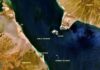
A U.S.-Iran deal that President Donald Trump says is days away from formal signing in Europe would immediately reopen the Strait of Hormuz with no tolls, extend the ceasefire for two months to sort out the contentious nuclear dispute, and is likely to be named the Islamabad Agreement.
A memorandum of understanding, expected to be signed, would extend the ceasefire for 60 days, including in Lebanon, while Washington and Tehran would address the question of Iran’s enriched uranium stockpile.
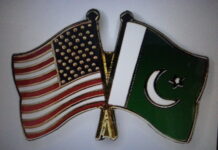
The deal has been jointly mediated by Pakistan, which initially facilitated contacts and a meeting between the two countries, and Qatar, which helped with negotiations involving the Iranian foreign minister just before the U.S. president announced it, hours before the planned U.S. strikes on Iran.
According to American publication Axios, citing a U.S. official and a diplomat from one of the facilitating countries, the deal would be “known as the Islamabad Agreement if both sides reach a final signing.”
Trump Calls Off Iran Strikes, Announces Broad Agreement on Talks https://t.co/5CwX545XfE via @ViewsNewsNow
— Views&News (@ViewsNewsMag) June 11, 2026
“We are working with the parties to put the final touches on the deal and set a date for the signing ceremony,” the unnamed diplomat from one of the mediating countries told Axios, even as the United States appeared to be readying Vice President JD Vance for travel to Europe.
Vance led the United States at the first round of talks with Iran that Pakistan hosted on April 11.
The talks ended inconclusively but marked a historic point as they brought together Washington and Tehran at the negotiating table for the first time in almost half a century after the 1979 Islamic Revolution upended the bilateral relationship.
🚨 BREAKING: President Trump’s Iran deal terms are reportedly as follows
1. Nuclear material will be DESTROYED AND REMOVED
2. Nuclear program DISMANTLED
3. NO funds released until they carry out the terms
4. Hormuz Strait OPEN
5. Iran cannot fund terrorist groupsTrump said the… pic.twitter.com/gjlnA5yEpn
— Eric Daugherty (@EricLDaugh) June 12, 2026
Praise for Pakistan’s Critical Role
President Trump applauded Pakistan and other Gulf nations for mediating the conflict, which has disrupted oil shipping and destabilized the region since it erupted on February 28.
Trump particularly highlighted Pakistan’s Prime Minister, Shehbaz Sharif, and Army Chief, Field Marshal Asim Munir, for pushing the negotiations process all along.
Meanwhile, European Union Foreign Policy Chief Kaja Kallis, also commended Pakistan’s efforts towards resolving the Iran conflict during a conversation with Pakistani Foreign Minister Ishaq Dar.
It is not clear why the signing ceremony is not taking place in Islamabad, the initiator and key mediator, which the White House and world leaders have hailed multiple times for its diplomatic initiative and work in actualizing the talks at the height of the conflict.
As per reported details, the agreement would see the immediate resumption of toll-free international shipping through the Strait of Hormuz. In return, Tehran would receive sanctions relief relevant to the implementation of its end of the agreement.
What Iran Has Said So Far and US Reaction
Iran’s Foreign Ministry spokesperson has said Tehran has “not yet reached a final decision,” underscoring the uncertainty even as talks advance.
According to Iran’s state media outlet Mehr, there is a 14-point draft MOU that remains subject to final review and approval by Iranian authorities and contains differences from the immediate reporting.
The terms that Iran leaked out to the Fake News have NOTHING to do with the terms that were agreed to, in writing. What they said, including their weak and pathetic statement on having a deal, bears no relation to the truth. Very dishonorable people to deal with. With them, there… pic.twitter.com/7iK2eiXGw4
— Commentary Donald J. Trump Truth Social Posts On X (@TrumpTruthOnX) June 12, 2026
A diplomat from a mediating country told Axios that “the U.S. and Iran have agreed on the text of a deal,” while acknowledging it still needs final sign-off.
As of Thursday evening, the deal had received high-level approval in Iran but likely not yet from Supreme Leader Mojtaba Khamenei.
How the Deal Came Together
The tentative agreement emerged Wednesday night following intensive negotiations in Tehran between Qatari mediator Ali Al-Thawadi and Iranian Foreign Minister Abbas Araghchi.
During the talks, Al-Thawadi was in frequent phone contact with Trump’s envoys, Steve Witkoff and Jared Kushner.
A senior U.S. official confirmed that President Trump accepted the possibility of down-blending Iran’s highly enriched uranium inside the country under UN inspector supervision. However, the diplomat stressed that any nuclear steps would only proceed if a follow-up agreement is reached—an outcome far from guaranteed given the complexity of even this initial MOU, the report said.
According to the reporting, the diplomat claimed the current text “goes into details on all the nuclear issues” and “satisfies all U.S. requirements.”
Sanctions Relief and Economic Incentives
U.S. officials previously outlined temporary sanctions waivers allowing Iran to sell oil for 60 days, generating critical revenue. Further relief would depend on Iranian compliance and good-faith participation in future talks. “There is no set date for sanctions relief and it will be tied to the implementation of the deal,” the mediating diplomat said, according to the report.
The Mehr-published draft goes considerably further than the initial Axios reporting. It calls for the suspension of sanctions on Iranian oil, petrochemical products, and derivatives; full access to Iran’s financial resources; and the eventual lifting of all primary and secondary U.S. sanctions, along with related UN and IAEA measures.
However, details reported by Axios and Iran’s Mehr News Agency are still not publicly confirmed by officials in both capitals.
On Iran’s nuclear question, President Trump made it clear at a White House event on Thursday that Tehran would not acquire a nuclear weapons capability.
The reporting so far suggests that Iran would make that commitment under the Nuclear Non-Proliferation Treaty.

Kiran Asim is a writer who covers the U.S., Europe, South Asia, and the Middle East. Her reports and analyses look at the geostrategic issues and contemporary developments and their economic and political implications. She also writes about society and education.