President Donald Trump and Iranian leaders expressed gratitude to Pakistan for its “extraordinary” efforts in arranging talks between them, even as the two sides concluded their marathon negotiations in Islamabad without an accord.
Vice President JD Vance, who led the American delegation in the historic talks, went a step further, clarifying that “whatever shortcomings [there were] in the negotiations, it wasn’t because of the Pakistanis, who did an amazing job and really tried to help us and the Iranians bridge the gap and get to a deal.”
However, such words were never likely to placate Pakistan’s critics, who from the outset had found it implausible that Islamabad could—or should—secure the distinction of mediating the U.S.-Iran conflict and bring Washington and Tehran—who have not had high-level diplomatic engagement since 1979 and often espouse maximalist positions—to the negotiating table.
Detractors paid little heed to how many lives Pakistan’s role in securing the ceasefire may have saved, coming just over an hour before the deadline set by President Trump for potential U.S. strikes on Iranian infrastructure.
There’s absolutely no reason why anyone should bl’ame #Pakistan for the lack of an agreement. It was up to the two protagonists—the US and Iran—to deliver an agreement, not up to the moderator! https://t.co/NdhxNIuS6T
— Dr Claude Rakisits (@ClaudeRakisits) April 12, 2026
Commentators seized on Vance’s statement that the two sides failed to reach agreement on Iran’s renunciation of nuclear weapons ambitions, declaring the talks a failure.
Newspapers splashed blaring headlines such as “Islamabad Talks Collapse,” while ebullient news channel anchors in neighboring India appeared to revel in portraying the outcome as a diplomatic setback for Pakistan.
Many argued that Pakistan’s mediatory role had reached a dead end.
Christine Fair, known as a staunch critic of Pakistan, conceded to an Indian anchor that the current developments are a massive victory for Pakistan, regardless of the ultimate result of the Islamabad Talks. pic.twitter.com/f8L01RWCyc
— Wajahat Kazmi (@KazmiWajahat) April 12, 2026
Soon enough, more measured voices began to emerge across airwaves and digital platforms, as analysts—including some in India—offered a more nuanced reading of the remarks by Vance, Trump, and Iranian leaders.
Both Trump and Vance signaled that the door remains open for future rounds of negotiations. Trump told Sunday Morning Futures that the Iranian side “hasn’t left the bargaining table” and predicted that talks could resume, even as he maintained a firm stance on Washington’s core demands, including a complete halt to Iran’s nuclear weapons capability.
“I predict they come back, and they give us everything we want,” Trump said. “I told my people, I want everything. I don’t want 90 percent, I don’t want 95 percent.”
Interesting: I see a number of netizens are ‘happy’ that US-Iran talks have not resulted in a breakthrough. I don’t know what’s to be happy about: Is it vicarious pleasure because talks were being held in Islamabad? Isn’t in our national interest to have an early end to the…
— Rajdeep Sardesai (@sardesairajdeep) April 12, 2026
Vance, speaking while en route back to the United States, also indicated that further rounds of talks could follow, noting that Washington had presented Tehran with a proposal.
“We leave here with a very simple proposal—a method of understanding that is our final and best offer. We’ll see if the Iranians accept it,” the vice president said.
A similar message—that diplomacy is a process, not a one-off event—came from Iran, with its ambassador in Islamabad, Reza Amiri Moghadam, underscoring the point in a post on X.
Well argued.
Being “reasonable” is the prerequisite to grasp the logic of your argument.
By all accounts, those gleefully celebrating the apparent collapse of the talks – and hastily declaring it a failure for Pakistan – have set aside logic and reason, replacing them with… https://t.co/pm6xbzrPbD
— Abhishek G. Bhaya अभिषेक অভিষেক ابھیشک 加冕礼 (@abhishekbhaya) April 12, 2026
That was not all.
As Pakistan positioned itself at the center of a diplomatic drive aimed at ending one of the most precarious conflicts in recent history, it received an unprecedented show of international support.
China, major European powers including France and United Kingdom, and influential Muslim-majority nations such as Saudi Arabia, Turkey, and Egypt—along with several African and Asian states—praised Islamabad’s diplomatic initiative.
Pakistan’s Mediation in US–Iran Ceasefire Adds $3 Trillion to Global Markets — Economist
Islamabad’s central role as mediator may represent the culmination of years of calibrated diplomacy in a deeply divided global landscape—balancing ties between major powers such as the U.S. and China, while carefully managing relations with both Iran and Saudi Arabia.
This strategic positioning appears to have prepared Pakistani diplomats to navigate the complexities of the Middle East crisis.
Even after the talks concluded without agreement, several countries and international organizations commended Pakistan’s efforts, elevating its stature as a peacemaker—a marked departure from how it was perceived in the not-too-distant past.
“I felt like I knew Pakistan, but you don’t know Pakistan until you truly experience it. And it has been delightful. It has the best, highest quality, most superb-tasting food I have ever experienced at a media event in my entire career.”
Senior #WhiteHouse Correspondent for… pic.twitter.com/DHChCGraYN— Shakir Abbasi (@ShakirAbbasi22) April 11, 2026
Beyond enhancing its diplomatic profile, Pakistan also projected its legitimate security interest in peace and stability—not only in neighboring Iran but across the broader Middle East.
Coinciding with the Islamabad talks, Pakistan and Saudi Arabia activated elements of their mutual defense pact, with Islamabad deploying fighter jets to King Abdulaziz Air Base and stationing around 13,000 troops.
The Islamabad Talks is “not an event but a process.”
The Islamabad Talks laid the foundation for a diplomatic process that, if trust and will are strengthened, can create a sustainable framework for the interests of all parties.I would like to express my gratitude to the… pic.twitter.com/qzCb1xYzPh
— Reza Amiri Moghadam (@IranAmbPak) April 12, 2026
Who would have imagined the sight of Pakistan-flagged ships transiting through the Strait of Hormuz at a time when the vital maritime artery was largely off-limits to the rest of the world?
Or Pakistani jets escorting the Iranian delegation’s aircraft through a conflict zone?
The world also witnessed the ripple effects of the Islamabad-proposed ceasefire. Its acceptance by the U.S. and Iran on April 7 added more than $3 trillion to global stock markets, according to economist Atif Mian.
Huge respect to Pakistan 🇵🇰 for playing a positive role and contributing to the global good. Your efforts haven’t gone unnoticed truly commendable! 🌍 pic.twitter.com/CgpXc0LbzZ
— Aussies Army🏏🦘 (@AussiesArmy) April 11, 2026
At the same time, Pakistan was able to showcase its broader appeal to the world. While the magnitude of the diplomatic effort may render such gains incidental, countries routinely spend hundreds of millions of dollars to promote their global image and attract tourism.
Yet it is the diplomatic dividend that stands out most. Pakistan has accrued valuable soft power, earning goodwill among countries and observers worldwide.
No agreement has been reached through the Islamabad Talks. But many came to know Pakistan and even some people have fallen in love with Pakistan. Not a small achievement!…. ☺️@CaitlinDoornbos 💚 pic.twitter.com/eqitnKtpYv
— Chérié🎭 (@bellla_cia0) April 12, 2026
A battle-hardened nation—one that has fought multiple wars and continues to confront militancy—now has an opportunity to leverage this moment to reshape its global image, move beyond perceptions of being solely security-driven, and address longstanding concerns related to human rights and democratic governance.
Ultimately, the Islamabad talks may not have produced an agreement, but they achieved something arguably just as consequential: they repositioned Pakistan as a credible convener of high-stakes diplomacy at a moment of global fracture.
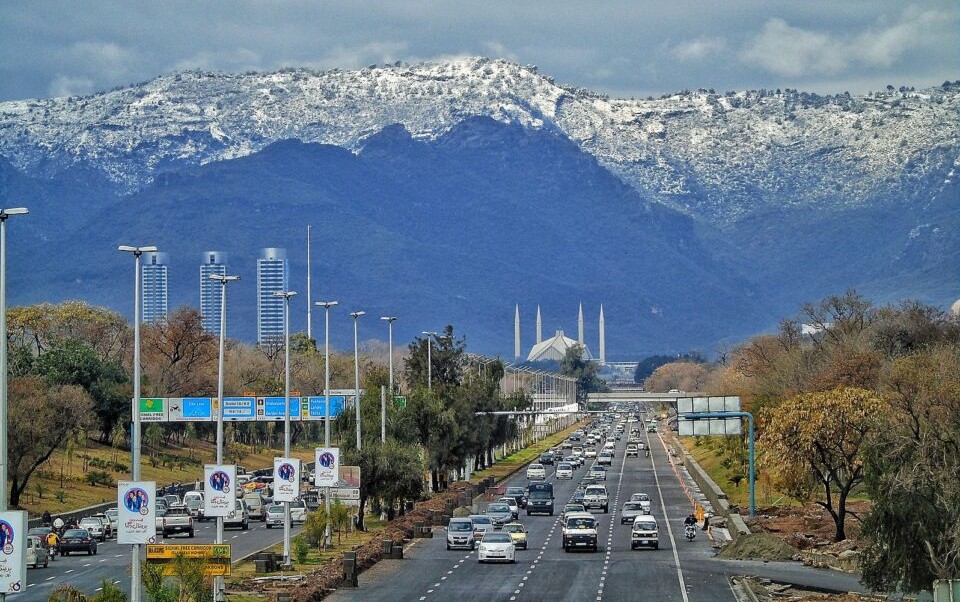
Exactly 💯 Islamabad is second beautiful capital in the world & ranked high for its blend of natural scenery, serene environment, and modern infrastructure.
We welcome you to Pakistan. You should definitely visit again there’s always more to explore in Islamabad. https://t.co/MGZbdaT96s— Advocate Afshan Awan (@AdvAfshanAwan) April 10, 2026
In an era defined by deep mistrust and hardened geopolitical lines, even bringing adversaries to the same table is no small feat.
If Islamabad could build on this momentum with consistency and strategic foresight, it may well have laid the foundation for a more enduring role as a stabilizing force in an increasingly volatile world.

Ali Imran is a Washington-based journalist, who has worked for leading world news organizations as correspondent, expert and in editorial positions. He is a published author and poet.