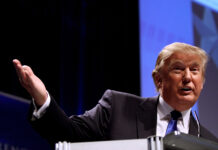
U.S. and Chinese officials said after two days of talks the two countries have reached a tentative trade agreement, ahead of a meeting between President Donald Trump and his Chinese counterpart Xi Jinping on Thursday. Trump-Xi meeting
The fruition of a deal between world’s two largest economies will signal an end to uncertainty, replacing U.S. threats of tariffs and Chinese reaction with restrictions on rare earth minerals with hope for a stabile global growth outlook.
The announcement of the trade framework came as both sides concluded two days of talks during ASEAN summit in Malaysia.
U.S. Treasury Secretary Scott Bessent and China’s top trade negotiator Li Chenggang both described the outcome of the latest round of discussions as a breakthrough.
Trump aims to secure trade deal with China’s Xi during high-stakes Asia Tour
Li told reporters the two sides had reached a “preliminary consensus,” while Bessent called it “a very successful framework” that could serve as the basis for a broader accord.
The contours of the tentative agreement have not been made public, but it reportedly includes provisions on export controls, fentanyl trafficking, and shipping levies.
For the U.S. the trade deal facilitate renewed Chinese purchases of American soybeans and other agricultural goods—an area of Washington see as critically important to American farmers hit hard by tariffs.
Bessent, speaking on CBS’s Face the Nation, said President Trump’s threat to impose tariffs of up to 100% on Chinese imports was “effectively off the table.”
China can continue to buy Iranian oil: Does Trump’s statement signify strategic shift?
He added that Beijing is expected to ease recent restrictions on rare earth exports, vital materials used in advanced technologies.
“The Chinese want to make a deal, and we want to make a deal,” President Trump said, expressing optimism ahead of his scheduled meeting with Xi in South Korea on Thursday.
Trump administration officials indicated that while much of the framework has been agreed upon, the final outcome will depend on the discussions between the two leaders.
Markets tumble as Trump levies 100% tariffs after China’s new rare earth export controls
For international markets, even a partial deal could offer a reprieve after months of uncertainty that saw investors grappling with the effects of new tariffs, disrupted supply chains, and mounting fears of a global economic slowdown.
The tensions between Washington and Beijing escalated in recent months after China limited exports of rare earth elements crucial for manufacturing high-tech goods. In response, Trump threatened additional tariffs on Chinese products, prompting concerns of a widening economic conflict.
Now, negotiators on both sides appear eager to dial back hostilities.
Trump also hinted at future diplomatic exchanges, saying he planned to visit China and that Xi might come to Washington—or to Trump’s private estate at Mar-a-Lago in Florida—for further talks.
Follow for more: Twitter (X) | Facebook | Instagram | LinkeIn

Kiran Asim is a writer who covers the U.S., Europe, South Asia, and the Middle East. Her reports and analyses look at the geostrategic issues and contemporary developments and their economic and political implications. She also writes about society and education.