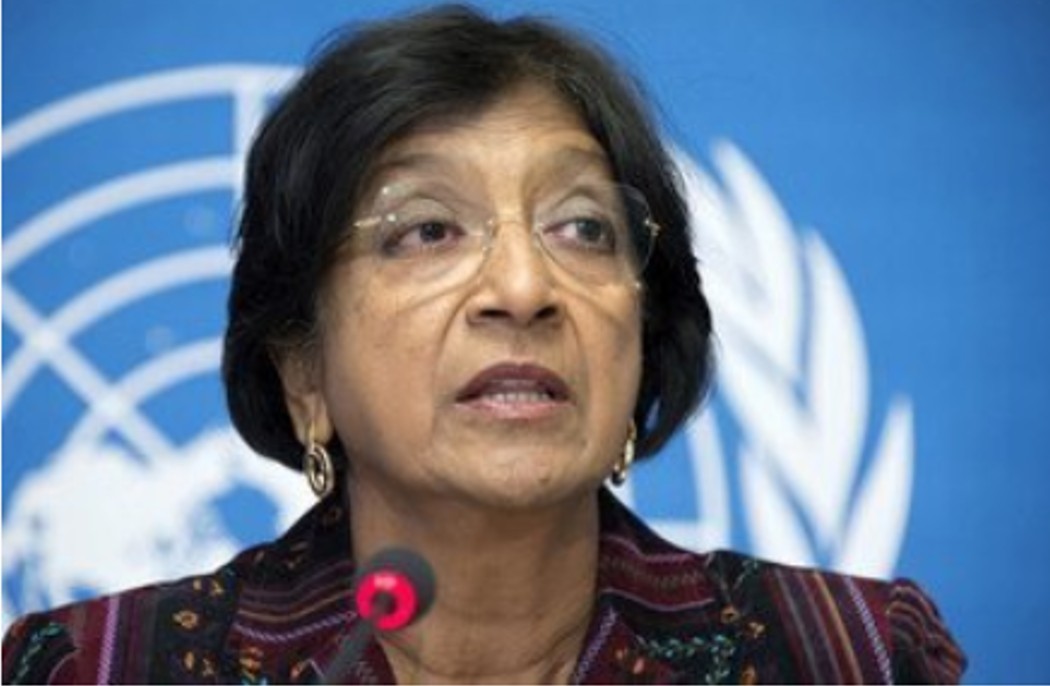
South African jurist Navanethem “Navi” Pillay has been awarded the 2026 Nobel Peace Prize in recognition of her decades-long efforts to advance international law, strengthen global justice and ensure accountability for war crimes, crimes against humanity and genocide.
The Norwegian Nobel Committee announced the award on October 9, recognizing Pillay’s contribution to the development of international justice and her efforts to promote a more inclusive global legal order.
The award carries significance beyond the recognition of one distinguished jurist. At a time when international legal institutions face mounting political pressure and the principles of universal accountability are fiercely contested, it affirms the enduring importance of justice, human dignity and the rule of law.
From Apartheid’s Shadows to the World Stage
Pillay’s career has spanned some of the world’s most consequential legal and human rights institutions, from South Africa’s judiciary to international criminal tribunals and the United Nations. Born into a family of Indian Tamil origin in Durban during apartheid, Pillay built a distinguished legal career despite the racial and gender barriers imposed by the system.
Her early legal work included defending Nelson Mandela and other opponents of apartheid. In 1967, she became the first woman to establish a law practice in Natal Province, South Africa. The daughter of a bus driver, Pillay grew up in a poor Indian community and went on to break through racial and gender barriers through determination, legal expertise and sustained professional achievement.
BREAKING NEWS
The Norwegian Nobel Committee has decided to award the 2026 #NobelPeacePrize to Navanethem “Navi” Pillay for her efforts to promote peace and international law.#NobelPrize https://t.co/97vurspw6z
— The Nobel Prize (@NobelPrize) October 9, 2026
After the end of apartheid, Pillay was appointed an acting judge of South Africa’s High Court in 1995, becoming the first non-white woman to hold that position. That same year, she was elected to serve as a judge on the International Criminal Tribunal for Rwanda. She served on the tribunal for eight years, including two terms as its president from 1999 to 2003.
Her journey from a society structured by racial exclusion to the highest levels of international justice is a testament to perseverance and to the importance of institutions that uphold equality before the law.
Pioneering Contributions to International Law
During her time at the Rwanda Tribunal, Pillay contributed to landmark jurisprudence on rape as a weapon of genocide, sexual violence and the legal consequences of inciting genocide.
The tribunal’s landmark judgment in the case of Prosecutor v. Jean-Paul Akayesu helped establish that rape and other forms of sexual violence could constitute acts of genocide when the necessary legal elements, including genocidal intent, were established. The judgment also recognized rape as a crime against humanity in the circumstances of the case.
The ruling marked a turning point in international criminal justice. It recognized that sexual violence could be central to the commission of genocide rather than merely a secondary consequence of armed conflict. Pillay’s contribution to this jurisprudence helped strengthen the legal recognition of victims whose experiences had too often been marginalized or overlooked.
UN Human Rights Chief @volker_turk’s reaction to #NobelPeacePrize award for former UN High Commissioner for Human Rights, Navi Pillay https://t.co/QKPJVLdmcm
— UN Human Rights (@UNHumanRights) October 9, 2026
The tribunal also developed important jurisprudence on direct and public incitement to commit genocide, reinforcing the principle that those who deliberately encourage mass violence can face criminal accountability.
In 2003, Pillay was elected a judge of the International Criminal Court, serving until August 2008, when she left to take up her appointment at the United Nations. She subsequently served as UN High Commissioner for Human Rights from 2008 to 2014, championing the protection of fundamental rights and strengthening international human rights standards.
Her later work continued to address some of the most consequential questions in international human rights law. From 2021 to 2025, Pillay chaired the UN Independent International Commission of Inquiry on the Occupied Palestinian Territory.
She has also served as an ad hoc judge of the International Court of Justice in proceedings concerning allegations that Myanmar committed genocide against the Rohingya.
These roles reflect a career devoted to the principle that international law must apply universally, and that allegations of grave violations deserve serious, impartial and independent scrutiny, irrespective of the identity or political influence of those implicated.
The Nobel Committee’s Tribute
In announcing the award, the Norwegian Nobel Committee praised Pillay’s contribution to international justice and the development of a more comprehensive global legal order. Her career demonstrates how legal institutions can help establish accountability for grave crimes and strengthen the foundations of peace.
Jørgen Watne Frydnes, chair of the Norwegian Nobel Committee, said Pillay had “led the way towards a more comprehensive global legal order.” He emphasized that, at a time of rising numbers of wars and conflicts and mounting political pressure on judges and international legal institutions, the committee wanted to remind the world that resolving conflicts without force or violence depends on respect for the international rule of law.
The committee’s position reflects a fundamental principle: an international legal system in which war criminals are held accountable and victims of abuse see justice done is a precondition for a peaceful world.
Peace is not simply the absence of open conflict. It also depends on justice, the protection of human dignity and the willingness of institutions to hold perpetrators accountable, regardless of their power or position.
Newly awarded peace laureate Navi Pillay has held states and national leaders accountable and brought hope to victims of violence and conflict.
Navi Pillay is one of the great defenders of international legal principles in our time. Her distinguished career reminds us of the need to support, fortify and expand the global rule of law. Navi Pillay’s commitment to justice and human dignity is a source of hope and inspiration to all who seek to bring about a more peaceful world.
Read more about the 2026 #NobelPeacePrize: https://t.co/JMjpp1jPKc
#NobelPrize
— The Nobel Prize (@NobelPrize) October 9, 2026
Tributes to a Lifetime of Service
The award prompted tributes from international human rights and legal institutions, underscoring the wider significance of Pillay’s career at a time when the international legal order faces mounting pressure.
UN High Commissioner for Human Rights Volker Türk described the award as “a collective victory for human rights and for all those who seek justice and accountability.” International Criminal Court President Tomoko Akane also welcomed the recognition, highlighting its significance at a time when international law and the rule of law face profound challenges.
European Commission President Ursula von der Leyen praised Pillay for having “looked injustice in its cruel face and never looked away,” describing her as “a defender of the persecuted, the vulnerable, the voiceless and the excluded.”
The tributes reflect a recurring theme in Pillay’s career: justice must not depend on a person’s identity, status or political power, and the protection of human dignity must remain a universal obligation.
“This a reminder to the world that we need to strengthen international law.”
Immediately following the announcement, Jørgen Watne Frydnes, Chair of the Norwegian Nobel Committee, was interviewed about the 2026 Nobel Peace Prize. https://t.co/VaxWw1Oqv3
— The Nobel Prize (@NobelPrize) October 9, 2026
A Moment of Humor Amid a Momentous Occasion
The announcement also produced a lighter moment. When the Nobel Committee initially struggled to reach Pillay by telephone, its chair, Jørgen Watne Frydnes, joked: “My message to her is, ‘If you see a Norwegian number calling, please pick up.’”
Pillay subsequently learned of the award while attending an international law summit in Nuremberg. In a video shared by Amnesty International Secretary General Agnès Callamard, she responded to the applause with characteristic humor:
“If you clap a little more, I might share this prize with Trump.”
She then added, in reference to her professional instinct for verification: “But being a lawyer and a judge, I still want to verify.”
The quip was a playful reference to US President Donald Trump’s widely expressed ambition to win the Nobel Peace Prize. The contrast between the joke and the occasion also highlighted the broader issues at stake: the relationship between political power, international law and the accountability of those accused of grave violations.
Trump’s criticism of international institutions, including his calls for countries to withdraw from the International Criminal Court, provides further context for the remark. The court is among the institutions in which Pillay previously served as a judge. Any reference to specific recent calls for withdrawal should be checked against the relevant dated statements before publication.
Pillay soon returned to the substance of her work. Referring to her recent report on Gaza, she said: “The last thing I did was submit a report on Gaza, naming what is happening there as genocide.”
The statement referred to the work of the UN Independent International Commission of Inquiry, which concluded in its report that genocide was being committed in Gaza. This should be understood as the commission’s finding, rather than a final judgment by the International Court of Justice.
Pillay also expressed surprise at the praise she had received for showing courage, asking why it should take courage to speak the truth.
Her remarks brought the occasion back to the principles that have defined her career. For Pillay, the pursuit of justice is not an extraordinary act of bravery that should be required only of a few. It is an obligation inherent in the work of a lawyer, a judge and anyone entrusted with upholding the law.

Muhammad Luqman is Associate Editor at Views News Now. He writes on wide-ranging issues including economy, South Asia, the Middle East, agriculture, economy and innovation. Luqman has worked some of the leading news organizations and won acclaim for his original and research-based works.