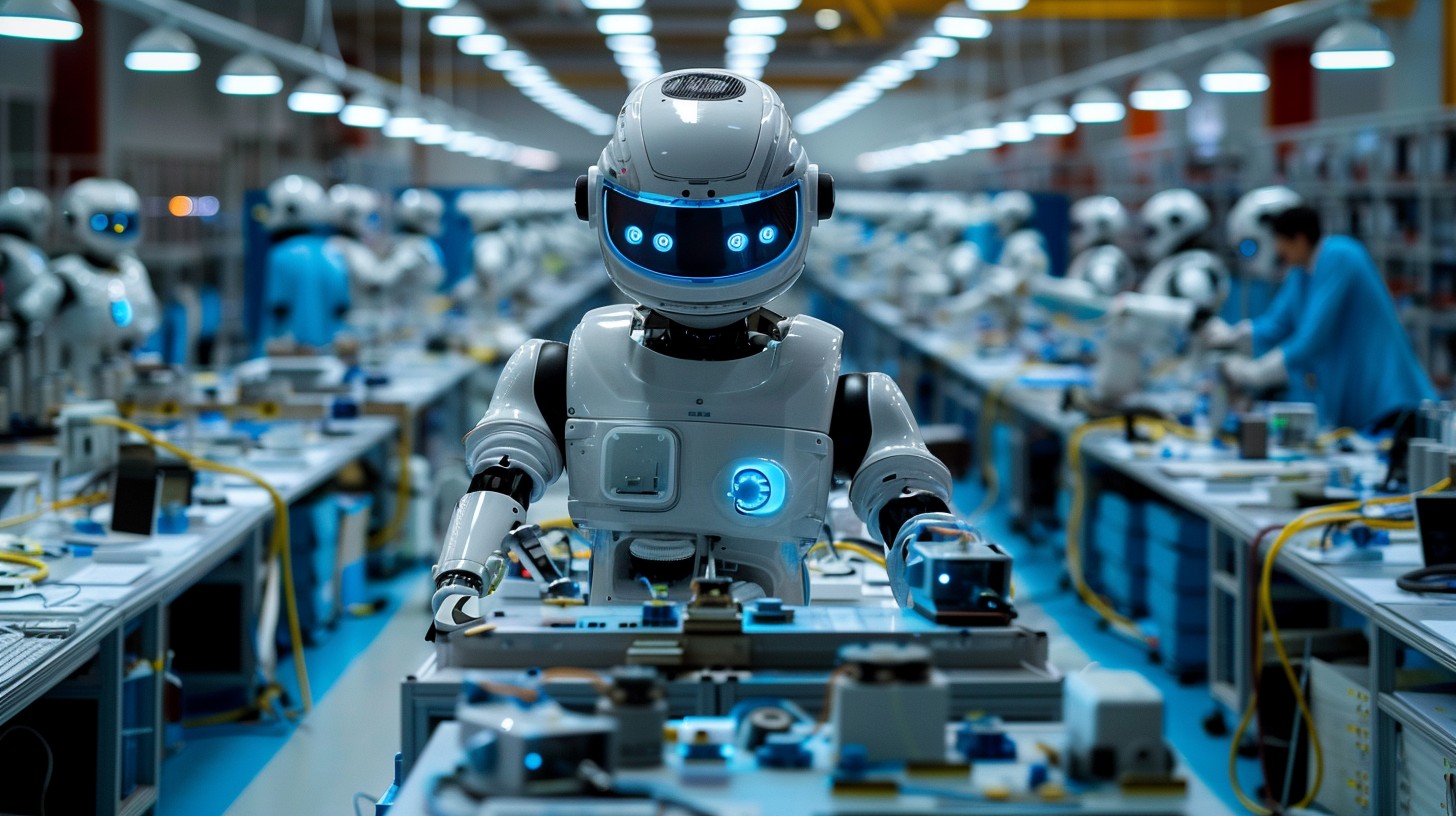
Washington has banned the import of new foreign-made advanced humanoid robots, four-legged robotic systems, and certain power inverters into the United States, citing national security concerns.
The Federal Communications Commission (FCC) announced that the products have been added to its Covered List, which identifies communications equipment and services deemed to pose an unacceptable risk to US national security. While the agency did not name any country, the restrictions are widely expected to affect Chinese manufacturers, which dominate the global humanoid robotics market.
The new rules apply only to newly imported products and do not affect robotic devices or power inverters that had already received FCC authorization before the restrictions took effect.
FCC Chairman Brendan Carr said the move is part of a broader effort to strengthen America’s critical supply chains and reduce potential security vulnerabilities.
NEW
The FCC has now added two new categories of devices to our Covered List, which bans new versions from import or sale in America.
1. Advanced robotic devices, such as humanoids and quadrupeds produced in foreign countries.
2. Power inverters produced in foreign countries.… pic.twitter.com/q8YCIOHBzZ
— Brendan Carr (@BrendanCarrFCC) July 28, 2026
According to the FCC, foreign-made power inverters—widely used in data centers, solar energy systems, and other critical infrastructure—could be exploited to disrupt essential services, steal sensitive information, enable unauthorized remote access, or facilitate cyberattacks.
The agency also warned that advanced foreign-made robots could be used by “malign actors” for surveillance, support foreign intelligence operations, or even be remotely commandeered.
China condemned the decision, with its embassy in Washington accusing the United States of politicizing trade and technology issues under “groundless pretexts.” Beijing said it would “take all necessary measures” to protect its legitimate interests and urged Washington to “abandon its hegemonic mindset, stop smearing Chinese companies, and cease threatening them with sanctions.”
On Thursday, China’s Commerce Ministry escalated the response, warning of retaliatory measures if the United States does not reverse the restrictions. The ministry said the FCC’s latest decision “severely damages China-US economic and trade stability” and called on Washington to withdraw the measures.
China responds to US’s ban on advanced Chinese humanoid & quadruped robots:
“Protectionism won’t make the US more competitive. Instead, it will only hurt American companies and consumers.”
Again, just like EVs, can’t win, so ban.🤷
Again, national security excuse.🤷 pic.twitter.com/socZXooC3n— Li Zexin 李泽欣 (@XH_Lee23) July 29, 2026
The latest restrictions come as Washington and Beijing continue to intensify competition over advanced technologies, particularly artificial intelligence and robotics. President Donald Trump is expected to host Chinese President Xi Jinping in September amid ongoing strategic rivalry between the world’s two largest economies.
Speaking on Thursday, Trump also suggested the United States could adopt a more measured approach to AI export controls in order to preserve America’s technological advantage over China.
Chinese companies AgiBot, Unitree, and UBTech held the top three positions in global humanoid robot installations last year, according to Counterpoint Research, while Tesla’s Optimus ranked fifth.
The Trump administration has steadily expanded restrictions on Chinese technology, citing national security concerns and seeking to reduce US dependence on Chinese supply chains. Washington has also tightened export controls on advanced semiconductors destined for China and imposed steep tariffs on a range of Chinese products.
Mark Zuckerberg warned that a US ban on Chinese AI models would not be “an effective solution” and suggested that US companies should instead “systematically” identify bottlenecks and roadblocks in order to better compete with Chinese AI firms. https://t.co/ffYqQ4S96b pic.twitter.com/82ReGQ58mi
— CNN (@CNN) July 29, 2026
US Treasury Secretary Scott Bessent has warned that Chinese AI companies could face sanctions over allegations of misappropriating American intellectual property. Beijing has rejected those claims, arguing that its advances in artificial intelligence are driven by domestic innovation, scientific research, and international collaboration.
The United States is also seeking to reduce supply chain risks after China tightened export controls on rare earth minerals, which are critical for electronics, batteries, and other high-tech industries.
China has rapidly emerged as a global leader in humanoid robotics, with companies accelerating the commercialization of robots for manufacturing, logistics, healthcare, and household applications. The country’s robotics firms have increasingly challenged US competitors, including Tesla and Boston Dynamics, in the race to dominate the next generation of intelligent machines.
Huma Nisar is Associate Editor at Views News Now. She also writes opinion articles on health, society and diet.