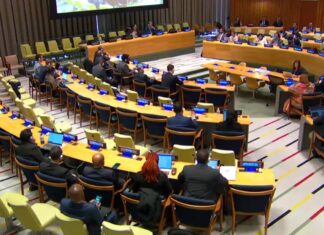
The United Nations High Commissioner for Human Rights, Volker Türk, has raised alarm over increasing attacks on journalists worldwide, calling for urgent action to protect media workers and uphold press freedom.
In a message marking World Press Freedom Day, Türk warned that growing hostility toward the media threatens the very foundations of democratic societies.
“When attacks on the media are normalized, freedom itself begins to decay, and with it, the foundations of peace, security, and sustainable development,” he said.
Journalism Becoming Increasingly Dangerous
The High Commissioner paid tribute to reporters and photographers who continue to document atrocities, expose corruption, and hold power to account. However, he noted that journalism has become “an insecure and, at times, dangerous profession.”
Media workers, he said, have been “bombed in their cars, abducted from their offices, silenced behind bars, and dismissed from their jobs.”
According to UN data, at least 14 journalists have been killed since the start of 2026, while only a fraction of killings over the past two decades have led to full accountability. Reporting in conflict zones remains particularly hazardous.
Conflict Zones: The Deadliest Frontlines
Türk highlighted the heavy toll on journalists covering wars, pointing to the devastating impact of Israel–Hamas war.
“Israel’s war in Gaza has become a death trap for the media. My Office has verified the killing of nearly 300 journalists since October 2023, with many more injured,” he said.
Israeli strikes kill Al Jazeera correspondent, two Lebanese journalists
So far in 2026, Lebanon has emerged as the deadliest country for media workers.
He also emphasized that local journalists often bear the greatest risks, citing reporters in Sudan who continue their work despite facing violence, displacement, and even famine.
Global Pressure on Press Freedom
In a separate message, António Guterres warned that the number of journalists killed in recent years has risen sharply, with many deliberately targeted.
“Far too frequently, the first casualties are the journalists who risk everything to report the truth,” he said.
India, Pakistan Rank Low on Press Freedom Index 2026 Amid Global Decline
Beyond physical threats, press freedom is also under “unprecedented strain” from economic pressures, technological disruption, and deliberate manipulation of information.
Türk echoed these concerns, stating that “virtually no country is truly safe for those who speak truth to power.”
Legal and Digital Threats Intensify
The UN rights chief warned that laws on defamation, disinformation, cybercrime, and terrorism are increasingly being misused to silence journalists and shield those in power.
He also expressed concern over growing transnational repression, including attacks on Iranian journalists abroad.
Online harassment remains a major issue, particularly for women journalists—three-quarters of whom have faced abuse, including smear campaigns and threats of sexual violence.
Such hostility, Türk warned, risks creating a “disinformation society” where media outlets are pressured to distort facts in order to operate safely.
Detentions, Economic Strain, and Media Shutdowns
Globally, around 330 media workers are currently detained, along with hundreds of citizen journalists and bloggers.
At the same time, economic pressures are forcing many outlets to shut down. In nearly one-third of countries, funding cuts and media consolidation are leading to the closure of local news organizations.
Türk also pointed to increasingly sophisticated methods of silencing the press, including restricted access to information, internet shutdowns, and news blackouts. In some cases, he warned, “an unholy alliance between political, corporate, and media power” is undermining democracy and deepening social divisions.
Call for Urgent Action
Despite mounting challenges, journalists continue to report under extreme conditions—even from hospital beds—driven by a commitment to truth.
Türk stressed that they cannot stand alone and urged governments to end the persecution of the press, repeal abusive laws, and align national frameworks with international human rights standards.
He called on authorities to prevent attacks, ensure accountability, and protect journalists from surveillance, including when operating abroad.
He also urged technology companies to take stronger action against online abuse and disinformation, while emphasizing the need for media institutions to uphold independence, transparency, and integrity.

Asim Tanveer is a seasoned journalist working for TV and electronic and print media outlets. He has been working for some of the world’s leading news organizations including Associated Press (AP), Reuters, BBC, CNN, CNBC, Star TV, Voice of America and The New York Times for more than 20 years. He has won several awards for his live coverage of events that include a Reuters News Agency World Award and the Pride of Performance award in 2010.