

No longer the realm of science fiction, the space economy is accelerating into a bold new era — projected to skyrocket past $730 billion by 2030, with over 100 lunar and orbital missions already planned.
As more than 90 nations launch satellites and reach for the stars, Earth’s connection to space is no longer distant — it’s deeply interwoven into our daily lives and shared future.
This week, the world turns its gaze upward as World Space Week 2025 begins — a global celebration of discovery, innovation, and imagination.
With this year’s theme, “Living in Space,” the United Nations invites us to envision what life could look like beyond our planet, while recognizing how space technologies already transform life on Earth.

From GPS navigation and weather satellites to solar panels and water purification systems, the innovations that support life in orbit are powering progress below.
Yet, as Earth’s orbit becomes increasingly crowded — now with over 45,000 human-made objects encircling our planet — the need for a responsible, sustainable space governance has never been more urgent.
Space exploration has advanced dramatically since the 1960s, when the United States landed the first humans on the Moon through its Apollo missions and the Soviet Union sent the first human into orbit aboard Vostok 1. Today, the U.S. space agency NASA remains the most active and influential space organization in the world.
According to World Population Review, NASA’s budget is nearly double that of any other national space agency. In terms of operational capabilities, the United States — still the only nation to have landed astronauts on the Moon — leads with a top operational rating of 7. China and Russia follow closely with a rating of 6, while India and Pakistan are rated at level 4, reflecting growing but more limited capabilities.

Meanwhile, space tourism has also become a reality led by billionaires including Elon Musk, Jeff Bezos, and Richard Branson. Their voyage and race span to the edge of space, hooking business to the era of space exploration.
Bezos the founder of Blue Origin, whose company has flown dozens of missions, foresees space as the next frontier for business foothold. He envisions AI companies setting up data centers in space over the next 20 years to avail ceaseless abundance of solar power.
Elon Musk, CEO of SpaceX, envisions a radically different future for humanity. His bold aim is to establish a self-sustaining human colony on Mars, with a population of one million, within the next two to three decades. For Musk, space isn’t just a destination—it’s the next frontier for human survival.
On earth, the UN Office for Outer Space Affairs (OOSA) is leading the charge, helping countries build national space capabilities, manage orbital debris, and ensure that space remains safe, peaceful, and accessible to all.
Initiatives like “One Moon for All” aim to guide the surge in lunar exploration, promoting cooperation across a growing constellation of missions.
“Space is not a distant dream. It’s already a shared reality,” said Aarti Holla-Maini, Director of OOSA. “If we work together, it can help us solve Earth’s most pressing challenges.”
The celebration is anchored between two milestones of human achievement: the 1957 launch of Sputnik 1, Earth’s first satellite, and the 1967 Outer Space Treaty, which laid the foundation for international space law. Today, those principles endure — championing multilateral cooperation as we face an increasingly complex space landscape.
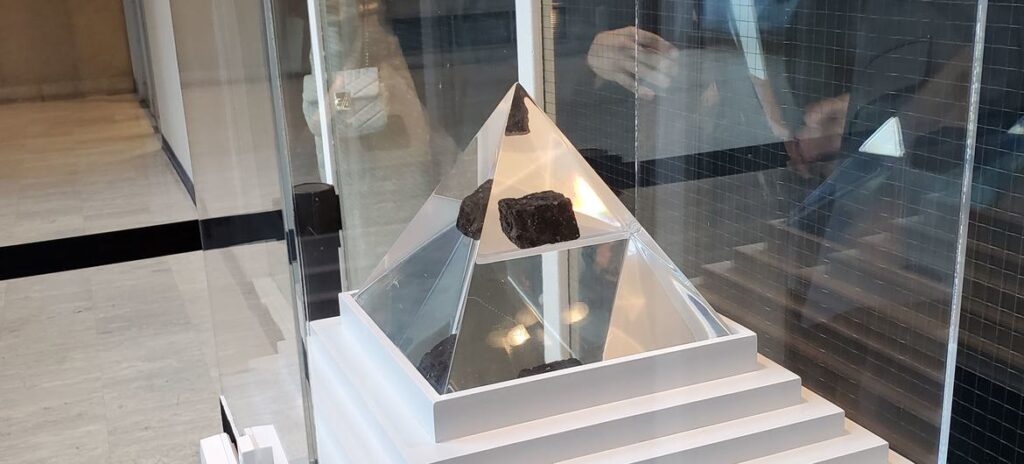
As we imagine lunar bases, orbital habitats, and interplanetary travel, World Space Week 2025 reminds us that the frontier of space is not just above us — it’s within our reach, shaped by collective will, innovation, and imagination.
“If we can build the International Space Station together — in orbit, at 17,500 miles an hour — we can do anything,” said former NASA astronaut Scott Kelly, reflecting on his 520 days in space.
“This is the hardest thing we’ve ever done. And it proves what’s possible when humanity works as one.”
Follow for more: Twitter (X) | Facebook | Instagram | LinkeIn

Ali Imran is a Washington-based journalist, who has worked for leading world news organizations as a correspondent, expert and in editorial positions. He is a published author and poet.







