A tentative ceasefire between the United States and Iran has opened a narrow diplomatic window—but conflicting statements from both sides reveal how fragile and contested the agreement announced on Tuesday remains.
What appears, on the surface, to be a breakthrough in de-escalation is, in reality, layered with mistrust, strategic ambiguity, and competing narratives.
U.S. President Donald Trump says he is optimistic about talks but has also warned Iran against charging toll on shipping through the Strait of Hormuz.
Vice President JD Vance will head the U.S. delegation that includes White House envoys Steve Witkoff and Jared Kushner. Foreign Minister, Abbas Araghchi, and Parliament speaker, Mohammad-Bagher Ghalibaf form the Iranian delegation.
Uranium at the Center of Negotiations
At the heart of the negotiations lies Iran’s nuclear program, with President Donald Trump having ruled out any space for nuclear enrichment.
Speaking at a White House press briefing, Press Secretary Karoline Leavitt confirmed that Iran has signaled a willingness to hand over enriched uranium. “They have, yes,” she stated when asked directly whether Tehran had shown readiness to relinquish its stockpile.
US-Iran Ceasefire Faces Early Tests in Lebanon and Strait of Hormuz
Leavitt emphasized that stripping Iran of enriched uranium remains “at the top of the priority list” for President Trump, underscoring Washington’s long-standing objective of halting Iran’s nuclear ambitions. This aligns with U.S. claims that the ceasefire agreement includes a critical stipulation: Tehran will no longer pursue uranium enrichment, a process central to the development of nuclear weapons. Echoing this position, War Secretary Pete Hegseth stated during a Pentagon briefing that Iran is expected to hand over its uranium “voluntarily,” reinforcing the administration’s confidence in the negotiation outcomes.
Iran’s Counter-Narrative
However, Iran’s official stance sharply contradicts these claims. Iranian state media has rejected the notion that Tehran agreed to either halt uranium enrichment or surrender its stockpile as part of the ceasefire.
According to Iran’s Supreme National Security Council, the proposed framework instead reflects a very different set of terms:
“In this plan, America fundamentally commits to guaranteeing non-aggression, continuing Iran’s control over the Strait of Hormuz, accepting enrichment, lifting all primary and secondary sanctions.”
This divergence highlights a fundamental gap between what Washington presents publicly and what Tehran acknowledges—raising serious questions about the actual substance of the agreement.
Competing Peace Proposals and Pakistan’s Mediation Milestone
The ceasefire agreement itself emerged from parallel negotiation frameworks. The United States reportedly introduced a 15-point peace plan, while Iran responded with a 10-point proposal.
These negotiations were brokered by Pakistan, positioning Islamabad as a key diplomatic intermediary in a high-stakes geopolitical standoff.
US–Iran Ceasefire: Pakistan’s Diplomatic Moment Offers Both Opportunity and Test
The ceasefire was finalized just hours before a deadline set by President Trump, who had warned of the “complete demolition” of Iran’s energy infrastructure if no agreement was reached.
This looming threat likely accelerated the pace of negotiations, but it also adds pressure on both sides to interpret the agreement in ways that serve their strategic interests.
The Strait of Hormuz: A Strategic Flashpoint
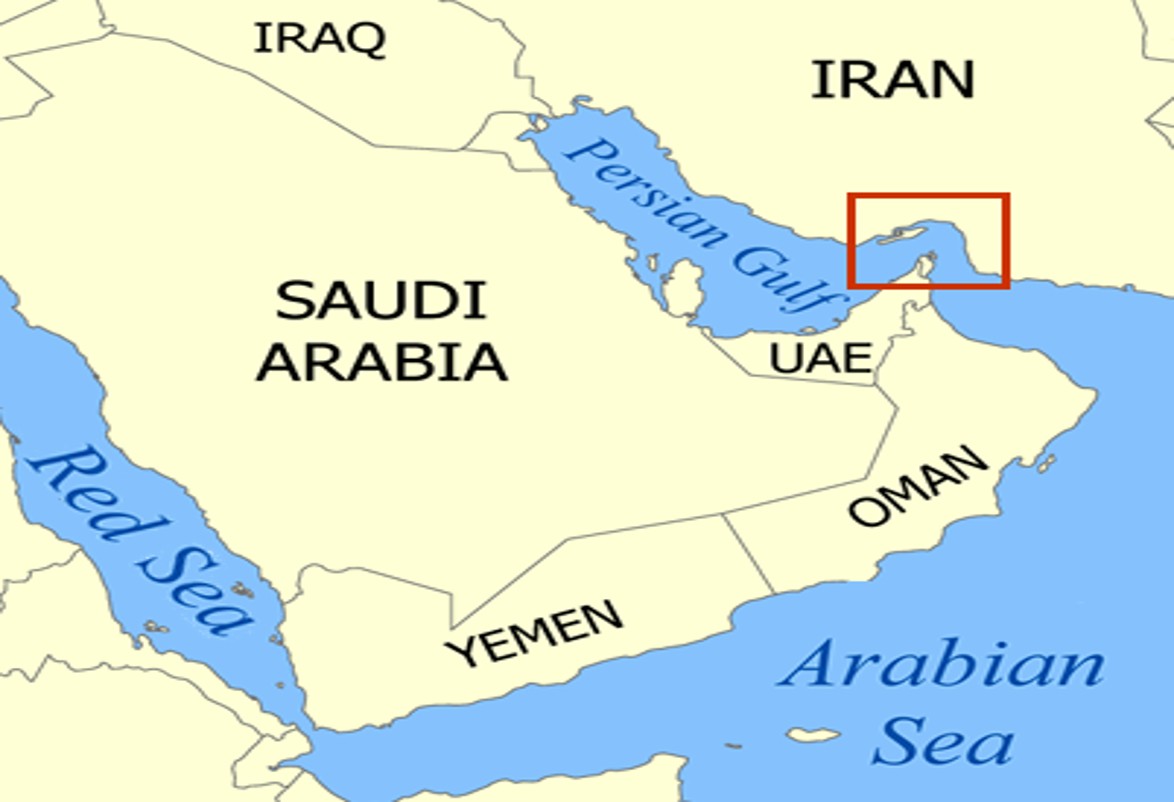
Another critical dimension of the conflict revolves around the Strait of Hormuz—a vital artery for global oil shipments. Iranian state media reported that Tehran has once again closed the strait, halting the passage of oil-carrying vessels, as it had done earlier during the conflict.
Yet, the White House has cast doubt on these reports. Leavitt noted that President Trump had been briefed on Iran’s claims prior to her remarks and dismissed them as inconsistent with prior understandings.
“That is completely unacceptable,” she said, adding that Iran’s public statements often diverge from private commitments.
While both sides had reportedly agreed to reopen the strait, Iran insists on doing so under its own conditions, further complicating an already tense maritime situation.
Israel’s Continued Military Operations
Notably absent from the ceasefire negotiations is Israel, which continues its military operations in Lebanon. These operations have targeted Hezbollah, an Iranian-backed group deeply involved in the regional conflict. Both the United States and Israel have clarified that Lebanon was never part of the ceasefire framework, effectively allowing Israeli operations to continue unabated.
This exclusion risks undermining the broader stability the ceasefire seeks to achieve, as regional tensions remain interconnected, with Tehran stating it would not abandon the Lebanese people.
A Ceasefire Built on Uncertainty
The current ceasefire, intended as a two-week pause in hostilities, reflects both diplomatic progress and deep structural tensions.
While Washington portrays the agreement as a step toward dismantling Iran’s nuclear capabilities, Tehran frames it as recognition of its sovereignty and strategic rights. The stark contrast in these narratives is not merely rhetorical—it signals unresolved core disputes that could unravel the agreement at any moment.
With ongoing military activity in Lebanon, contested control over the Strait of Hormuz, and conflicting interpretations of nuclear commitments, the ceasefire stands on uncertain ground.
In the end, what has been achieved is not a resolution, but a pause—one shaped as much by urgency and pressure as by genuine consensus.
From Pause to Resolution
The current ceasefire between the United States and Iran is less a definitive agreement and more a temporary alignment of interests under pressure.
Iran has been pushing for sanctions relief, a possibility Trump referred to in his Wednesday morning post. The U.S. president has also emphasized that Iran must reopen key maritime routes to international shipping.
These competing narratives expose a deeper reality: both sides may be participating in the same agreement, but they are not operating from the same understanding.
The inclusion of Pakistan as a mediator adds a layer of diplomatic credibility, yet the exclusion of Israel—and the continuation of conflict in Lebanon involving Hezbollah—will test the limits of diplomacy as well as the broader vision for regional stability.
Ultimately, the ceasefire rests on fragile ground. With contradictions over uranium enrichment, disputed claims about maritime control, and ongoing military engagements, the risk of renewed escalation remains high.
What exists now is not peace, but a calculated pause—one that could either open the door to sustained diplomacy or collapse under the weight of unresolved tensions and mutual distrust.

Kiran Asim is a writer who covers the U.S., Europe, South Asia, and the Middle East. Her reports and analyses look at the geostrategic issues and contemporary developments and their economic and political implications. She also writes about society and education.