A nascent ceasefire between the United States and Iran, hailed as a breakthrough after weeks of intense aerial bombardments across the Middle East, is confronting its first major tests: escalating violence in Lebanon and the continued closure of the Strait of Hormuz.
Brokered through efforts involving U.S. President Donald Trump, Pakistani Prime Minister Shehbaz Sharif, and backchannel mediators, the two-week truce — announced just last Tuesday — was intended to halt direct confrontations between American, Israeli, and Iranian forces.
Within hours, Israeli airstrikes resumed in Beirut, targeting Hezbollah strongholds, while Iran-aligned forces maintained a tightening grip over Hormuz, the world’s most critical oil chokepoint.
These developments risk undermining the fragile accord before it can translate into sustained de-escalation even as Islamabad is all set to host U.S. Vice President J D Vance and senior Iran leaders for talks on ending the conflict.
In return, Iran pledged to pause ballistic missile launches toward Israeli airspace.
President has credited Pakistan Prime Minister Shehbaz Sharif’s shuttle diplomacy, indicating that reopening of key sea lanes and nuclear inspections would be benchmarks for extending the truce.
JD Vance:
The Israelis have actually offered to check themselves a little bit in Lebanon because they want to make sure that our negotiation is successful.
That’s not because that is part of the ceasefire. I think that’s the Israelis trying to set us up for success. pic.twitter.com/Hu1paewlqn
— Clash Report (@clashreport) April 8, 2026
However, ambiguities within the agreement have already fueled friction. Israel, not a formal signatory, maintains that operations against Hezbollah fall outside the scope of the truce. Hezbollah’s intervention in early March — launching thousands of rockets from southern Lebanon in solidarity with Iran following U.S. strikes on Isfahan nuclear facilities — helped transform the conflict into a multi-front confrontation.
Still, in a tentative diplomatic opening, Israeli Prime Minister Benjamin Netanyahu has signaled readiness for direct talks with Lebanese officials “as soon as possible,” focusing on Hezbollah’s disarmament under United Nations Security Council Resolution 1701 and potential normalization steps with Beirut. Lebanon has thus emerged as the most immediate testing ground for the ceasefire.
Overnight Wednesday, Israeli F-35 jets struck more than two dozen targets in Beirut’s southern suburbs — a Hezbollah stronghold — killing at least 254 people and wounding scores more, according to Lebanon’s Health Ministry. Lebanese President Joseph Aoun condemned the strikes as “a blatant violation of sovereignty,” convening emergency cabinet sessions without announcing immediate retaliation.
Hezbollah Secretary-General Naim Qassem vowed “escalatory responses” from concealed arsenals, linking the group’s restraint to Tehran’s directives.
Iran, for its part, views Lebanon as integral to its broader security calculus. Parliamentary Speaker Mohammad Bagher Ghalibaf warned that “any continuation of aggression against our brothers in Lebanon will incur explicit costs and unyielding countermeasures.”
Foreign Minister Abbas Araghchi reinforced this stance, telling intermediaries in Oman that Iran’s adherence to the truce depends on Israel halting its operations against Hezbollah.
Diplomats say sustaining the ceasefire in Lebanon would require a complex, tripartite arrangement: an Israeli withdrawal from the disputed Shebaa Farms, deployment of the Lebanese Army south of the Litani River, and curbs on Hezbollah’s rocket arsenal — proposals that remain contentious in Jerusalem.

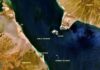
Parallel to Lebanon’s volatility, the Strait of Hormuz has emerged as the economic barometer of the ceasefire’s viability. The narrow waterway, through which roughly 20% of global oil supply — about 21 million barrels per day — transits, remains effectively restricted by Iran’s Islamic Revolutionary Guard Corps naval forces.
Since late February, swarms of fast boats, naval mines, and anti-ship missile deployments have deterred tanker traffic, pushing Brent crude prices toward $120 per barrel and fueling global inflation concerns. U.S. Fifth Fleet patrols have intermittently encountered IRGC vessels, but no major tanker convoys have resumed passage since the ceasefire took effect.
“Iranian forces are still enforcing a de facto blockade,” according to officials in the region.
Reopening the waterway was a central condition of the ceasefire, with U.S. officials calling for international monitoring of maritime traffic. However, satellite imagery from Maxar Technologies indicates continued IRGC deployments near Qeshm Island, including fast-attack craft reportedly equipped with naval mines.
Prime Minister Benjamin Netanyahu:
“In light of Lebanon’s repeated requests to open direct negotiations with Israel, I instructed at the Government meeting yesterday to open direct negotiations with Lebanon as soon as possible.
1/2
— Prime Minister of Israel (@IsraeliPM) April 9, 2026
Market analysts warn that a prolonged disruption could reduce global GDP growth by as much as 1.5%, with Europe and Asia particularly vulnerable.
Compounding these pressures is the unresolved nuclear dispute. While the ceasefire has temporarily sidelined the issue, it does not address Iran’s stockpile of 60% enriched uranium — sufficient for multiple warheads, according to International Atomic Energy Agency estimates.
Washington and Jerusalem are pressing for full dismantlement, citing alleged Iranian violations of the 2015 nuclear agreement framework. Tehran, meanwhile, insists on its “peaceful nuclear rights,” offering to cap enrichment at 3.67% in exchange for sanctions relief.
Lebanon: @antonioguterres, deeply alarmed by mounting toll on civilians following massive strikes by Israel, unequivocally condemns the attacks.
International law must be respected.
Civilians must be protected.
Attacks against them are unacceptable.https://t.co/HS4sTU3Sjh pic.twitter.com/pLs42Z2iv5
— United Nations (@UN) April 9, 2026
Global reactions reflect the high stakes. Saudi Crown Prince Mohammed bin Salman urged restraint “for prosperity’s sake,” while EU foreign policy chief Josep Borrell called for United Nations Security Council oversight of both flashpoints.
Prime Minister Sharif, facing domestic criticism for aligning closely with Washington, has defended the agreement as “a Pakistani gift to the ummah.”
Major energy firms such as ExxonMobil have scaled back operations in the Gulf, while Asian importers are rationing supplies, intensifying pressure for compliance with the ceasefire terms.
Analysts remain divided on the outlook. “Lebanon is the emotional trigger; Hormuz, the economic one,” said Suzanne Maloney. “If Israel pauses strikes and Iran restores shipping access within days, an extension is possible. Otherwise, we return to instability.”
US–Iran Ceasefire: Pakistan’s Diplomatic Moment Offers Both Opportunity and Test
The contested waters of the Strait of Hormuz make the ceasefire appears increasingly fragile.
Direct U.S.–Iran hostilities have subsided, with no reported strikes since Tuesday, but the calm remains tentative.
The region now watches closely as Islamabad hosts talks this weekend amid unfolding frictions.

Muhammad Luqman is Associate Editor at Views News Now. He writes on wide-ranging issues including economy, South Asia, the Middle East, agriculture, economy and innovation. Luqman has worked some of the leading news organizations and won acclaim for his original and research-based works.