U.S. Defense Secretary Pete Hegseth said Monday that the primary objective of current operations is the systematic destruction of Tehran’s missile capabilities, naval fleet, and core security infrastructure.
Hegseth’s remarks signaled a transition from a posture of containment to one of active, high-intensity dismantling of the Islamic Republic’s military reach.
However, the path forward is expected to be costly.
U.S. General Dan Caine, Chairman of the Joint Chiefs of Staff, cautioned the public that achieving these strategic military objectives in Iran will not be swift.
Acknowledging the gravity of the mission, Caine warned that additional U.S. casualties are expected as the conflict intensifies.
“This is not a single overnight operation,” Caine told reporters during a briefing.
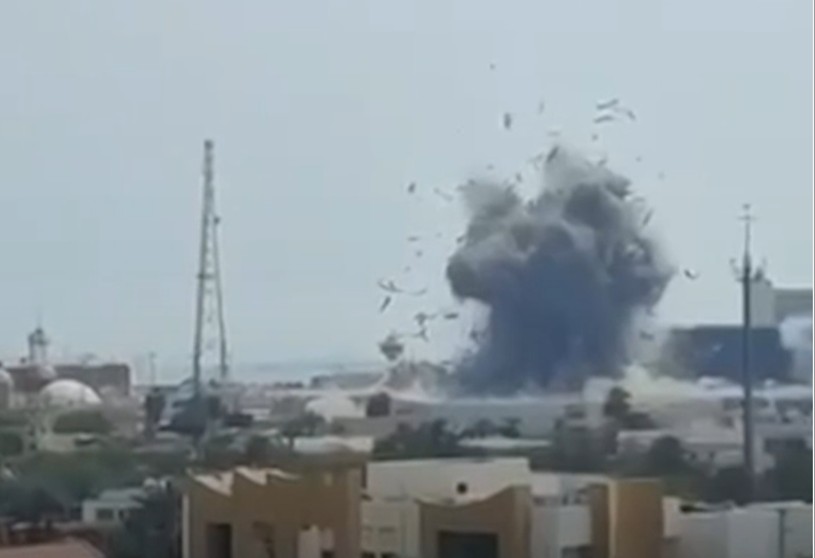
Last night, U.S. B-1 bombers, struck deep inside Iran to degrade Iranian ballistic missile capabilities. As the President stated, “we’re going to destroy their missiles and raze their missile industry to the ground.” pic.twitter.com/tIkIo5ugWv
— U.S. Central Command (@CENTCOM) March 2, 2026
“The military objectives that CENTCOM and the Joint Force have been tasked with will take some time to achieve, and in some cases, will be difficult and gritty work.”
Despite a massive initial military buildup, Caine confirmed that the United States continues to deploy additional troops to the Middle East.
His assessment arrived just twenty-four hours after President Donald Trump suggested that the current wave of strikes against Iranian targets could persist for at least the next four weeks.
Addressing fears of another protracted entanglement in the region, Secretary Hegseth insisted that these operations would not devolve into an “endless war.”
“Destroy Iranian offensive missiles, destroy Iranian missile production, destroy their navy and other security infrastructure, and they will never have nuclear weapons.”@SecWar Pete Hegseth outlines Operation Epic Fury at the Pentagon. 🇺🇸 pic.twitter.com/lxPNhoTgTU
— The White House (@WhiteHouse) March 2, 2026
While he admitted the mission remains in its early stages, he drew a sharp distinction between this campaign and previous conflicts.
“This is not Iraq. This is not endless,” Hegseth declared, reiterating that the goal is the functional neutralization of Tehran’s navy and missile systems rather than long-term occupation.
The human cost of the escalation became increasingly clear as Iranian media reported the death of Mansoureh Khojasteh Bagherzadeh, the wife of the recently killed Supreme Leader Ayatollah Ali Khamenei.
Bagherzadeh, 79, had reportedly been in a coma since the initial U.S.-Israeli strikes on Saturday that claimed her husband’s life; she succumbed to her wounds earlier today.
On the tactical front, Hegseth clarified that while there are currently no American “boots on the ground” inside Iranian territory, the administration is keeping all strategic avenues open.
“No, but we’re not going to go into the exercise of what we will or will not do,” Hegseth said when pressed on a potential ground invasion.
“We’ll go as far as we need to go.”
Further defining the mission’s scope, the defense secretary emphasized that the United States has no intention of engaging in “nation-building” or democratic social engineering within the Islamic Republic.
.@POTUS: “Our objectives are clear. First, we’re destroying Iran’s missile capabilities… Second, we’re annihilating their navy… Third, we’re ensuring that the world’s number one sponsor of terror can never obtain a nuclear weapon… And finally, we’re ensuring that the… pic.twitter.com/Ib050KttSB
— Rapid Response 47 (@RapidResponse47) March 2, 2026
“No stupid rules of engagement, no nation-building quagmire, no democracy-building exercise. No politically correct wars,” Hegseth told the press gallery.
“We fight to win and we don’t waste time or lives.”
Tehran, however, appears unswerving in the face of Washington’s rhetoric of a short, decisive campaign.
Ali Larijani, the influential head of the Supreme National Security Council, took to social media to signal Iran’s resilience. “Iran, unlike the United States, has prepared itself for a long war,” Larijani posted on X, suggesting a protracted resistance strategy.
As the conflict completes its third day, the Islamic Revolutionary Guard Corps (IRGC) claims to have significantly widened its retaliatory strikes.
According to an IRGC statement, Iranian forces have targeted 500 sites linked to the U.S. and Israel across the Middle East. The claims, however, have not been independently confirmed.
“Since the start of the conflict, the brave soldiers of the Iranian armed forces have attacked 60 strategic targets and 500 American military targets and targets of the Zionist regime,” the statement read, noting the deployment of over 700 drones and hundreds of ballistic missiles.
By late afternoon Monday, Iranian state television reported an 11th wave of “Operation Honest Promise 4,” confirming fresh salvos of missiles and drones aimed at targets in Beersheva, Israel.
As the missiles fall and the rhetoric sharpens, the region remains locked in a high-stakes struggle that both sides warn is only just beginning.

Kiran Asim is a writer who covers the U.S., Europe, South Asia, and the Middle East. Her reports and analyses look at the geostrategic issues and contemporary developments and their economic and political implications. She also writes about society and education.