The United States has temporarily closed its embassies in Saudi Arabia, Kuwait and Lebanon as the widening confrontation with Iran spreads across the Middle East, prompting heightened security measures and regional instability.
The closures come days after coordinated U.S. and Israeli strikes on Iranian targets triggered retaliatory attacks by Tehran, broadening the conflict beyond Iran’s borders. The State Department has evacuated some diplomatic personnel and urged American citizens to leave affected countries, citing serious security risks.
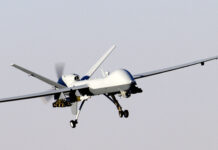
Saudi authorities said a drone strike sparked a limited fire at the U.S. Embassy compound in Riyadh, causing minor material damage. No casualties were immediately reported.
“The US Embassy in Riyadh was attacked by two drones, according to initial assessments. The attack resulted in a limited fire and minor material damage to the building,” the Saudi statement said.

Iran has launched retaliatory strikes targeting energy infrastructure and U.S. military installations in several countries, while Israel said it carried out additional strikes in Tehran against what it described as high-profile government targets.
Israel also signaled plans to expand ground operations in southern Lebanon after the Iran-backed group Hezbollah launched drone attacks against Israeli positions.
Rising Casualties and Cultural Damage
As the conflict moves deeper into its first week, casualties continue to mount. U.S. officials have confirmed that six American service members were killed in the fighting.
Iranian authorities report more than 700 fatalities from strikes on its territory. The Iranian Red Crescent Society has put the death toll at 787, though independent verification remains difficult amid ongoing hostilities.
Tehran has also informed UNESCO that airstrikes damaged two historic sites in the capital — the Grand Bazaar and Golestan Palace, a UNESCO World Heritage site. International bodies have called on all parties to respect protection for cultural and civilian locations under international law.
Energy and Economic Shockwaves
Beyond the battlefield, the conflict is reverberating through global energy and transportation networks, particularly around the Strait of Hormuz — a strategic chokepoint that carries roughly 20 percent of the world’s crude oil supplies.
Shipping traffic through the narrow waterway has slowed significantly as tanker operators assess mounting security risks. Freight rates for very large crude carriers transporting Gulf oil to Asia are fear to surge, reflecting heightened risk premiums and constrained transit.
U.S. forces have destroyed Islamic Revolutionary Guard Corps command and control facilities, Iranian air defense capabilities, missile and drone launch sites, and military airfields during sustained operations. We will continue to take decisive action against imminent threats… pic.twitter.com/0aHEyVHf5e
— U.S. Central Command (@CENTCOM) March 3, 2026
Air travel has also been heavily disrupted. Airspace closures across Iran, Iraq and parts of the Gulf have forced airlines to cancel thousands of flights and reroute long-haul services.
Aviation data show more than 3,400 flight cancellations in a single day at the height of the disruption. Industry estimates suggest prolonged restrictions could cost airlines and airports hundreds of millions of dollars per month.
Oil markets have reacted swiftly. Brent crude has climbed above $80 per barrel, with analysts warning that sustained disruption to Hormuz traffic could push prices beyond $100 per barrel.
Uncertain Outlook
With embassies shuttered, diplomatic staff evacuated, rising casualties and mounting economic strain, the confrontation shows few signs of immediate de-escalation.
President Donald Trump has said U.S. forces are prepared to continue operations beyond the initially projected four-to-five-week timeframe, underscoring the risk of a prolonged regional conflict.
As both military and economic stakes rise, governments across the region remain on high alert, while global markets brace for further volatility tied to developments in one of the world’s most strategically vital corridors.

Ali Imran is a Washington-based journalist, who has worked for leading world news organizations as a correspondent, expert and in editorial positions. He is a published author and poet.