The escalating war in the Middle East is raising alarms about growing civilian suffering, mass displacement across the region, and global economic disruption, the United Nations warned as the war widened.
Eight days after Israeli and U.S. bombing in Iran triggered retaliatory strikes across the region, UN humanitarian officials report major upheaval in Lebanon, the latest hotspot in the expanding war theater.
UN Secretary-General António Guterres warned that the growing hostilities risk spiraling into a wider crisis.
“All the unlawful attacks in the Middle East and beyond are causing tremendous suffering and harm to civilians throughout the region — and pose a grave risk to the global economy, particularly for the most vulnerable people,” Guterres said in a statement.
“The situation could spiral beyond anyone’s control. It is time to stop the fighting and move toward serious diplomatic negotiations. The stakes could not be higher,” he added.
US demands unconditional surrender from Iran
Meanwhile, U.S. President Donald Trump said he would accept nothing less than “unconditional surrender” from Iran as the United States and Israel continue strikes on Iranian targets, prompting continued retaliation from Tehran.
“There will be no deal with Iran except unconditional surrender!” Trump wrote on his Truth Social platform.
Trump Rules Out Iran Deal Without ‘Unconditional Surrender’ as Conflict Escalates
“After that, and the selection of a great and acceptable leader or leaders, we — along with many of our brave allies and partners — will work tirelessly to bring Iran back from the brink of destruction, making it economically bigger, better and stronger than ever before. Iran will have a great future,” he added.
The U.S. and Israeli strikes pounded Iran over the weekend.
Iran rejects surrender, continues to target ME countries
Iran has continued to target several Middle Eastern neighbors in retaliation for the U.S. and Israeli strikes despite the Iranian President’s earlier apologizing attacks. “
Tehran launched waves of ballistic missiles and drones toward several countries including the United Arab Emirates, Bahrain and Kuwait on Sunday.
President Masoud Pezeshkian later clarified that his remarks were misinterpreted and that Iran would respond to attacks carried out from the Middle Easter locations.
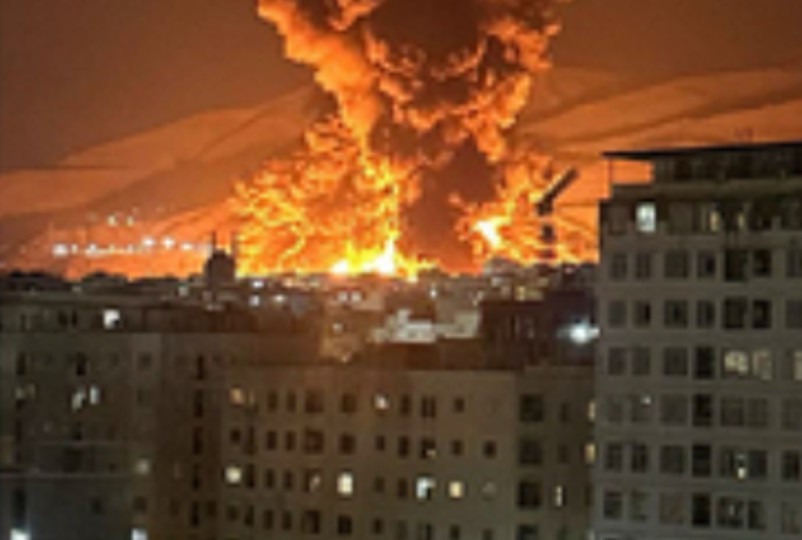
While an attack on an oil depot in Tehran covered the capital’s sky in thick smoke.
Speaking to reporters outside the UN Security Council on Friday evening, Iran’s ambassador to the United Nations, Amir Iravani, said his country was not seeking war or escalation.
Iran’s President Apologizes for Strikes on ME Neighbors as Trump Warns Tehran
“But Iran will never surrender its sovereignty,” he said.
Iravani added that Tehran would take all necessary measures to defend its territory and independence.
He also called on UN member states to condemn what he described as “this criminal war against the Iranian people,” urging the Security Council to act immediately.
“The Council must act now — firmly, clearly and without delay,” he said. “Failure to act will have catastrophic consequences.”
Economic toll grows
The expanding conflict is also beginning to impose mounting economic costs across global transport networks and national budgets.
Airlines have suspended or rerouted thousands of flights as airspace closures across Iran and several Gulf countries force carriers to take longer routes, raising fuel consumption and operating costs. Industry analysts warn that air cargo capacity has tightened sharply and freight rates have surged as aircraft avoid the region’s major flight corridors between Europe and Asia.
Shipping has also been severely disrupted. Major carriers have suspended transit through the Strait of Hormuz — one of the world’s most important maritime chokepoints — forcing vessels to reroute around Africa or delay shipments entirely. The disruption has sharply reduced vessel traffic, left dozens of ships waiting outside the Gulf and triggered war-risk surcharges and higher freight rates across global supply chains.
ME oil, gas exporters could halt production within days, warns Qatar
Energy markets are already reacting. Analysts warn that reduced oil flows through the strait could push crude prices above $100 per barrel, raising fuel and transportation costs worldwide and fueling inflation in many economies.
At the same time, governments involved in the conflict are facing rapidly rising military expenditures as missile defenses, air operations and naval deployments expand, adding further pressure to already strained public finances.
Economists warn that if the conflict drags on, the combined impact of higher energy prices, disrupted trade routes and rising military spending could deliver a significant shock to the global economy.
Lebanon displacement crisis
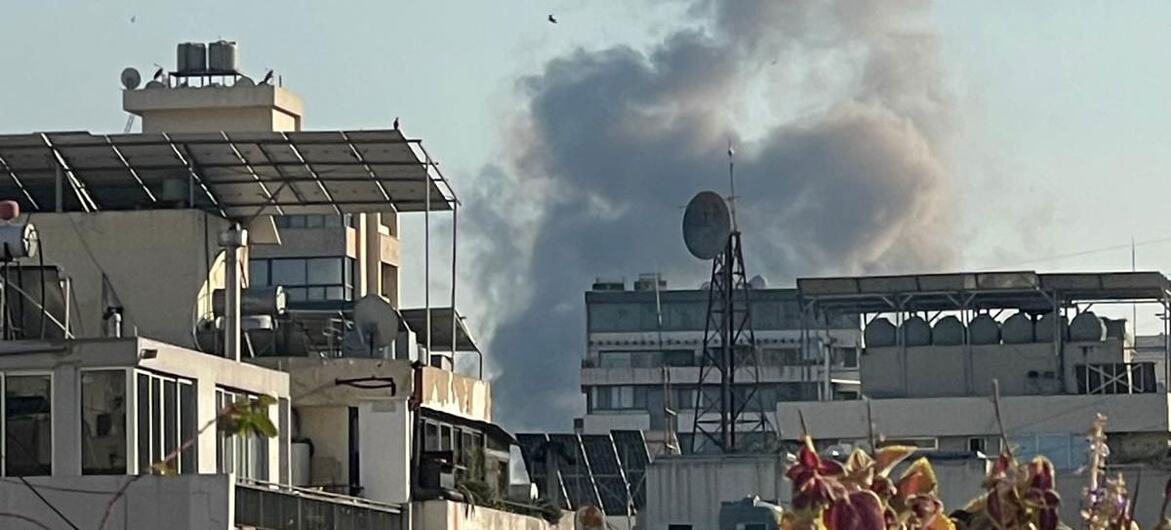
The UN migration agency (IOM) reported worsening conditions in Lebanon as Israeli airstrikes continued overnight in the southern suburbs of Beirut.
Mathieu Luciano, IOM Chief of Mission in Lebanon, described the situation on Thursday evening as a “dramatic deterioration,” noting that many collective shelters have already reached capacity.
“People are being redirected to other shelters, especially in the north, in Al-Qaa, and in safer areas of the Bekaa,” Luciano said.
The UN refugee agency (UNHCR) has now classified the crisis as a major humanitarian emergency requiring an immediate regional response.
Ayaki Ito, UNHCR Director for Emergencies, said the fighting is triggering large-scale population movements across the Middle East and into Southwest Asia.
Nearly 25 million people in affected areas are already refugees, internally displaced persons, or recent returnees, placing further strain on fragile host countries, he warned.
Hundreds of emergency shelters are already full as entire neighborhoods in Beirut have emptied amid ongoing bombardment.
“Israel’s military ground incursions into southern Lebanon, blanket displacement orders for the population in Beirut’s southern suburbs, the Bekaa region and the entire area south of the Litani River, along with continued airstrikes across the country, are bringing more misery and suffering to an already exhausted civilian population,” Ravina Shamdasani, spokesperson for the UN human rights office (OHCHR), told reporters in Geneva on Friday.
Israel says it is hitting Hezbollah targets and has ordered evacuation from many Lebanese areas. Hezbollah is considered an Iranian proxy in the country.
Global humanitarian impact
The conflict is also triggering a major commercial shipping disruption after vessel traffic through the Strait of Hormuz — a critical maritime route south of Iran — was largely halted.
The narrow waterway carries nearly one-fifth of the world’s oil supply as well as vast volumes of global trade.
“All traffic via sea has significantly slowed down,” said Anne Schaefer, IOM Deputy Director for Humanitarian Response and Recovery. She noted the impact is already being felt in ports including Port Sudan.
The disruption is affecting UN relief operations worldwide.
“For Gaza, shelter items, tarps, tents and lamps are all stuck at different stages and unable to arrive,” Schaefer said, warning of “a significant deterioration of the supply chain very, very quickly.”
Meanwhile, Palestinians in the West Bank have also reported Israeli settlers’ inflicting violence on people and neighborhoods.
Aid operations in Sudan are also at risk as the humanitarian situation there continues to worsen.
“With the rainy season approaching, if we do not get supplies in the next six to eight weeks it will be extremely difficult to reach vulnerable populations, especially in Darfur,” she said.
The World Health Organization’s regional director for the Eastern Mediterranean, Dr. Hanan Balkhy, confirmed that medical supplies are also being delayed due to the shipping disruption.
However, she noted that flights from Dubai — a key logistics hub for humanitarian operations — have started to resume.
“We have more than 50 emergency supply requests across 25 countries that have been affected by the current pause,” Balkhy said, including Lebanon, Yemen and Somalia.

Iftikhar Ali is a veteran Pakistani journalist, former president of UN Correspondents Association, and a recipient of the Pride of Performance civil award

Muhammad Luqman is Associate Editor at Views News Now. He writes on wide-ranging issues including economy, South Asia, the Middle East, agriculture, economy and innovation. Luqman has worked some of the leading news organizations and won acclaim for his original and research-based works.