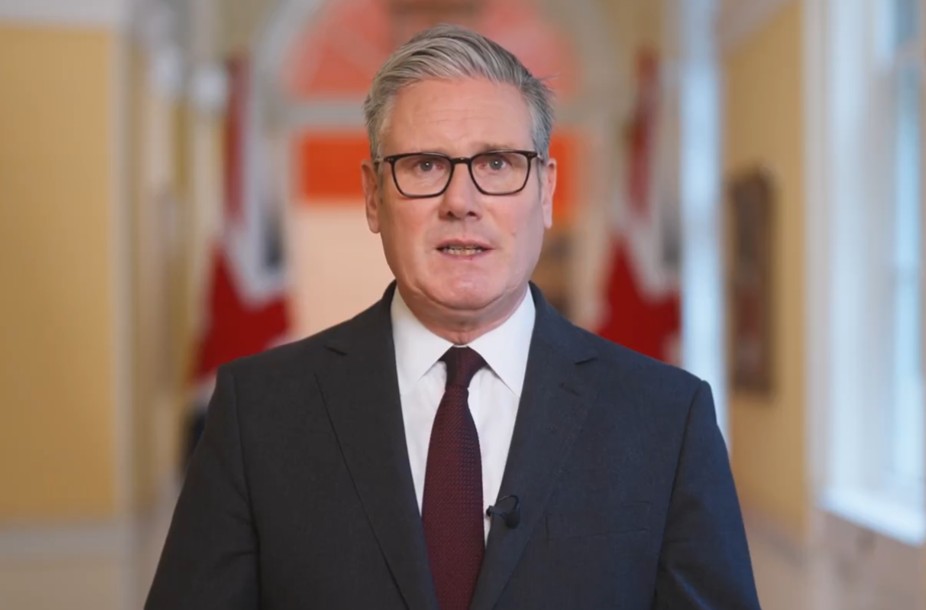
Prime Minister Keir Starmer said on Monday that the United Kingdom is working with international partners on a plan to reopen the Strait of Hormuz, while stressing that his country will not be drawn into a wider war with Iran.
Speaking at a press conference, Starmer said his government’s priority was to de-escalate tensions in the Middle East even as it cooperates with allies to restore safe passage through the strategically vital shipping route, which carries a significant share of global oil supplies.
His remarks came after Donald Trump urged Britain and other countries to deploy naval forces to the Gulf to help protect commercial shipping lanes amid escalating tensions with Iran.
Starmer said the UK already has minehunter vessels operating in the region but emphasized that no final decision had been made on whether to expand Britain’s military presence.
Trump Hopes Countries Will Join Effort to Keep Strait of Hormuz Open as Iran Expands Retaliation
Despite growing international pressure, the prime minister reiterated that Britain would not be dragged into a broader conflict.
The Strait of Hormuz has effectively been closed to oil tankers since hostilities with Iran intensified, sending global oil prices sharply higher. Tehran has warned it could target vessels it believes are linked to the United States, while sea mines pose an additional threat to maritime traffic.
“Ultimately, we have to reopen the Strait of Hormuz to ensure stability in global markets,” Starmer said. “But this is not a simple task. We are working with our allies, including European partners, to develop a collective plan that can restore freedom of navigation in the region as quickly as possible and reduce the economic impact.”
In First Statement, Iran’s Supreme Leader Vows to Block Strait of Hormuz
Starmer said he had also been in discussions with the United States and Gulf nations, stressing that any response must be coordinated among as many partners as possible.
At the same time, the prime minister announced £53 million in support for vulnerable households struggling with surging heating oil costs. Unlike gas and electricity prices, which are capped until the end of June, heating oil prices are not regulated by Ofgem, leaving many consumers exposed to market volatility.
Earlier tensions had emerged between London and Washington after Starmer initially refused to allow the United States to use British bases for offensive strikes against Iran. He later approved their use for defensive operations aimed at intercepting potential Iranian missile attacks.
Trump Says NATO Faces ‘Very Bad’ Future Without Hormuz Help.
Defending his position, Starmer said some critics would have “rushed the UK headlong into this war without the full picture or a plan to get us out.”
“My leadership is about standing firm for the British interest, no matter the pressure,” he added.
Members of the Conservative Party (UK) and Reform UK had earlier criticized the prime minister for refusing to allow US forces to launch offensive operations from British bases at the outset of the conflict.
Starmer acknowledged that the longer-term outlook remains uncertain, saying it is difficult to predict how the conflict and its economic impact could evolve over the next six months. Nevertheless, he said his government’s priority is to reduce tensions and prevent a wider regional war.
Pivotal Moment in Iran War as Oil and Shipping Disruptions Imperil Global Economy
In an interview with the Financial Times, Trump warned that the future of the NATO alliance could be at risk if member states fail to provide greater support. He repeated his call for countries that benefit from trade through the Strait of Hormuz—including the UK, China, France, Japan and South Korea—to contribute naval forces to help secure the vital waterway.
Starmer said any mission to safeguard the strait would not operate under NATO command but instead through what he described as “an alliance of partners.”
When asked whether he was rejecting Trump’s request to deploy the Royal Navy, Starmer said the government was still reviewing its options, noting that British mine-hunting systems are already operating in the area.
Despite the differences over strategy, the prime minister stressed that Britain and the United States remain close allies.
“It is for me to act in what I consider to be the best interests of Britain,” he said.

Muhammad Luqman is Associate Editor at Views News Now. He writes on wide-ranging issues including economy, South Asia, the Middle East, agriculture, economy and innovation. Luqman has worked some of the leading news organizations and won acclaim for his original and research-based works.