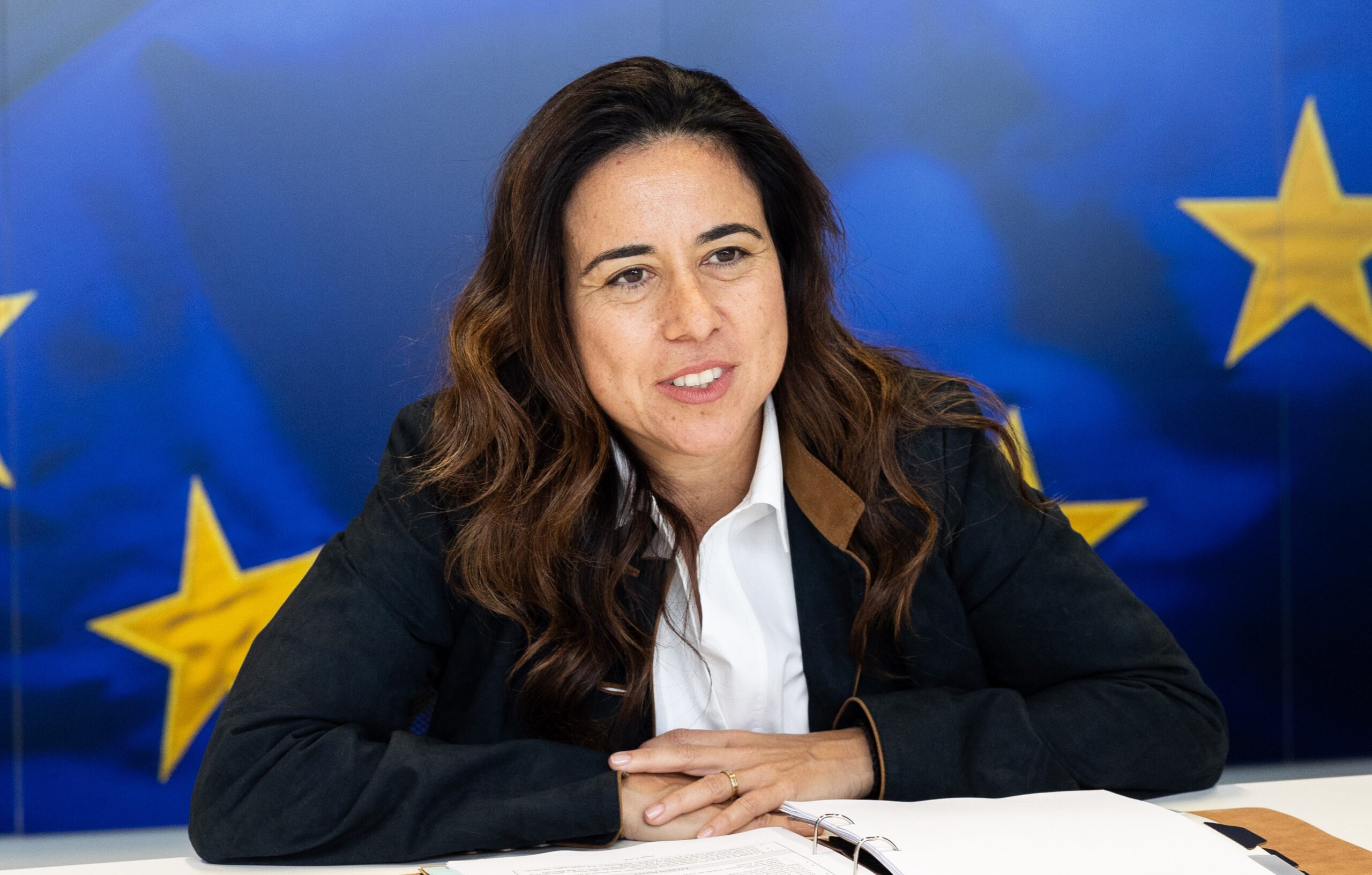
After weeks of uncertainty over the selection of the next United Nations secretary-general, the United Arab Emirates’ veteran diplomat Lana Zaki Nusseibeh has emerged as a potential compromise candidate in an increasingly competitive race to lead the world body.
Her candidacy comes amid growing difficulty in building consensus around the existing contenders, several of whom have reportedly struggled to secure sufficient support in informal polls conducted by the UN Security Council.
Against this backdrop, Nusseibeh’s diplomatic credentials, extensive UN experience and emphasis on practical conflict resolution could strengthen her appeal among council members seeking a viable alternative.
Formally nominated by the UAE, Nusseibeh is seeking to become the 10th secretary-general of the United Nations, succeeding António Guterres, whose second five-year term ends on December 31, 2026. The incoming secretary-general is scheduled to take office on January 1, 2027.
I am standing to be Secretary-General because I believe this is a moment to act with greater urgency: to act earlier, bring people together across difference, and drive the work forward until it produces concrete results. That is how we rebuild trust in the United Nations and ensure it delivers meaningful change for the people it exists to serve.
My vision: https://t.co/G449B8vaTI
— Lana Nusseibeh (@Lana_Nusseibeh) October 22, 2026
Nusseibeh, who is of Palestinian descent, joins a field of candidates that includes Rebeca Grynspan of Costa Rica, Carolyn Rodrigues-Birkett of Guyana, Rafael Mariano Grossi of Argentina, Ivonne A-Baki of Ecuador and Lebanon, María Fernanda Espinosa Garcés of Ecuador, and Olara Otunnu of Uganda.
Her entry into the contest follows the Security Council’s latest informal straw poll on October 16, part of the process through which members assess contenders before recommending a candidate to the General Assembly. Nusseibeh has taken a leave of absence from her government responsibilities to focus on her campaign.
A case for pragmatic diplomacy
A central feature of Nusseibeh’s campaign is her emphasis on what might be described as “quiet diplomacy” — pursuing achievable agreements through sustained engagement rather than relying exclusively on high-profile diplomatic initiatives.
In her vision statement, A United Nations for the Next Eighty Years, she places international peace and security at the heart of her agenda, arguing that the UN must intervene earlier to prevent disputes from escalating into full-scale conflicts.
Her approach prioritizes practical measures, including local ceasefires, prisoner exchanges and humanitarian corridors, to reduce suffering and create conditions for wider political settlements. She also advocates continued diplomatic engagement and mechanisms to monitor whether agreements are implemented.
UPDATE: Lana Nusseibeh, senior UAE diplomat, enters race for next UN Secretary General. If elected, she’d be
– first woman
– first of Palestinian descent
– second Arab in position. More https://t.co/G4YxCGPiGR— Joyce Karam (@Joyce_Karam) October 21, 2026
Nusseibeh believes the UN should work more closely with regional organizations, local stakeholders and mediators trusted by conflicting parties. Rather than insisting on directing every peace initiative, she argues, the organization should empower those best positioned to deliver results.
Explaining her decision to seek the top UN post, she said: “I am standing to be secretary-general because I believe this is a moment to act with greater urgency: to act earlier, bring people together across differences, and drive the work forward until it produces concrete results.”
She has also warned that the widening gap between the UN’s commitments and its delivery has eroded public trust and weakened its capacity to respond effectively to global challenges.
“I wish to offer myself to this office as I would serve it: speaking frankly with every government and answering to none,” she said.
An agenda for UN reform
Beyond conflict prevention, Nusseibeh has outlined an ambitious program to make the United Nations more efficient, transparent and accountable.
She proposes requiring major Secretariat programs to demonstrate results in relation to their costs, eliminating duplication and directing leadership attention and resources towards areas of greatest need.
Her reform agenda also calls for greater decision-making authority for staff working in the field, clearer institutional priorities and stronger accountability across the UN’s peace and security, development and human rights operations.
On development, she advocates aligning international cooperation more closely with national priorities, encouraging job creation and pursuing fairer approaches to mounting debt challenges. She also supports stronger partnerships with philanthropic institutions and the private sector.
On human rights, Nusseibeh maintains that international law and universal human rights standards must be applied consistently, without double standards.
Her proposed agenda extends to emerging technologies and climate change. On artificial intelligence and biotechnology, she supports practical international cooperation and voluntary mechanisms for reporting incidents, alongside greater participation by countries that use these technologies but do not develop them.
She also stresses the need to help vulnerable countries anticipate climate-related risks and strengthen their resilience, particularly in fragile and conflict-affected settings.
Extensive diplomatic experience
Nusseibeh brings considerable diplomatic experience to the contest. She served as the UAE’s permanent representative to the United Nations from 2013 to 2024, helping guide the country’s engagement with the organization, including during its 2022–2023 term on the Security Council. During that period, she twice held the council’s rotating presidency.
Her previous UN responsibilities also included serving as a vice-president of the General Assembly and president of the Executive Board of UN Women. She has additionally served as the UAE’s envoy to the European Union.
Her long involvement in multilateral diplomacy could prove an asset in a selection process shaped by competing geopolitical interests and the need to secure support across the Security Council’s permanent and elected members.
If elected, Nusseibeh would make history as the first woman to serve as UN secretary-general. She would also be the second secretary-general from the Middle East and North Africa, following Egypt’s Boutros Boutros-Ghali, who held the post from 1992 to 1996.
Her candidacy therefore carries both diplomatic and symbolic significance, coming amid renewed calls for greater gender representation in international leadership and a more effective multilateral system.
A challenging path to the top job
The secretary-general selection process places the Security Council at the center of the decision. The council recommends a candidate to the General Assembly, which formally appoints the next head of the organization.
The five permanent members — China, France, Russia, the United Kingdom and the United States — wield particular influence because any one of them can block a recommendation through a veto.
Nusseibeh’s emphasis on conflict prevention, incremental agreements and institutional reform may offer an alternative to candidates whose prospects have been complicated by geopolitical divisions.
The next secretary-general will inherit an organization confronting mounting geopolitical tensions, protracted humanitarian crises, climate-related challenges and growing demands for institutional reform.

Muhammad Luqman is Associate Editor at Views News Now. He writes on wide-ranging issues including economy, South Asia, the Middle East, agriculture, economy and innovation. Luqman has worked some of the leading news organizations and won acclaim for his original and research-based works.