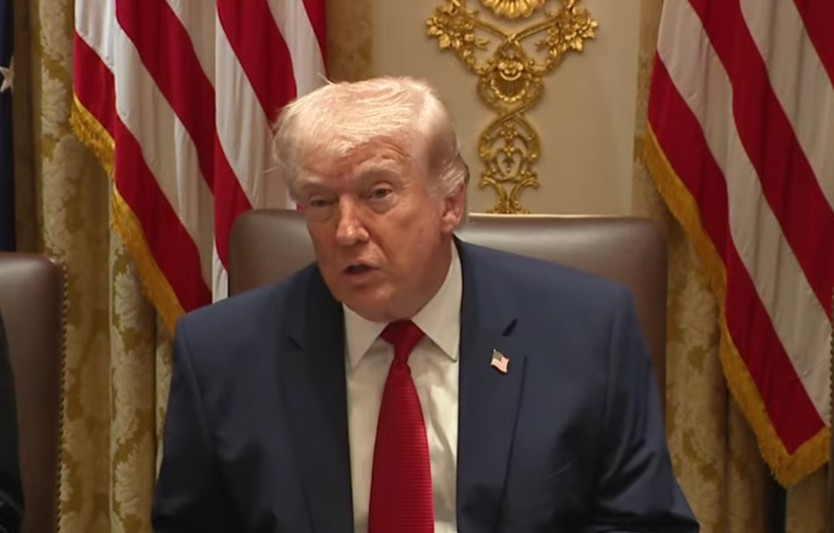
President Donald Trump met with senior aides for two hours at the White House on Friday but did not m a make a final decision on whether to proceed with a proposed framework aimed at ending the conflict involving Iran.
The deliberations ended without a conclusive determination. The White House did not immediately explain why the president chose to defer a decision.
Earlier in the day, Trump suggested in a post on Truth Social that he was nearing a decision on a preliminary agreement that negotiators have been discussing as part of efforts to resolve the conflict.
The president also indicated a lifting of the U.S. naval blockade of Iranian ports.
Trump: Iran must agree that they will never have a Nuclear Weapon or Bomb. The Hormuz Strait must be immediately open, no tolls, for unrestricted shipping traffic, in both directions pic.twitter.com/WcAm4GX098
— Views&News (@ViewsNewsMag) May 29, 2026
Earlier, Axios reported, citing U.S. officials, that negotiators had tentatively agreed to a proposed 60-day cease-fire framework.
During that period, the two sides would seek to address contentious issues, including Iran’s nuclear program and broader regional security concerns.
The U.S.-Iran negotiations have involved a mix of direct and indirect contacts aimed at securing a temporary cessation of hostilities while creating space for broader discussions on Iran’s nuclear activities, regional security concerns and maritime stability.
Diplomats familiar with the talks say the proposed framework is intended to serve as a confidence-building measure, allowing both sides to pursue longer-term arrangements without the immediate pressure of escalating military action.
Pakistan has emerged as an important diplomatic interlocutor during the crisis, leveraging its ties with Washington, Tehran and key Gulf capitals to encourage dialogue and de-escalation.
Islamabad has consistently advocated a negotiated settlement, warning that a prolonged conflict could destabilize the wider region and undermine fragile diplomatic efforts aimed at restoring security in the Middle East.
The conflict has heightened concerns across global energy and shipping markets, particularly because of Iran’s strategic position along key maritime routes that handle a significant share of the world’s oil and liquefied natural gas trade.
Analysts have warned that any prolonged disruption could trigger higher energy prices, increase transportation costs and exacerbate inflationary pressures in major economies.
Regional governments and international stakeholders have therefore pushed for a diplomatic resolution, fearing that further escalation could disrupt commercial shipping, unsettle financial markets and complicate global supply chains.
Pakistan, which maintains relations with both Iran and the United States, has supported efforts to reduce tensions, arguing that regional stability remains critical for trade, investment and energy security across Asia and the Middle East.
The political backdrop also remains important even as the president has publicly dismissed suggestions that the approaching midterm elections are influencing his approach to the negotiations.
Trump said earlier this week that he did not care about the political implications of the talks and would not be pressured into an agreement for electoral reasons.
Nevertheless, the emerging framework could be a major issue for the Republican Party ahead of the November midterms as some conservative lawmakers and foreign-policy hawks want a tougher agreement that would more fully align with U.S. security objectives.

Iftikhar Ali is a veteran Pakistani journalist, former president of UN Correspondents Association, and a recipient of the Pride of Performance civil award