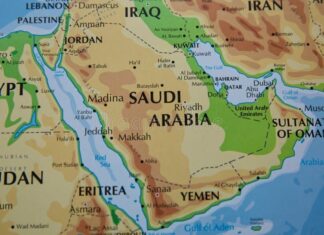
President Donald Trump has outlined U.S. preferences for a potential final agreement with Iran, demanding firm commitments that Tehran permanently abandon any nuclear weapons ambitions while immediately restoring unrestricted passage through the strategically vital Strait of Hormuz.
The president convened a meeting with senior advisers to make what he described as a “final determination” on a possible agreement aimed at ending the three-month-old war.
The latest reports suggest U.S. and Iranian negotiators have made significant progress toward extending a fragile ceasefire framework and launching broader negotiations on Tehran’s nuclear program and regional security issues.
Iran’s Nuclear Program: Zero Tolerance for Weapons
At the core of Trump’s demands is a requirement that Iran formally commit never to develop or possess a nuclear weapon. The position aligns with the administration’s long-standing objective, repeatedly emphasized during both direct and indirect negotiations mediated in part by Pakistan since April.
In a Truth Social post on Friday, Trump referred to the remnants of Iran’s enriched uranium stockpile — which he has previously described as “nuclear dust” — claiming the material was buried deep underground beneath mountains destabilized by powerful U.S. B-2 bomber strikes carried out in June 2025.
Trump: Iran must agree that they will never have a Nuclear Weapon or Bomb. The Hormuz Strait must be immediately open, no tolls, for unrestricted shipping traffic, in both directions pic.twitter.com/WcAm4GX098
— Views&News (@ViewsNewsMag) May 29, 2026
According to Trump, the material would eventually be recovered by the United States, though he noted that China was the only other country with the necessary heavy mechanical capability to undertake such an operation. He suggested the process would take place in coordination with Iran and the International Atomic Energy Agency (IAEA).
Trump said the recovered nuclear material would ultimately be destroyed.
Full Reopening of the Strait of Hormuz
Trump also insisted that the Strait of Hormuz be fully reopened immediately, with no tolls or restrictions imposed on commercial shipping traffic transiting the waterway.
He said the United States had already removed numerous naval mines using advanced underwater mine-clearing systems and called on Iran to eliminate any remaining mines, which he suggested were limited in number.
No Immediate Sanctions Relief Rightaway
Emphasizing fiscal caution, Trump said no financial transfers or sanctions relief measures would be implemented “until further notice.”
The sequencing reflects a broader negotiating approach in which core security and nuclear issues take precedence over economic concessions and financial arrangements.
The president also suggested that several secondary issues had already been resolved as part of what administration officials have described as a “largely negotiated” framework.
Trump was expected to convene additional discussions in the White House Situation Room as the administration weighed whether to formally endorse the emerging agreement.
The Context
The current negotiations stem from a conflict that escalated in late February 2026 following coordinated U.S.-Israeli strikes on Iranian nuclear and military facilities.
Trump has repeatedly credited U.S. B-2 bomber operations with preventing what he describes as an imminent Iranian nuclear breakout.
Tensions have persisted despite the ceasefire process, with recent U.S. defensive strikes targeting missile sites and alleged naval mining operations, while Iran has responded with ballistic missile launches toward Kuwait and attacks on regional military facilities.
Even so, indirect negotiations facilitated through intermediaries including Pakistan and Qatar have continued to advance.
Neither side has formally approved the emerging framework, with final authorization still pending from both Trump and Iran’s Supreme Leader Mojtaba Khamenei.

Kiran Asim is a writer who covers the U.S., Europe, South Asia, and the Middle East. Her reports and analyses look at the geostrategic issues and contemporary developments and their economic and political implications. She also writes about society and education.