Every October, a few people wake up to find that the world now knows their name. They’ve won a Nobel Prize — one of the most powerful honors on Earth.
Redemption
But behind the glittering medals and emotional speeches lies a story full of mistakes, secrets, and surprises that most people have never heard of. The Nobel story is proof that even life’s biggest errors can spark the brightest ideas.
In 1888, a French newspaper made a huge blunder — it accidentally published Alfred Nobel’s obituary while he was still alive. The headline called him “The Merchant of Death,” mocking his invention of dynamite.
Shocked and heartbroken, Nobel asked himself how he would be remembered. The answer changed history. He rewrote his will — leaving his fortune to reward people who made the world better, not worse. And that’s how the Nobel Prize was born: out of regret, reflection, and a powerful wish for redemption.
Hungarian author László Krasznahorkai wins 2025 Nobel Prize in literature
Here are some of the most fascinating — and little-known — facts about the Nobel legacy:
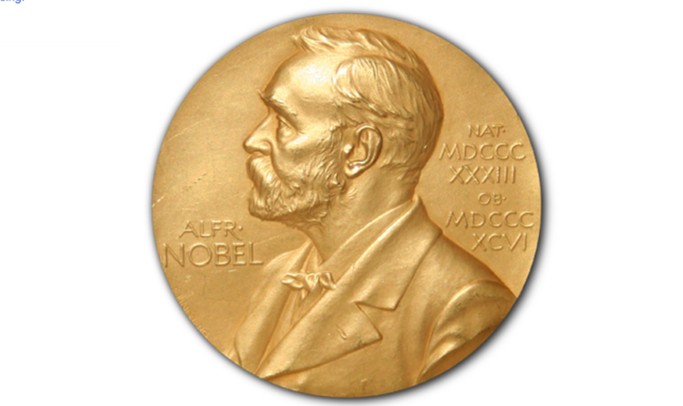
Real gold, real weight. Each Nobel medal is made of 18-carat gold and weighs around 200 grams. During World War II, scientists melted medals to hide them from the Nazis.
One prize isn’t really a “Nobel.” The Economics Prize was added later by Sweden’s central bank in 1968 — it wasn’t part of Nobel’s original will.
Only four people have ever won twice — Marie Curie, Linus Pauling, John Bardeen, and Frederick Sanger. No one has ever managed three.
The youngest winner was just 17 — Malala Yousafzai became the youngest laureate in 2014 when she won the Peace Prize.
The Peace Prize stands apart — unlike all the others, it’s awarded in Norway, not Sweden, by Nobel’s own choice.
The nominations are locked away for 50 years — meaning the world won’t know who almost won until decades later.
Some winners don’t even know right away — every year, a few laureates find out by surprise, sometimes while asleep, traveling, or even hiking in the mountains.
The 2025 Nobel Peace Prize generated interest for who might win.
As fall marked a new season, the world turned its gaze toward Oslo, where the Norwegian Nobel Committee announced the 2025 Peace Prize winner.
This year’s race became particularly exciting — with 338 nominations, including both individuals and organizations that have made meaningful contributions to peace, justice, and human rights.
María Machado wins Nobel Peace Prize for fight for democracy in Venezuela
The most talked-about predictions for this year’s Nobel Peace Prize included:
- Committee to Protect Journalists (CPJ) — Recognized for defending press freedom globally, often at great personal risk.
- Sudan’s Emergency Response Rooms — Grassroots humanitarian networks saving lives amid the ongoing Sudanese conflict.
- International Criminal Court (ICC) — Honored for upholding international justice and accountability in times of war.
- Ukrainian and Russian peace advocates — Symbolizing reconciliation, dialogue, and hope in a region torn by war.
- Donald J. Trump — U.S. President and a global figure who has been formally nominated for his diplomatic efforts and commitment to fostering dialogue and peace across regions and resolution to military conflicts.
This year’s Nobel Peace Prize went to Venezuelan opposition leader and human rights advocate María Corina Machado for her “tireless work promoting democratic rights” and for leading efforts toward a peaceful transition from dictatorship to democracy.
Nobel Prize has now become a tradition, recognizing talent and contribution in a variety of fields. However, the prize has also courted controversy on numerous occasions. For example, the prize in literature remains highly contested. Similarly, the peace prize has also proved to be controversial on many occasions.
However, the last one hundred years awards show that the Nobel Prize was never meant to be perfect — it was meant to be redemption but also a recognition of talent. A story born from a feeling guilt became a celebration of hope, discovery, and human brilliance.
Follow for more: Twitter (X) | Facebook | Instagram | LinkeIn

Imran Igra is a political analyst and international affairs strategist based in Washington, D.C. He is the president of the Overseas Pakistanis Society and founder of Horus Strategies.