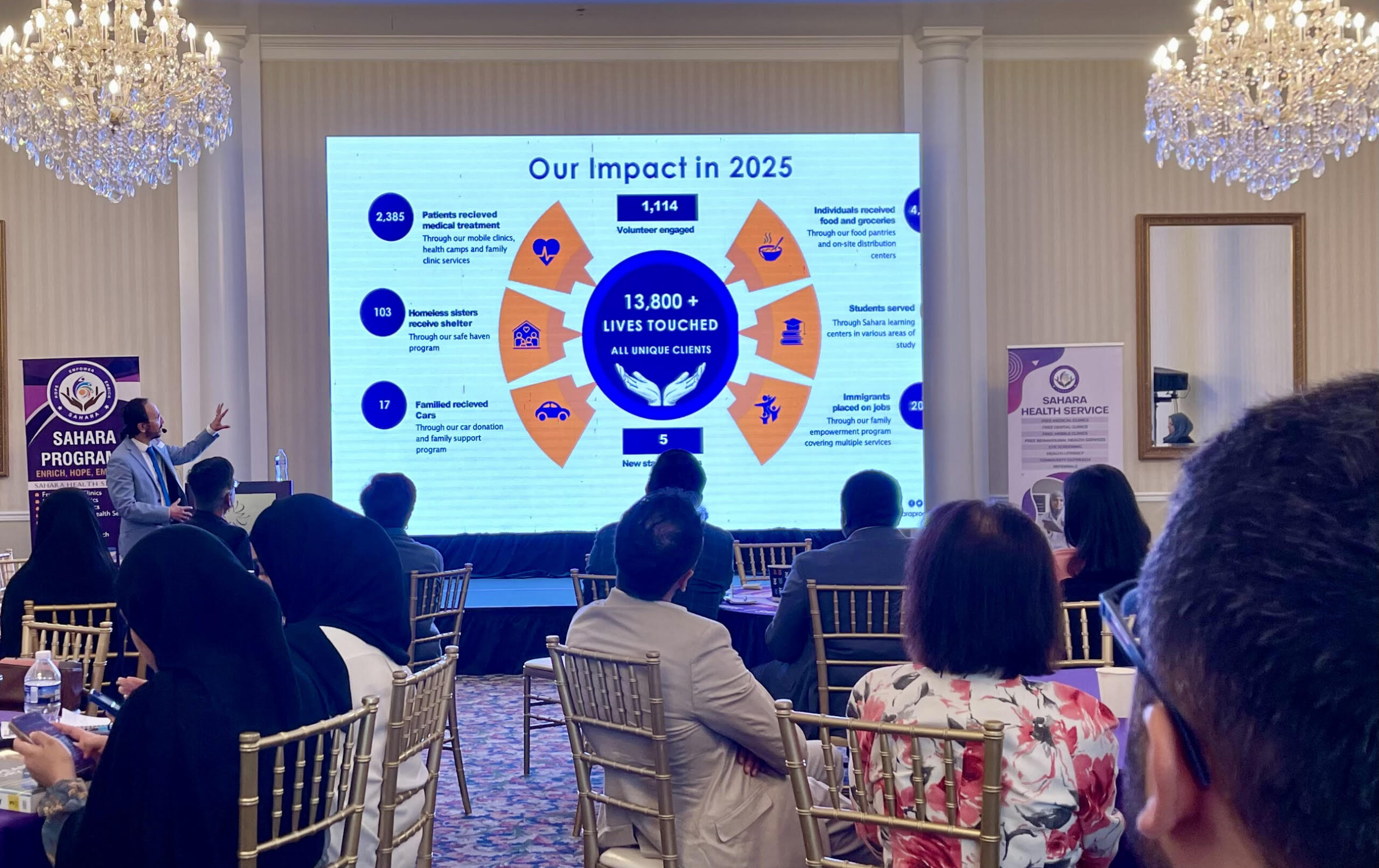
A community organization, Sahara, went to the heart of human health in modern times as it hosted a conference on mental health, bringing together medical doctors, faith leaders, and psychologists to explore ways to heal people beyond medication.
“We are treating diseases effectively, but not always the distress that drives them,” said Dr. Naved Khan, Executive Director and co-founder of Sahara.
Dr. Khan was among several speakers and panelists who emphasized the importance of addressing mental health issues, noting that while medication remains central to managing biological illness, lasting wellness depends on addressing emotional health—particularly in an era marked by trauma and economic strain.
Sahara, which means “support,” has expanded its services in recent years, providing a range of social and medical assistance under the motto:
“Our job is to empower underserved individuals, families, and communities through comprehensive and compassionate services that prioritize their well-being, safety, and personal growth,” said Fazal Mumtaz, the organization’s Chief Operating Officer.
Prominent cardiologist Dr. Ahtisham Shakoor shared their insights on addressing the epidemic of heart disease and its prevention.
Dr. Shakoor, who established Chandler Cardiology Associates, spoke about diet, lifestyle, and habits that can help prevent coronary conditions and maintain heart health.
“We are proud to be part of Sahara’s efforts. We provide guidance, support, and patient care, and host free clinics,” he said.
His wife, Dr. Sumbal Shakoor, a pediatrician, also volunteers at Sahara events, offering healthcare advice to families.
Dr. Rashid Chotani, a noted physician-scientist, spoke about the future of public health, focusing on research, preparedness, and community impact.
Dr. Chotani, whose company Naviums works to advance cultural competence in healthcare delivery, highlighted behavioral health challenges faced by immigrant children.
“There are multiple factors affecting the behavioral health of children in minority and immigrant communities. They come from different cultural backgrounds but are often expected to adapt quickly. This can make adjustment difficult. We focus on raising awareness and providing training to address such challenges,” he said.
Conference attendees also heard about spiritual approaches to healing.
Imam Naeem Baig explained how faith-based practices can support mental health treatment, particularly for individuals dealing with personal and collective pressures.
He noted that Muslim communities increasingly face challenges linked to migration, Islamophobia, post-traumatic stress, and socioeconomic pressures, although data on these trends remains limited. For example, he said more than 15% of men report anxiety, while young people also experience varying levels of stress.
However, he emphasized that practices such as gratitude, meditation, and strong family support systems can play a significant role in healing. He added that the American Psychiatric Association has found that about 60% of adults consider faith important to their mental health.

Dr. Morad Chughtai, a prominent young Orthopedic Surgeon with more than 200 published papers, presented a global snapshot of how leading healthcare systems – such as the UK, Canada, Taiwan, Japan, and Singapore – use technology to improve affordability, access, and care coordination.
He highlighted practical innovations like national digital health infrastructure, streamlined eligibility/claims workflows, standardized pricing frameworks, and data-driven care pathways that reduce friction for both patients and providers.
According to COO Fazal Mumtaz, Sahara’s services have reached more than 13,800 individuals across the United States, with each case reflecting unique needs. Services include medical care, shelter for homeless women, transportation support for families, food assistance, educational support for students, and job placement for immigrants.
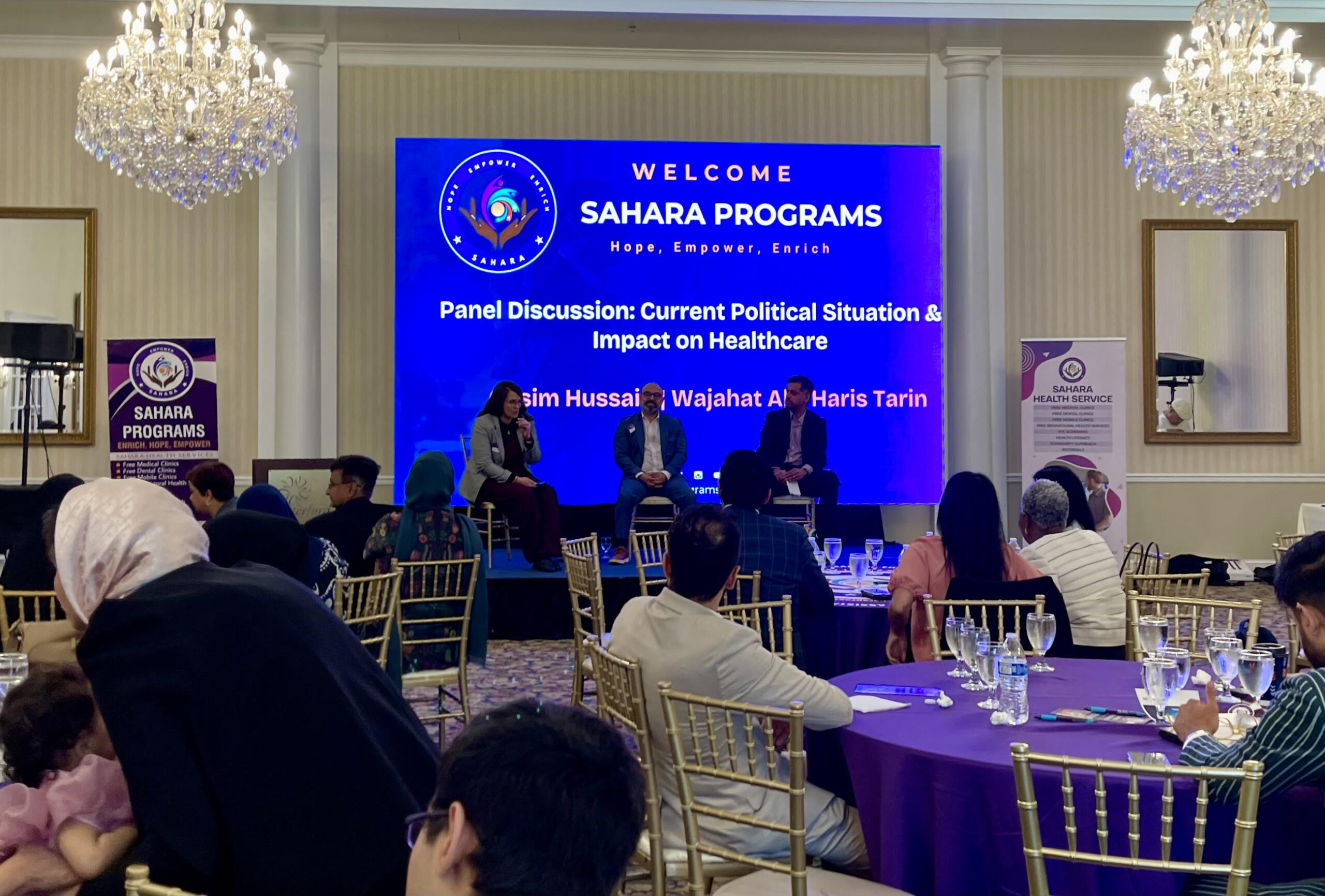
A panel discussion on the current political climate and its impact on healthcare featured entrepreneur Qasim Hussain and author Wajahat Ali, who raised concerns about policies affecting vaccines and declining research opportunities, warning of increased risks to children’s health.
The conference also highlighted issues affecting women. Dr. Nukhba Zia, who holds a PhD, spoke about translating medical research into meaningful community impact, while Sadaf Khwaja discussed the biology of trauma and how integrated tools can help address stress and trauma patterns.

Ali Imran is a Washington-based journalist, who has worked for leading world news organizations as a correspondent, expert and in editorial positions. He is a published author and poet.