As Houthi forces continue to threaten Saudi infrastructure, energy facilities, and airports, attention has increasingly turned to the military infrastructure that may help them sustain operations despite advanced air defenses and repeated aerial strikes.
Among the questions confronting Saudi Arabia and its allies is how much of the group’s military capability is concealed beneath Yemen’s mountainous terrain—and how difficult it may be to dismantle.
In northern Yemen, a network of underground installations, mountain storage sites, and concealed facilities has emerged as a central part of the conflict’s military landscape.
According to Houthis and Saudi-led coalition officials, these sites serve a range of military purposes, from weapons storage to missile and drone production.
Their reported expansion raises a broader question: how has underground infrastructure become part of the Houthis’ strategy for sustaining a prolonged conflict?
🔴 Coalition says Houthis are using tunnels and mountain cavities to launch rockets.
🔴 It says it has the capabilities needed to counter the threats.
🔴 Coalition reaffirms support for Yemen’s internationally recognized government and armed forces.
🔴 It calls on the Houthis to immediately halt attacks on civilian infrastructure. https://t.co/TlC4Ihuit7— Arab News (@arabnews) October 15, 2026
A Legacy of Underground Warfare
Yemen’s underground military infrastructure predates the Houthis’ rise to power. During his presidency, Ali Abdullah Saleh oversaw the construction of underground installations intended to protect ballistic missiles and other strategic weapons, including facilities in and around Sana’a.
The Houthis took control of Yemen’s capital in 2014 and later consolidated their hold over much of the country’s north. Saleh was killed in December 2017 after his alliance with the Houthis collapsed and he attempted to realign with the Saudi-led coalition. The extent to which existing installations were subsequently incorporated into the Houthis’ military infrastructure remains difficult to establish independently.
Houthi forces have encircled the city of Taiz — an important battlefront in Yemen’s reignited civil war — by cutting off its main road south to Aden, causing widespread displacement and worsening a humanitarian crisis. Here’s what you need to know: https://t.co/mTyyTVpZpr https://t.co/0k7Z2icYKp
— Reuters (@Reuters) October 16, 2026
Citing Houthi sources, Yemen Monitor reported in a piece in October 2024 that group had renovated and expanded existing sites while establishing additional underground warehouses and production facilities. They described installations used for assembling or manufacturing ballistic missiles and drones, producing explosives, storing conventional and advanced weapons, and housing command-and-control functions. They also described facilities associated with unmanned boats and naval mines.
The reported development of this infrastructure reflects the changing demands of the conflict. During the six rounds of fighting between the Houthis and Yemen’s government from 2004 to 2009, concealment offered a means of protecting personnel and equipment against a stronger opponent. In subsequent years, the group’s military requirements expanded alongside the conflict itself.
Following the April 2022 truce, Houthi sources said, construction and expansion of underground facilities accelerated. Some sites that had previously served more limited functions were reportedly developed into larger military complexes. The scale of this transformation, however, remains difficult to assess without independent access to the facilities.
The Geography of Concealment
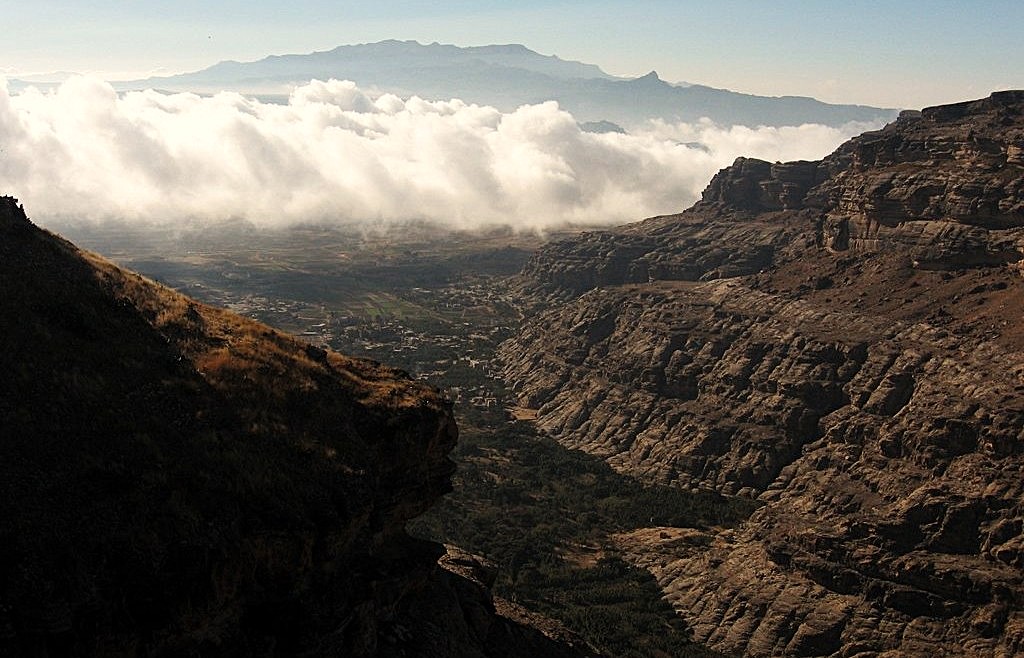
The mountainous terrain of northern Yemen offers natural protection and complicates efforts to monitor military activity. Coalition officials have identified Sana’a, Saada, and Amran as important concentrations of Houthi mountain storage facilities.
According to accounts cited by Yemen Monitor, the group has also developed access roads and supporting infrastructure to connect concealed sites with its wider military network. The extent to which these routes and installations evade aerial surveillance is not independently established, and concealment should not be confused with complete immunity from detection.
The strategic significance of the mountain facilities was underscored by Major General Turki Al-Maliki, spokesperson for the Saudi-led coalition this week. He accused the Houthis of deliberately concentrating weapons storage sites in Sana’a, Saada, and Amran and using them to support attacks within Yemen and against neighboring countries.
Houthis hammer pro-Saudi advance at Bab el-Mandeb.
Source: combat footage circulating today via @IranObserver0
Saudi-backed Yemeni forces pushed toward the strait again this week, trying to claw back ground the Houthis seized last month. The video shows columns moving across open desert and roads under sustained fire from elevated positions—vehicles hit, smoke columns rising, and units scattering.
Classic mountain-defense advantage for the Houthis: they sit higher, have the ranges dialed in, and force the attacker to cross exposed ground. https://t.co/A54zajt0hJ
— Global Defense Analysis (@GlobalDefenseAn) October 14, 2026
Al-Maliki’s remarks form part of the coalition’s broader account of the threat posed by Houthi missile and drone capabilities. While the locations and military functions described by coalition officials offer an indication of their concerns, the precise scale of the underground network and the extent of its operational role remain difficult to verify independently.
The Iranian Connection
The Houthis’ growing missile and drone capabilities have intensified scrutiny of their relationship with Iran. Governments and international monitoring bodies have reported evidence of Iranian-origin weapons components and technology linked to the group’s arsenal. Tehran has denied supplying the Houthis with weapons, while allegations of assistance have remained a persistent feature of the wider regional confrontation.
The technology associated with the Houthi arsenal includes ballistic and cruise missiles, unmanned aerial vehicles, and systems used in attacks on maritime traffic. Some of the group’s weapons have also been employed in attacks directed at Israel and commercial shipping in the Red Sea, widening the conflict’s regional consequences.
Saudi Arabia has publicly accused Iran of encouraging Yemen’s Houthis to attack the kingdom, saying it violates a 2023 diplomatic deal it reached with Tehran
https://t.co/55UGRqram1
— Middle East Eye (@MiddleEastEye) October 17, 2026
Al-Maliki has accused the Houthis of obtaining advanced military technology with assistance from regional actors. He has argued that this support has enabled the group to develop capabilities that extend beyond those traditionally associated with a non-state armed movement.
The extent of Iran’s contribution to individual weapons systems, however, varies by system and remains a matter requiring evidence-specific assessment. The presence of Iranian-origin components does not, on its own, establish the provenance of every weapon or the degree of direct Iranian involvement in its production.
The Scale of the Arsenal
Figures released by the Saudi-led coalition illustrate the scale of the threat it attributes to Houthi forces. According to Yemen Monitor’s report of Al-Maliki’s October 15, 2026, briefing, the coalition said the Houthis had launched 1,104 ballistic missiles and 1,135 unmanned aerial vehicles since the beginning of its military operations on March 26, 2015.
The coalition also cited 118 unmanned boats and 278 naval mines. These figures should be understood as the coalition’s cumulative estimates; they do not independently establish how many weapons remain in the Houthi arsenal or how many were manufactured, stored, or launched from underground installations.
Separate coalition figures covering the period after the April 2022 truce indicate continued military activity. The group was reported to have launched ballistic missiles, operated drones, and fired thousands of additional projectiles during that period. The coalition also reported incidents involving the placement of mines.
These figures point to the breadth of the military challenge facing Saudi Arabia and its partners. But they do not, by themselves, establish that every weapon was assembled or stored underground. Determining the contribution of subterranean facilities to the group’s operational capacity requires evidence linking particular weapons, production sites, storage locations, and launch activity.
The Campaign Against Mountain Facilities
Underground military infrastructure has become a focus of efforts to weaken Houthi capabilities. The United States conducted strikes against Houthi-controlled territory in 2024, including attacks that officials said targeted underground military sites. The use of specialized aircraft and weapons against fortified targets has highlighted the difficulty of reaching installations designed to withstand attack.
This week Saudi-led coalition has also reported strikes against mountain storage facilities and launch platforms. In its October 15 briefing, Al-Maliki said coalition forces had destroyed 127 warehouses in mountainous areas, alongside additional launch facilities.
BREAKING:
Military Source: The coalition bombed a vast network of tunnels in #Nihm District, east of #Sana’a, extending for several kilometers and containing “assembly workshops,” ballistic missile depots, and drone storage facilities https://t.co/P4QMMPeagH— Yemen Monitor-EN (@YeMonitorEN) October 10, 2026
He described an ongoing campaign intended to degrade the group’s weapons infrastructure and target personnel involved in operating and maintaining its capabilities. According to the coalition, these efforts draw on continuous intelligence collection and operations against both fixed and mobile military assets.
The reported destruction of facilities does not necessarily mean that the underlying military network has been eliminated. Assessing the results of such strikes requires information about the sites affected, the equipment lost, the extent of any damage, and the group’s ability to replace or relocate its capabilities. Without independently verified assessments, the long-term effect of the campaign remains uncertain.
The Human Cost of the Escalation
The confrontation has also brought renewed danger to civilians and civilian infrastructure in Saudi Arabia. Coalition spokesperson Al-Maliki has accused the Houthis of repeatedly targeting airports and other critical facilities across the Kingdom.
According to the coalition’s October 15 account, Houthi attacks on Saudi airports had caused 19 deaths and injured 364 people. Those cumulative figures are attributable to the coalition and should be distinguished from independently confirmed casualty totals.
A particularly serious incident occurred at King Khalid International Airport in Riyadh on October 10, 2026. Saudi authorities reported that 12 people were killed and 309 injured. The attack followed other incidents involving Saudi airports during the same month, amid a broader escalation of hostilities.
The reported attacks have raised concerns about the safety of passengers, airport workers, and other civilians using essential transport infrastructure. They have also intensified diplomatic and military pressure for a response.
Al-Maliki condemned the attacks, describing them as deliberate assaults on civilian facilities and warning of the risks posed to travelers. His statements reflect the coalition’s position that the targeting of airports and other civilian infrastructure represents a serious escalation in the conflict.
The legal assessment of individual incidents depends on the circumstances of each attack, including the target, the weapon used, and the available evidence. Nevertheless, attacks that deliberately target civilians or civilian objects are prohibited under international humanitarian law.
A Conflict Without a Clear Front Line
The military significance of the Houthis’ reported underground network lies not simply in the existence of tunnels or fortified storage sites, but in the challenge of locating and assessing dispersed military infrastructure during a prolonged conflict. Concealed installations can complicate surveillance and targeting, while repeated attacks may force military forces to reassess the effectiveness of their existing intelligence and strike capabilities.
Coalition officials have also accused the Houthis of using civilian facilities and strategically important infrastructure to support military operations. Al-Maliki cited facilities associated with fuel storage, industrial infrastructure, and fuel handling in Hodeidah, Sana’a, and Dhamar. Such allegations require site-specific verification, particularly where civilian and military functions may overlap.
The coalition maintains that Saudi Arabia has advanced air-defense systems capable of intercepting incoming threats and protecting its territory, population, airports, and critical infrastructure. Yet interception is only one part of the challenge. Preventing further attacks also depends on understanding how weapons are acquired, produced, stored, transported, and deployed.
Houthis mine the stones with remote controlled explosives and with cameras https://t.co/uYDhhQqbEb
— El Errante (@elerrantenomad) October 11, 2026
The challenge for Saudi Arabia and its allies is therefore broader than destroying individual warehouses or launch sites. It involves assessing the resilience of a dispersed military system, the extent of external technological support, and the ability of Houthi forces to adapt when facilities are damaged or lost.
The underground infrastructure described by Houthi sources and coalition officials has become an important part of this strategic contest. Its exact scale and effectiveness remain uncertain, but the wider challenge is clear: in a conflict shaped by concealed facilities, long-range weapons, and repeated attacks on critical infrastructure, military advantage cannot be measured solely by the number of targets destroyed.
The question is not only how many underground sites can be struck, but whether those operations can produce a lasting reduction in the Houthis’ ability to wage war—and whether that reduction can be achieved without deepening the conflict’s toll on civilians.

Muhammad Luqman is Associate Editor at Views News Now. He writes on wide-ranging issues including economy, South Asia, the Middle East, agriculture, economy and innovation. Luqman has worked some of the leading news organizations and won acclaim for his original and research-based works.

Asim Tanveer is a seasoned journalist working for TV and electronic and print media outlets. He has been working for some of the world’s leading news organizations including Associated Press (AP), Reuters, BBC, CNN, CNBC, Star TV, Voice of America and The New York Times for more than 20 years. He has won several awards for his live coverage of events that include a Reuters News Agency World Award and the Pride of Performance award in 2010.