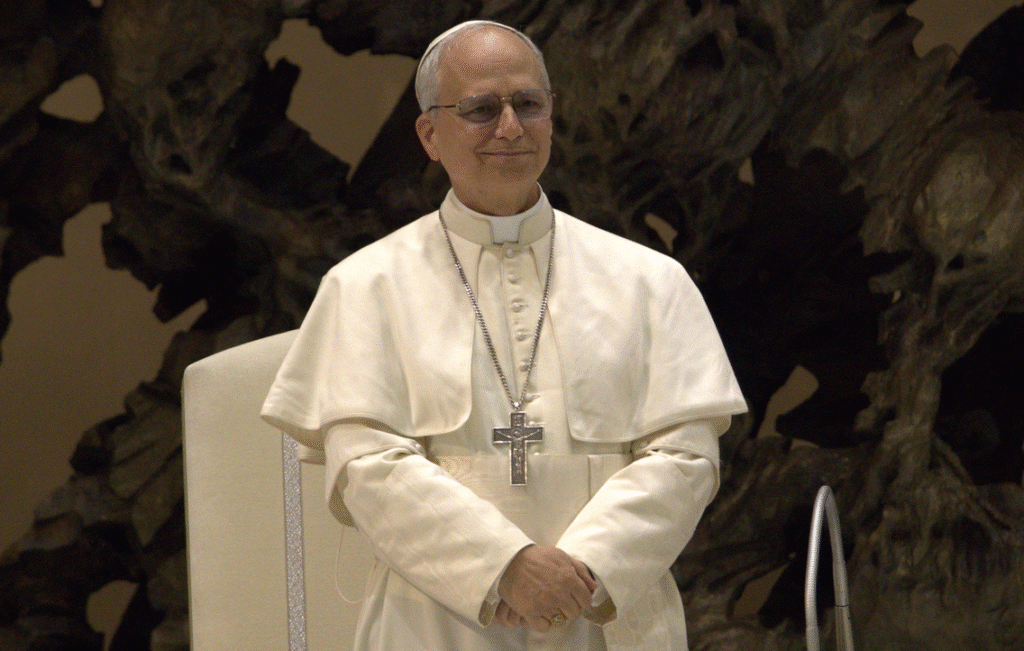
Pope Leo XIV has issued a historic apology for the Catholic Church’s institutional role in legitimizing and perpetuating slavery over centuries, describing the Vatican’s past actions as “a wound in Christian memory” from which the Church cannot detach itself, according to Vatican News.
Delivered in his first encyclical, the apology marks a significant milestone in the Church’s long and evolving reflection on its colonial-era complicity in slavery and human exploitation.
An encyclical is a formal and authoritative letter issued by the pope to address major religious, moral, social, or global issues facing the Catholic Church and the wider world.
Addressing the Church’s Delayed Condemnation of Slavery
Pope Leo XIV acknowledged that while the Church had long taught the dignity of every human being, it took eighteen centuries for its teachings to explicitly recognize slavery’s full incompatibility with Christian doctrine.
“Yet neither can we deny or diminish the delay with which both society and the church came to denounce the scourge of slavery,” he said.
In his first #encyclical “#Magnificahumanitas“, on the Church’s social doctrine in the era of #ArtificialIntelligence, Pope Leo XIV appeals for the safeguarding of humanity, promotion of truth, dignity of work, social justice, and peace.https://t.co/4Mev5jVPxD pic.twitter.com/EtoMGByPFe
— Vatican News (@VaticanNews) May 25, 2026
He expressed deep sorrow over “the immense suffering and humiliation endured by so many in stark contrast to their immeasurable dignity as persons infinitely loved by the Lord,” and asked for pardon in the name of the Church.
Linking Historical Slavery to Modern ‘Technological Enslavement’
The sweeping encyclical, titled Magnifica Humanitas (“Magnificent Humanity”), focuses primarily on safeguarding human dignity in the age of artificial intelligence.
Pope Leo XIV drew a direct parallel between the trans-Atlantic slave trade and what he described as new forms of exploitation emerging from the digital revolution — particularly labor abuses associated with mining rare minerals used in AI-related technologies and supply chains.
Anthea Butler, senior fellow at the Koch History Center at Oxford University, welcomed the apology, noting that Leo needed to address the Church’s historical complicity in slavery to credibly speak on current issues of technological exploitation.
“For descendants of enslaved persons, this is once again a much needed apology from the pope,” Butler said, according to AP.
The Pope thanked Chrisopher Olah, co-founder of @AnthropicAI, during the presentation of the encyclical #MagnificaHumanitas. “I accept his invitation to walk together, to listen and to speak, and together to find a path for humanity in this time of artificial intelligence,” he… pic.twitter.com/OTxLEu20eW
— Vatican News (@VaticanNews) May 25, 2026
Papal Decrees and the Doctrine of Discovery
The apology goes further than previous Vatican statements by explicitly referencing papal directives that authorized the enslavement of non-Christians during the colonial era.
In 1452, Pope Nicholas V issued the papal bull Dum Diversas, authorizing the Portuguese king to “invade, conquer, fight and subjugate” and reduce “Saracens, pagans, and other infidels” to “perpetual slavery.”
This was followed by Romanus Pontifex in 1455, which together formed part of the foundation of the so-called Doctrine of Discovery, according to Catholic News Service reporting.
These permissions were later confirmed or renewed by several popes, including Callixtus III, Sixtus IV, and Leo X. Similar rights were also granted to Spanish monarchs during the colonization of the Americas. Although the Vatican formally repudiated the Doctrine of Discovery in 2023, it has never formally rescinded the original papal bulls themselves.
A Personal and Pontifical First
As the first American pope, Leo XIV brings a distinctive perspective to the issue. He noted that his predecessor, Pope Leo XIII, was the first pontiff to explicitly condemn slavery in 1888 — long after many nations had already abolished the practice.
Historical records show that Church institutions themselves owned slaves prior to the Vatican’s eventual formal condemnation of slavery.
Pope Leo XIV has apologized for the Catholic Church’s delayed response to slavery, acknowledging that it took too long for the Church to clearly condemn the practice and describing it as a painful chapter in Christian history.
In a new document addressing artificial… pic.twitter.com/1t11AoT1a3
— African Hub (@AfricanHub_) May 25, 2026
The encyclical frames the apology not as an isolated historical reflection, but as part of a broader moral warning about emerging technologies and modern systems of exploitation.
By connecting past atrocities to present-day labor abuses linked to global AI supply chains, Pope Leo XIV is attempting to position the Church as a moral voice in the digital era.
Black American Catholics, activists, and scholars have long called for a deeper level of institutional accountability that moves beyond general apologies for individual Christian involvement in the slave trade. The encyclical appears to respond directly to those demands.
While some may argue that judging 15th-century decisions by modern standards is unfair, Pope Leo XIV made clear that the Church’s prolonged delay in condemning slavery — as well as its role in legitimizing aspects of the system — cannot be minimized.
In doing so, he has opened a new chapter in the Vatican’s relationship with its painful past, one aimed at confronting difficult historical truths while seeking reconciliation and moral credibility in a rapidly changing world.

Kiran Asim is a writer who covers the U.S., Europe, South Asia, and the Middle East. Her reports and analyses look at the geostrategic issues and contemporary developments and their economic and political implications. She also writes about society and education.