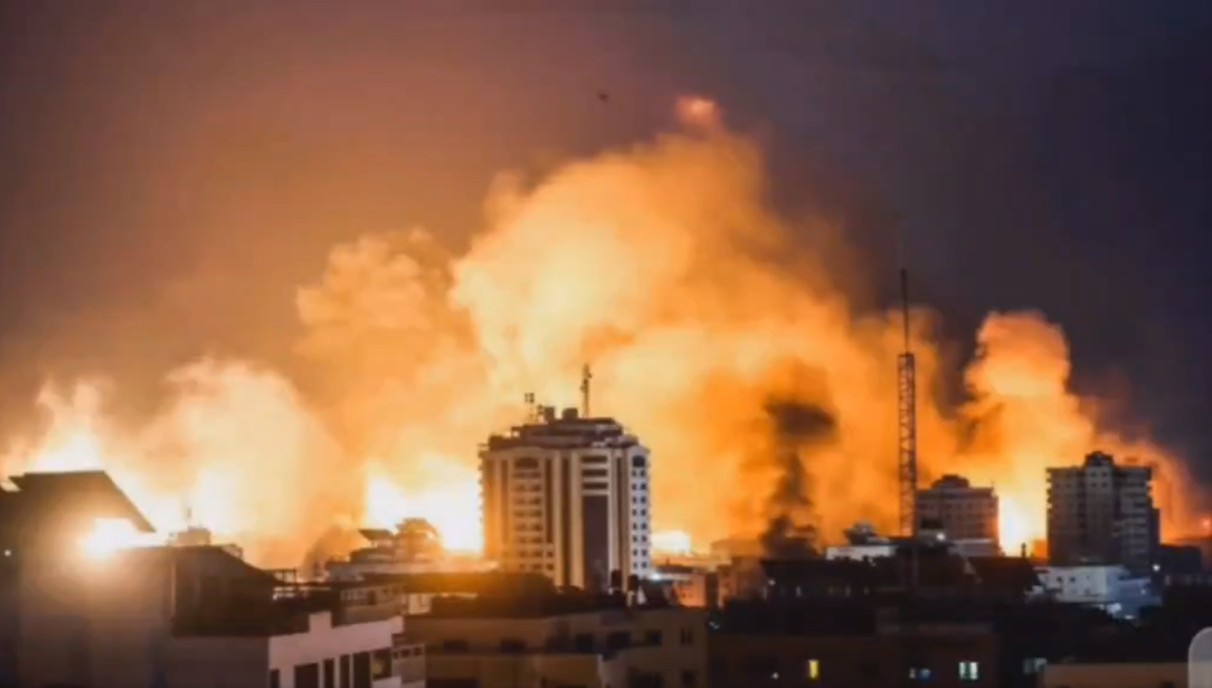
As the United States and Iran engage in escalating tit-for-tat strikes for a second consecutive week—and the conflict radiates across the Middle East from the Strait of Hormuz to the Red Sea, from Iraq to Egypt—Pakistan declared Thursday that it is doing its “utmost” to bring both adversaries back to the Islamabad Memorandum of Understanding signed just last month.
With the brief respite that had raised cautious hopes for de-escalation now shattered by renewed military exchanges, Pakistan’s Foreign Office warned that the region stands at a perilous crossroads, where diplomacy alone can still chart a path away from all-out war.
A precarious calm collapses
Foreign Office spokesperson Tahir Hussain Andrabi struck a sobering note at the weekly press briefing, acknowledging that the relative lull in hostilities over recent days had proven fleeting and deceptive.
“The situation remains precarious despite the relative calm witnessed over the past few days, which had rekindled hopes that this positive development would evolve into a durable and fully respected ceasefire and pave the way for dialogue,” Andrabi said.
US Launches Heavy Airstrikes on IRGC Sites After Iran Attempted Missile Attack
His remarks came as the conflict, which had been largely contained to the Strait of Hormuz following the June 18 signing of the Islamabad MoU, has now metastasized across multiple fronts.
What began as Iranian strikes on commercial shipping—including a Qatari liquefied natural gas tanker on July 7—has spiraled into a widening regional conflagration. Yemen’s Houthi rebels have imposed a naval blockade on Saudi Arabia; U.S. and Saudi forces have launched joint strikes against Iran-backed paramilitary groups in Iraq; explosions have rocked a natural gas terminal in Egypt; and American strikes on Iranian targets resumed Thursday after Tehran allegedly attacked U.S. military bases in Jordan.
Riyadh’s direct entry into the conflict has further raised raised stakes for Pakistan, which has a mutual defense agreement with the Kingdom, and is obligated to defend it when Saudi Arabia is under attack.
Foreign Office Spokesperson Tahir Andrabi says Pakistan remains concerned over the fragile regional security situation despite recent calm, stressing that dialogue and diplomacy are the only viable path forward in the Middle East. He welcomed ongoing efforts to sustain the… pic.twitter.com/OHH59k87Jy
— Pakistan TV (@PakTVGlobal) July 30, 2026
Pakistan’s newest push: quieter but no less urgent
Against this volatile backdrop, Pakistan has once again positioned itself as an indispensable intermediary—a role rooted not in grand ambition but in geographic necessity and historical precedent. Islamabad shares a porous border with Iran and maintains deep security and economic ties with the United States, giving it rare access to both capitals at a moment when direct communication channels have all but frayed.
The Islamabad MoU, signed on June 18 after weeks of intensive shuttle diplomacy, represented Pakistan’s most significant foray into great-power mediation.
Also signed by Pakistan as the mediator, the agreement sought to reopen the Strait of Hormuz—through which nearly one-fifth of global oil supply transits—and establish a 60-day framework for negotiations to end the broader regional conflict. Yet that window has now slammed shut, with hostilities resuming just 19 days after the ink dried.
BREAKING: Iran’s army claims drone strike on US air base in Kuwait
🔴 LIVE updates: https://t.co/NFOIZFr3yL pic.twitter.com/2nalQrwRfq
— Al Jazeera Breaking News (@AJENews) July 31, 2026
Andrabi urged both Washington and Tehran to exercise maximum restraint and honor their commitments to resume technical-level talks in accordance with the MoU and the Pakistan-Qatar joint statement issued on June 22, which had further codified the de-escalation roadmap.
“Pakistan is doing its utmost to bring both parties back to the Islamabad MoU so that all outstanding issues can be resolved in the spirit of the agreement,” he said, adding that negotiations continue to normalize the situation in the Strait of Hormuz and promote de-escalation across the region.
A test of influence
For Pakistan, the stakes extend far beyond diplomatic prestige. A full-blown U.S.-Iran confrontation would destabilize its western flank, disrupt energy imports, and complicate its fragile economic recovery. Tehran and Islamabad have long managed their border with a blend of pragmatism and periodic tension, while Washington remains a crucial—if occasionally transactional—partner for Pakistan’s military and civilian leadership.
The current crisis thus presents both a challenge and an opportunity: can Islamabad translate its unique geographic and political position into tangible de-escalation, or will the gravitational pull of great-power rivalry overwhelm its mediation efforts?
Andrabi reiterated Pakistan’s longstanding position that dialogue and diplomacy remain the only viable path toward lasting peace, welcoming all efforts aimed at sustaining the cessation of hostilities.
“Pakistan remains actively engaged and will continue its diplomatic efforts,” he affirmed.
The road ahead
With the United States and Iran locked in a cycle of strikes and counter-strikes, and proxy fronts multiplying from the Red Sea to the Mediterranean, the window for diplomacy is narrowing by the hour. Pakistan’s appeal for restraint and its push for a return to the Islamabad MoU represent one of the few remaining off-ramps available to both sides.
Yet the question hanging over Islamabad’s mediation is whether its diplomatic capital—earned through years of quiet back-channel engagement—can withstand the momentum of military escalation. Andrabi’s message was clear: Pakistan is prepared to test that capital to its limit.
“Dialogue and diplomacy,” he said, “remain the only viable path.”

Kiran Asim is a writer who covers the U.S., Europe, South Asia, and the Middle East. Her reports and analyses look at the geostrategic issues and contemporary developments and their economic and political implications. She also writes about society and education.

Muhammad Luqman is Associate Editor at Views News Now. He writes on wide-ranging issues including economy, South Asia, the Middle East, agriculture, economy and innovation. Luqman has worked some of the leading news organizations and won acclaim for his original and research-based works.