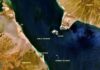
A Pakistan-bound Qatari liquefied natural gas carrier passed through the Strait of Hormuz on Sunday for the first time since the outbreak of the Iran war, coinciding with Tehran’s delivery of its formal response—via mediator Islamabad—to a U.S. proposal seeking to restart negotiations on a framework to end the conflict.
Pakistani officials are expected to relay the Iranian reply to Washington shortly, at a moment seen as diplomatically sensitive for U.S. President Donald Trump as he prepares for a key visit to Beijing later this week.
The transit of the Qatar Energy-operated LNG vessel Al Kharaitiyat, en route to Pakistan’s Port Qasim, was confirmed through shipping data from analytics firm Kpler.
It marks the first recorded movement of a Qatari LNG shipment through the strait since the start of hostilities on February 28, when U.S. and Israeli military action against Iran disrupted regional security dynamics and sharply raised risks to maritime traffic.
Islamabad secures Hormuz passage for 20 more Pakistan-flagged ships amid Iran diplomacy
For Pakistan, a major South Asian country of 240 million population with growing energy requirements, the shipment comes at a critical time, offering partial relief amid prolonged electricity shortages and strained gas supplies.
Pakistani energy experts say the return of LNG cargoes from Qatar is expected to improve electricity generation, which has remained below required levels since late February.
“This will help LNG-fired power plants contribute more effectively to the national grid,” said Lahore-based energy expert Irfan Ali.
Pakistan’s suspension of LNG imports during March and April reportedly reduced national power generation capacity by nearly 4,000 megawatts, forcing electricity distribution companies to implement prolonged outages under load management measures.
Pakistan and Qatar on Sunday reaffirmed their support for diplomatic efforts to ensure regional peace and stability. https://t.co/5Q3fSYTiKd
— Arab News Pakistan (@arabnewspk) May 10, 2026
Islamabad has emerged as a vital diplomatic conduit in backchannel discussions between Tehran and Washington.
Iran is understood to have approved the passage as a confidence-building step toward both Qatar and Pakistan, which have taken on facilitation roles in ongoing mediation efforts.
However, the broader security picture across Gulf shipping lanes remains unsettled, with energy markets still reacting sharply to intermittent disruptions and escalating regional tensions.
On Sunday, the United Arab Emirates and Kuwait reported intercepting two drones allegedly launched from Iranian territory, while Qatar condemned a separate drone strike involving a commercial vessel near its waters. Kuwait said its air defenses engaged and neutralized hostile drones entering its airspace, underscoring the widening scope of cross-border incidents.
Since the escalation of hostilities, Tehran has significantly curtailed commercial movement through the Strait of Hormuz.
Before the conflict erupted on February 28, the waterway handled roughly one-fifth of global oil trade, underscoring its central role in global energy flows and its current status as a focal point of geopolitical pressure.
Aside from Pakistan’s critical mediation efforts, Qatar has also come forward with help to continue the diplomatic in parallel to recent exchange of fire by the U.S. and Iranian forces.
Qatari Prime Minister Mohammed bin Abdulrahman Al Thani held discussions in Miami with U.S. Secretary of State Marco Rubio over Pakistan’s mediation initiative, while also urging Iranian Foreign Minister Abbas Araghchi not to treat the strait as a “pressure tool.”
He warned that further disruption could push the global economy into a challenging phase.
HE #Qatar PM & FM spoke with Iran’s FM Araghchi on regional peace. Reaffirmed support for mediation, urged all parties to respond. Stressed freedom of navigation: closing #StraitOfHormuz deepens crisis & risks global energy/food supply chains. pic.twitter.com/alsPenH798
— Rasheed Ahmad Chughtai , president of IUC, , (@AhmadIuc) May 10, 2026
Two Qatari LNG carriers — Rasheeda and Al Daayen — had previously abandoned attempts to transit the waterway on April 6 after reportedly failing to secure clearance from Iranian authorities.
Qatar is the world’s second-largest LNG exporter, with Asian countries accounting for a major share of its export market. Energy analysts say the resumption of LNG shipments to Pakistan could help stabilize the country’s power generation sector, which has faced severe fuel shortages since the Middle East crisis erupted.
A source familiar with the Qatar-Pakistan energy arrangement said Islamabad has been in discussions with Tehran to facilitate limited LNG shipments through the Strait in order to meet urgent domestic energy demands, with coordinated security arrangements ensuring safe passage for the vessels.
Earlier disruptions to regional gas exports, coupled with reported Iranian attacks on Qatari energy infrastructure, are believed to have affected nearly 17 percent of Qatar’s LNG export capacity. Industry experts estimate that full recovery of the damaged facilities could take years.

Muhammad Luqman is Associate Editor at Views News Now. He writes on wide-ranging issues including economy, South Asia, the Middle East, agriculture, economy and innovation. Luqman has worked some of the leading news organizations and won acclaim for his original and research-based works.