In a turbulent week for Nepal, President Ramchandra Paudel has dissolved the parliament and announced fresh elections for March 5, following a nationwide youth-led uprising that has shaken the foundations of the country’s political establishment.
The developments in Nepal, landlocked between powerful economies and the world’s largest populations, India and China, are seen as significant to the region. Both New Delhi and Beijing have appealed for restraint and stability in the Himalayan country.
The dramatic happenings culminated in the resignation of former Prime Minister K.P. Sharma Oli and the appointment of Sushila Karki—Nepal’s first female head of government—as interim prime minister.
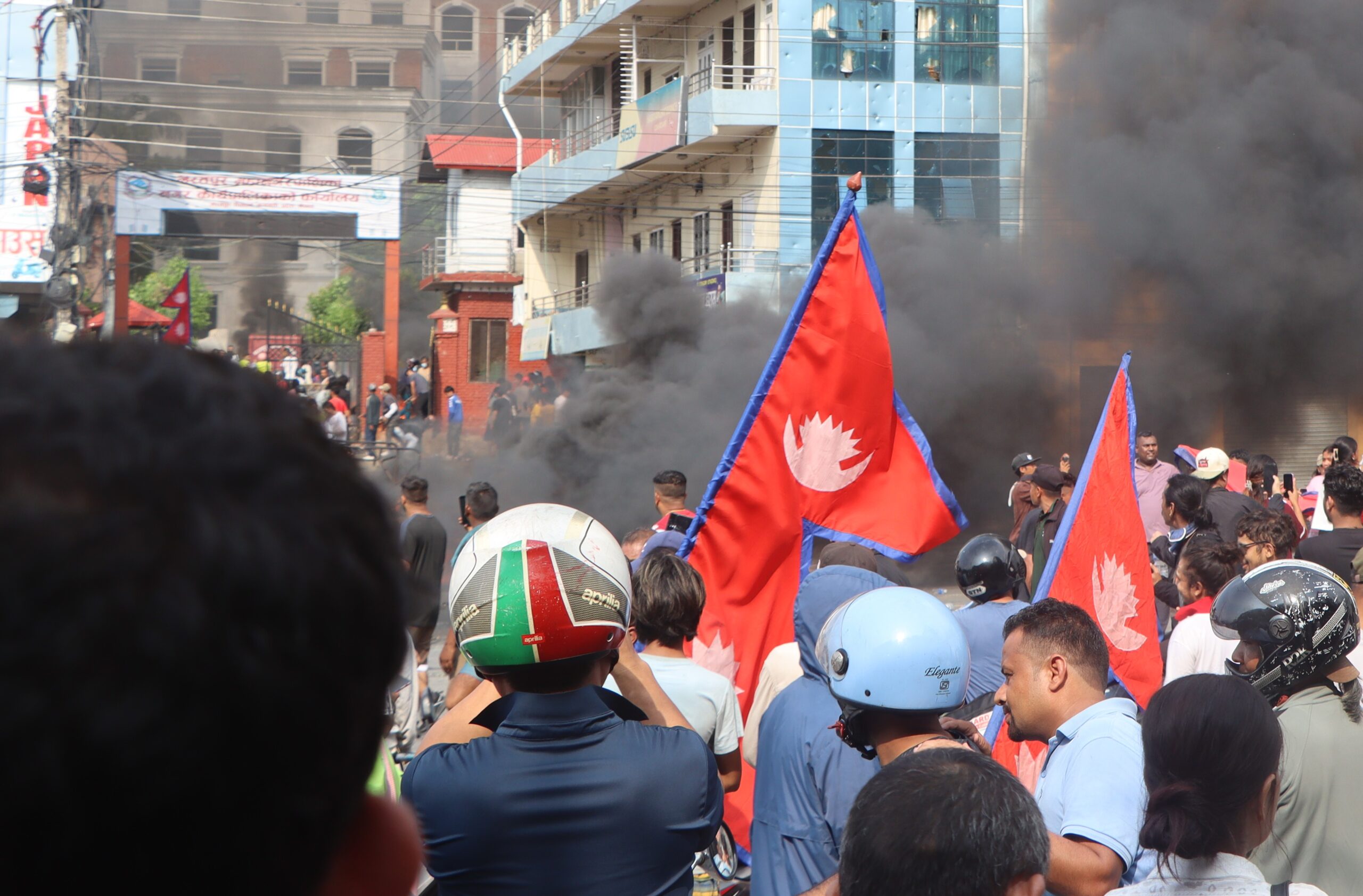
The protests, which left at least 51 dead and over 1,300 injured, were sparked by a controversial social media ban that inflamed longstanding frustrations among Nepal’s youth.
Social media ban sparks spontaneous uprising among Nepal’s Gen Z
Nepali Generation Z, already frustrated with chronic corruption, joblessness, and political stagnation, led mass demonstrations across the country.
The upheaval also resulted in the escape of more than 13,000 prisoners, over 12,500 of whom remain at large.
Karki, a 73-year-old former Chief Justice known for her anti-corruption stance, was appointed after urgent negotiations between President Paudel, army chief Ashok Raj Sigdel, and protest leaders.
While she is a unifying figure for many of the Gen Z activists due to her clean track record, she is seen as a consensus candidate in a deeply divided political climate.
Her swearing-in marks a symbolic turning point in a country still grappling with the legacies of monarchy, civil war, and fragile democratic institutions.
In 24 hours, Nepal’s Gen Z forced their PM to resign—storming Parliament & shattering decades of corruption, cronyism & censorship. This isn’t just protest, it’s revolution. A generation refuses silence, rewriting history in real time.#NepalUprising #GenZRevolution #viral pic.twitter.com/aOjbOze1hY
— Daizy Gedeon (@DaizyGedeon) September 13, 2025
Nepal’s path to democracy has been defined by decades of political instability. Beginning with the 1951 revolution that ended the autocratic Rana regime, the country has witnessed several waves of democratic movements—including the 1990 Jana Andolan (People’s Movement), the 10-year Maoist insurgency starting in 1996, and the eventual abolition of the monarchy in 2008.
The promulgation of a new constitution in 2015 formally established Nepal as a federal democratic republic.
However, this hard-won democratic framework has remained unstable. Power struggles among major parties—the Nepali Congress, the CPN-UML, and the Maoist Centre—along with widespread corruption and socio-economic inequality have fueled public disenchantment, particularly among the youth.
With over a third of the population under the age of 25 and millions of young Nepalis migrating abroad for employment, the country’s youth have long felt excluded from national decision-making.
After this week’s protests in Nepal, a disinterested political class can no longer look away.
This week for @ForeignPolicy: https://t.co/Q2iKQdmj8s— Michael Kugelman (@MichaelKugelman) September 10, 2025
This latest uprising represents a significant generational shift. Young Nepalis, born after the monarchy’s fall and raised in the digital age, are increasingly vocal in their demands for transparency, accountability, and opportunity. The movement—sparked online but realized in the streets—forced Oli to step down after days of escalating violence.
Many protesters brandished placards calling for the end of elite dominance and political cronyism. In response to the deaths of protesters, grieving families have refused to collect the bodies of loved ones, demanding that the deceased be declared martyrs and their families compensated.
Nepal stands at a critical crossroads in its search for democracy. The current upheaval, driven by a digitally empowered and politically conscious Generation Z, may prove to be the catalyst for a deeper democratic renewal, analysts say.
The apparent calm following the spontaneous upheaval is being partly attributed to the Nepalese people’s respect for the army, which fought the Maoist movement and has stayed away from politics.
LMFAO, that vlogger went to Nepal on vacation and ended in the middle of their revolution and ended up documenting the whole thing😂.
He became a celebrity over there apparently pic.twitter.com/LWR2PHI7KW
— Devchart 👨🏻💻 (@devchart) September 12, 2025
Contrary to the civil-military divide in some of the regional countries, the Nepalese army’s presence on the roads has come as somewhat comforting for the young people, who have made it clear that they would not stand government corruption any longer.
Whether the country can seize this moment to build a more inclusive and accountable political system remains to be seen—but one thing is clear: Nepal’s youth are no longer on the sidelines of history. They are shaping it.
“We are not against the political system or the constitution. We are against the crony government, political parties, and their inept leadership,” a leader of the latest movement, who asked not to be named, told DW this week.
“We demand good governance and justice for those who lost their lives during these protests. We don’t want the same old faces repeated in the new political course.”
Nepal is the second South Asian country after Bangladesh where a largescale popular movement has toppled the sitting government in the last year or so. In both instances, young people have been on the forefront, who term government corruption as the bane of life. In the last few years, Sri Lanka also witnessed political upheavals. Meanwhile, Pakistan, another country with a history of truncated democratic rules, has also a huge youth population, and watching closely the developments in Bangladesh and Nepal.
Follow for more: Twitter (X) | Facebook | Instagram | LinkeIn

Muhammad Luqman is Associate Editor at Views News Now. He writes on wide-ranging issues including economy, South Asia, the Middle East, agriculture, economy and innovation. Luqman has worked some of the leading news organizations and won acclaim for his original and research-based works.