Kuwait has formally ratified a comprehensive defense cooperation agreement with Pakistan, finalizing a deal initially signed in June 2023. The move underscores a deepening military partnership between the two nations as regional geopolitical tensions intensify.
Approved under Decree-Law No. 73 of 2026 and published in Kuwait’s official gazette, Kuwait Al-Youm, the five-year accord establishes a broad framework for bilateral military collaboration. Its provisions span military training and education, intelligence-sharing, logistics, defense technology, scientific research, and personnel exchanges.
The pact also encourages joint ventures in military manufacturing, electronic communications systems, military media, and cultural and sporting activities.
To ensure effective implementation, the agreement provides for the creation of a joint military committee tasked with coordinating joint exercises, official visits, and other defense-related programs. The pact remains in force for five years with automatic renewal provisions, unless either party opts for termination. Both signatories have committed to safeguarding classified military information and resolving any disputes through diplomatic channels.
The ratification follows a series of high-level military engagements between Pakistani and Kuwaiti officials, reflecting a mutual desire to expand strategic coordination and defense cooperation.
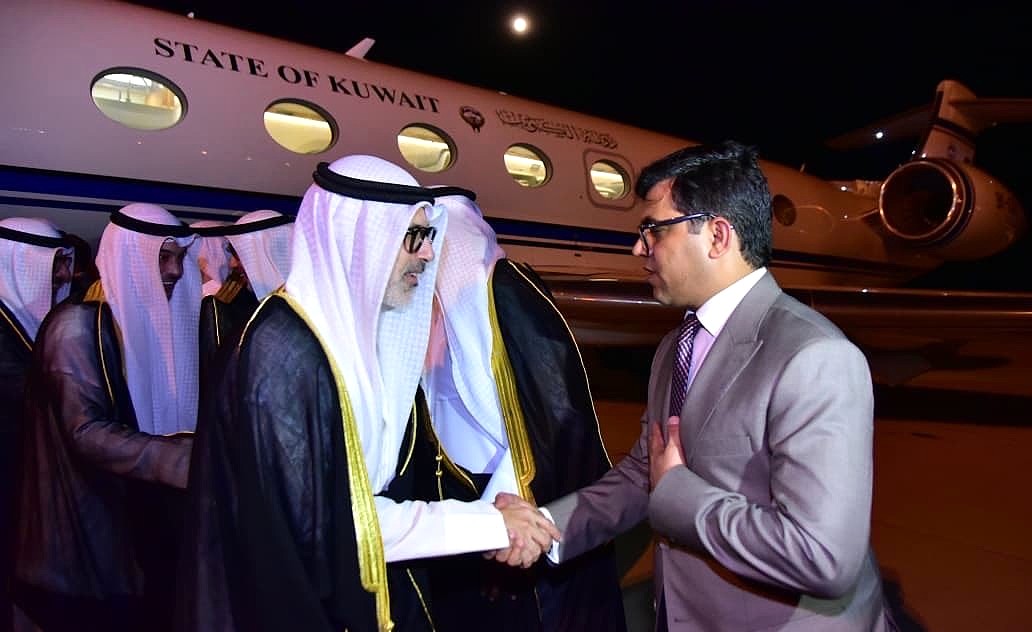
H.E. Sheikh Jarrah Jaber Al-Ahmad Al-Sabah, Minister of Foreign Affairs of the State of Kuwait, arrived in Islamabad today on an official visit at the invitation of Deputy Prime Minister and Foreign Minister Senator Mohammad Ishaq Dar @MIshaqDar50.
Upon arrival at Islamabad… pic.twitter.com/7sOY6qtx22
— Ministry of Foreign Affairs – Pakistan (@ForeignOfficePk) July 28, 2026
Kuwaiti FM Arrives in Pakistan for High-Level Talks
The defense pact’s ratification comes just days before Kuwaiti Foreign Minister Sheikh Jarrah Jaber Al-Ahmad Al-Sabah arrived in Islamabad on Tuesday for high-level discussions on bilateral relations and regional developments.
According to Pakistan’s Foreign Office, the visit will encompass a comprehensive review of bilateral cooperation, alongside exchanges on regional and international matters of mutual interest.
“During the visit, the two sides will hold talks covering the full spectrum of bilateral relations and exchange views on regional and international issues of mutual interest,” the Foreign Office stated.
Pakistan’s Rising Strategic Profile
This defense pact with Kuwait, though initiated a couple of years ago, marks the latest in a series of developments that have significantly elevated Pakistan’s strategic profile on the global stage.
As a major nuclear power with considerable influence across both South Asia and the Middle East, Pakistan has leveraged its defense partnerships and economic linkages to emerge as a key regional actor. Its footprint in the Gulf is particularly pronounced, with an estimated seven million Pakistanis—including highly skilled professionals and blue-collar workers—spread across the energy-rich states, forming a vital human and economic bridge that ties Islamabad’s interests to Gulf security.
Kuwait has recently Announced a Joint Defence Cooperation Agreement with Pakistan. 🇰🇼🇵🇰
According to the Agreement, both Countries are Set to Increase Joint Training initiatives, Share Intelligence, Exchange Technical Specialists and Conduct Regular Operational Planning through… https://t.co/yuiVj5LT7c pic.twitter.com/BM03QyS9pA
— Armed Forces Update (@ArmedUpdat1947) July 28, 2026
Three key factors have further bolstered Pakistan’s strategic standing. First, the country has emerged as an indispensable diplomatic bridge, particularly in the U.S.-Iran conflict, maintaining simultaneous communication channels with Tehran, Washington, Riyadh, and Beijing during periods of intense hostility to create space for dialogue.
This role has drawn global recognition including from President Donald Trump, European Union and China, with officials describing Pakistan’s mediation as instrumental in achieving ceasefires and preserving the “Islamabad MoU” framework for negotiations.
Second, Pakistan’s formidable defense capabilities were on full display during the May 2025 conflict with India, where the military’s resolute response and effective multi-domain operations—including tri-service synergy, integrated cyber and electronic warfare capabilities, and intelligence-led operations—effectively debunked any notion of space for conventional war in South Asia.
Third, this military strength has been anchored in domestic innovation and deep technological collaboration with China, most notably through the JF-17 Thunder fighter jet program, which has emerged as a successful example of defense collaboration between developing countries.
Kuwait-Pakistan Defense Pact Signals Gulf Shift | Maj Gen R Zahid Mehmood Analysis | Decode Zunaira#Kuwait #Pakistan #DefensePact #DecodeWithZunairaAzhar #MajGenZahidMehmood #putin #viralvideo #viral #express247 #trending #breakingnews #GulfSecurity #MiddleEast@ZunairaAzhar10 pic.twitter.com/JJfiKnW95c
— Express 24/7 (@Express247PK) July 28, 2026
The JF-17, a 4.5-generation multirole combat aircraft equipped with advanced avionics, active electronically scanned array radar, and beyond-visual-range missiles, has proven its combat effectiveness in actual conflict, sparking significant international interest with at least six countries either securing or negotiating purchase agreements. This defense industrial base, further bolstered by Pakistan’s status as the sole recipient of China’s J-10C fighter exports and advanced unmanned aerial vehicle technology, positions the country as an emerging middle power with both military credibility and diplomatic reach.
Deepening Gulf Security Commitments
Beyond these capabilities, Pakistan has deepened its security commitments to key Gulf allies.
Last year, Islamabad entered into a landmark Mutual Defense Agreement with Saudi Arabia—widely regarded as the center of the Islamic world—under which it has deployed high-tech weaponry, fighter jets, and thousands of troops for the defense of the oil- and gas-rich Kingdom.
Pakistan Deploys Fighter Jets to Saudi Arabia Under Defense Pact
This deployment not only underscores the trust Gulf monarchies place in Pakistan’s military professionalism but also reflects Islamabad’s strategic calculus to secure enduring influence in a region undergoing rapid realignment.
Hopes for Economic Boost
In return for this robust defense cooperation, both Saudi Arabia and—more recently—Kuwait have reportedly extended generous economic concessions to Islamabad, transforming security ties into a mutually reinforcing economic partnership.
These concessions are said to include substantial credit facilities, the sale of crude oil on deferred payment terms to ease Pakistan’s balance-of-payments pressures, and significant investments across multiple sectors of Pakistan’s economy, ranging from energy infrastructure and petrochemicals to agriculture, mining, and technology.
Trump Extends Iran Ceasefire at Pakistan’s Request, Awaits Tehran’s Unified Proposal
For cash-strapped Pakistan, these economic lifelines provide critical fiscal breathing room at a time of mounting external debt obligations and global inflationary headwinds.
While for the Gulf monarchies, the arrangement represents a strategic hedge—securing reliable military backing from a nuclear-armed, battle-tested ally while simultaneously diversifying their investment portfolios and locking in long-term economic influence in South Asia.
This emerging model of “security-for-economy” diplomacy is rapidly reshaping the traditional dynamics of Pakistan-Gulf relations, elevating them from transactional aid relationships to comprehensive strategic partnerships with deep mutual dependencies.
Together, these diplomatic, economic, and military dimensions make Pakistan an increasingly essential partner for Gulf states like Kuwait, which are seeking to diversify their security partnerships amid mounting regional challenges.
Gulf Military Integration Moves Forward
In a parallel development, Kuwait’s Chief of Staff, Lt. Gen. Khaled Al-Shuraian, met separately with the Commander of the GCC Unified Military Command, Maj. Gen. Abdulaziz Al-Balawi, and the Commander of the Peninsula Shield Force, Maj. Gen. Mohammed Al-Ruwais.
The talks, held on Sunday, centered on enhancing joint Gulf defense capabilities, bolstering military integration, and reviewing issues of shared concern. The discussions were attended by Deputy Chief of Staff Air Vice Marshal Sabah Jaber Al-Ahmad Al-Sabah and other senior military officials.

Muhammad Luqman is Associate Editor at Views News Now. He writes on wide-ranging issues including economy, South Asia, the Middle East, agriculture, economy and innovation. Luqman has worked some of the leading news organizations and won acclaim for his original and research-based works.