Iran struck a defiant tone on Sunday in response to U.S. President Donald Trump’s suggestion that Washington should play a role in approving the country’s next supreme leader, insisting that only the Iranian people will determine the nation’s future leadership.
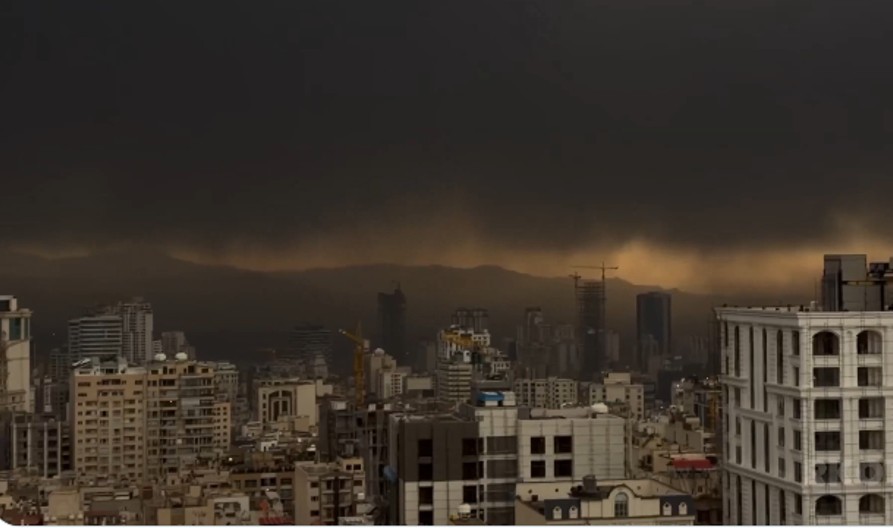
Iran’s Foreign Minister Abbas Araghchi made the remarks as thick grey smoke filled the skies over Tehran following the bombing of an oil facility, one of several targets hit amid relentless U.S. and Israeli attacks and Iran’s own retaliatory strikes across the region.
“We allow nobody to interfere in our domestic affairs. This is up to the Iranian people to elect their new leader,” Araghchi said.
The comments come after the reported killing of Iran’s longtime Supreme Leader Ayatollah Ali Khamenei in coordinated U.S.–Israeli strikes during the first day of the war, creating an unprecedented leadership crisis in the Islamic Republic.
Trump Seeks Role in Choosing Iran’s Next Supreme Leader, Rejects Khamenei’s Son
Israel has since warned that potential successors could also be targeted, while President Trump has said the United States should have a role in approving Iran’s next leader.
“He’s going to have to get approval from us,” Trump said in a recent interview.
“If he doesn’t get approval from us, he’s not going to last long,” the U.S. president added.
Araghchi said Iran’s constitutional mechanism for selecting a new supreme leader would proceed as planned, noting that the Assembly of Experts, the clerical body responsible for choosing the country’s top authority, would decide on the successor.
Regional strikes escalate tensions
Meanwhile, Tehran has continued retaliatory attacks across the region, targeting Gulf countries that host U.S. military bases or are accused by Iran of facilitating strikes against its territory, raising fears that the conflict could expand further across the Middle East.
“It is the Americans who started this war against us by attacking our country, and we are defending ourselves,” Araghchi said in an interview with NBC News.
UN Warns Middle East Crisis Could Spiral ‘Beyond Anyone’s Control’
“So, it is obvious that our missiles cannot reach U.S. soil. What we can do is target American bases and installations around us, which are unfortunately located in neighboring countries,” he added.
Economic shockwaves
The widening conflict is also sending shockwaves through global energy markets and trade routes, raising concerns about a broader economic fallout.
Oil markets have reacted sharply to the escalating hostilities and attacks on energy infrastructure in the Gulf region. Analysts warn that crude prices could surge above $100 per barrel if disruptions intensify, potentially driving up fuel and transportation costs worldwide.
Maritime trade has also been affected as commercial vessels reduce or suspend movement through the Strait of Hormuz, the narrow waterway south of Iran that carries nearly one-fifth of global oil shipments along with large volumes of commercial cargo.
ME oil, gas exporters could halt production within days, warns Qatar
Shipping companies and insurers have imposed steep war-risk premiums, adding millions of dollars to individual voyages and forcing some tankers to delay entry into the Gulf or reroute shipments.
Industry analysts say prolonged disruption to energy flows and shipping lanes could cost the global economy billions of dollars, while also straining already fragile supply chains.
The aviation sector is also facing disruption as airlines avoid airspace over Iran and parts of the Gulf, forcing longer routes between Europe and Asia that increase fuel consumption and operating costs.
Economists warn that if the conflict continues to escalate, the combined impact of higher energy prices, disrupted trade routes and rising military spending could place significant pressure on regional economies and contribute to renewed global inflation.

Kiran Asim is a writer who covers the U.S., Europe, South Asia, and the Middle East. Her reports and analyses look at the geostrategic issues and contemporary developments and their economic and political implications. She also writes about society and education.