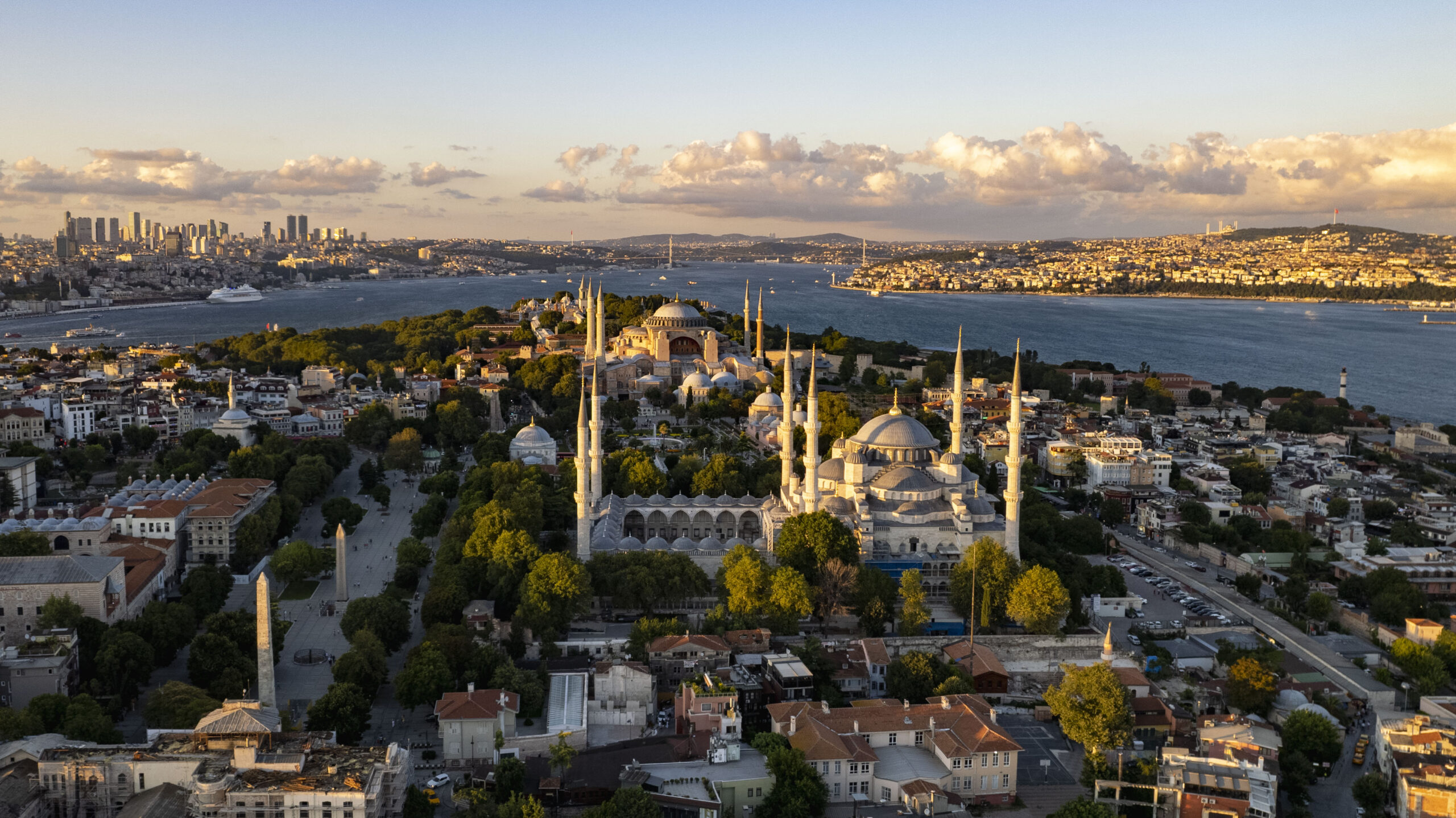
In a first-of-its-kind diplomatic gathering bringing together four influential Muslim-majority countries and Europe’s three leading powers, foreign ministers from the R4 grouping and the European E3 are meeting in Istanbul on Friday to explore closer coordination on mounting regional and international security challenges.
The meeting brings together Türkiye, Pakistan, Saudi Arabia and Egypt with the United Kingdom, France and Germany, creating a new diplomatic channel between key Middle Eastern powers and Europe’s principal diplomatic actors.
The discussions come amid heightened tensions over the Israeli-Palestinian conflict, threats to shipping through the Strait of Hormuz amid renewed U.S.-Iran tensions, insecurity linked to Yemen’s Houthi movement and the continuing Russia-Ukraine war.
“The meetings will provide an opportunity for participating ministers to exchange views on key regional and international developments,” Pakistan’s Foreign Ministry said in Islamabad.
Deputy Prime Minister/Foreign Minister Senator Mohammad Ishaq Dar @MIshaqDar50 held his first meeting in Istanbul today with H.E. Hakan Fidan, Foreign Minister of Türkiye.
The DPM/FM thanked FM Hakan Fidan for Türkiye’s hosting of the R-4 Ministerial Meeting and the R4+ meeting with Foreign Ministers of France, Germany, Italy and the United Kingdom in Istanbul.
The DPM/FM conveyed condolences over the loss of lives caused by flash floods following heavy rains in Türkiye and wished a swift recovery to those affected.
The two leaders reviewed bilateral relations and exchanged views on regional developments, particularly the situation in the Middle East and Palestine. They expressed concern over threats to regional stability and underscored the importance of dialogue, diplomacy and coordinated efforts to promote regional peace and security.
The two sides also strongly condemned the Houthi attacks on Saudi Arabia and reaffirmed their commitment to close coordination on regional issues, including under the Makkah Defence Agreement among Pakistan, Türkiye and Saudi Arabia.
Both leaders reaffirmed their commitment to further strengthening the longstanding bonds of friendship and brotherhood between Pakistan and Türkiye, and to deepening cooperation across all areas of mutual interest, both bilaterally and in multilateral fora.
— Ministry of Foreign Affairs – Pakistan (@ForeignOfficePk) October 23, 2026
Pakistan’s Deputy Prime Minister and Foreign Minister Ishaq Dar is participating in the deliberations. The meeting is hosted by Turkish Foreign Minister Hakan Fidan.
The joint format brings together two groups with different diplomatic histories and regional priorities. The four R4 countries have held separate consultations on regional issues, while the European E3 — Britain, France and Germany — has a longer record of diplomatic coordination, notably on Iran’s nuclear program. The Istanbul meeting provides an opportunity to extend that engagement into a broader framework involving Middle Eastern and European security concerns.
Iran and Maritime Security at the Center of European Concerns
The European perspective was outlined by the French Foreign Ministry ahead of the meeting. In a briefing on Thursday, Paris described the gathering as an unprecedented format intended to strengthen coordination between European and Middle Eastern countries in addressing shared regional crises.
France identified Iran’s nuclear and ballistic missile programmes and the disruption of shipping through the Strait of Hormuz as central concerns. It said the discussions would explore ways to work with regional partners towards a lasting diplomatic settlement to the conflict.
The Strait of Hormuz is one of the world’s most strategically important energy shipping routes, carrying a substantial share of internationally traded oil and liquefied natural gas. Threats to commercial vessels or restrictions on passage can disrupt energy supplies, increase shipping and insurance costs, and add volatility to global markets.
“Fransa, Avrupalı ve bölgesel ortaklarıyla 🇩🇪🇬🇧🇹🇷🇪🇬🇸🇦🇵🇰 birlikte bugün İstanbul’da ilk kez düzenlenecek E3/R4 toplantısına katılacak.
Amaç: Hepimizi etkileyen bölgesel krizler karşısında Avrupalılar ile Orta Doğu ülkeleri arasındaki eşgüdümü güçlendirmek”.
@francediplo Sözcülüğü— La France en Turquie 🇫🇷🇪🇺 (@FranceenTurquie) October 23, 2026
The Bab el-Mandeb Strait, connecting the Red Sea with the Gulf of Aden, is another critical maritime chokepoint. Attacks by Yemen’s Iran-aligned Houthi movement on commercial shipping and threats to Saudi security have heightened concerns over the safety of international trade routes.
Türkiye is expected to emphasize freedom of navigation through both waterways and the importance of regional security cooperation. For European governments, the stakes extend beyond the immediate Middle East conflict: disruption to shipping and energy supplies can affect European economies, while escalation involving Iran risks drawing additional countries into a wider confrontation.
A New Diplomatic Channel Amid Evolving Situations
The Istanbul meeting also reflects Türkiye’s effort to strengthen its role as a diplomatic bridge between Middle Eastern powers and Europe. Ankara has advocated diplomatic engagement and greater regional responsibility for security, while seeking to prevent conflicts from spreading across the region.
The war in Ukraine is another concern linking the participants. Türkiye, which borders the Black Sea, has sought to prevent the conflict from expanding into the maritime region. European governments, meanwhile, remain deeply involved in efforts to support Ukraine and pursue a diplomatic end to the war.
Pakistan, Türkiye Take Military Prowess to New Defense Group in Doha
Bringing the seven countries together creates an opportunity to compare assessments and explore coordinated responses to interconnected security threats. However, their participation does not imply that they share identical positions on every conflict or that they have agreed to a common security policy.
The meeting’s significance will therefore depend on whether the ministers can move beyond exchanging views to establish regular consultations, pursue joint diplomatic initiatives or agree on practical cooperation in areas such as maritime security.
The initiative appears to hold mutually beneficial promise for all members: offering an opportunity to Türkiye to reinforce its diplomatic role between Europe and the Middle East; bringing Pakistan, Saudi Arabia and Egypt get an additional channel to engage European governments on security issues affecting their regions; and helping the E3 countries find prospects for closer engagement with these regional actors to build diplomatic support for efforts to contain conflicts and protect international trade routes.

Muhammad Luqman is Associate Editor at Views News Now. He writes on wide-ranging issues including economy, South Asia, the Middle East, agriculture, economy and innovation. Luqman has worked some of the leading news organizations and won acclaim for his original and research-based works.

Kiran Asim is a writer who covers the U.S., Europe, South Asia, and the Middle East. Her reports and analyses look at the geostrategic issues and contemporary developments and their economic and political implications. She also writes about society and education.