
Pakistan has decided to return $3.5 billion in deposits to the United Arab Emirates (UAE), despite the potential strain on its foreign exchange reserves and the deepening economic fallout from the Iran war, which threatens to drive up fuel costs and disrupt critical trade routes across the region.
The funds were originally placed by Abu Dhabi in 2019, when Pakistan was grappling with a severe balance-of-payments crisis and dangerously low reserves. Since then, the deposits — extended through the Abu Dhabi Fund for Development — have been repeatedly rolled over, forming a key pillar of Pakistan’s external financing support framework.
The decision to repay the amount follows a request from the UAE for immediate settlement, according to a senior Pakistani official, who described the move as one guided by “national dignity,” even at the cost of financial pressure.
“The amount will be returned as soon as possible,” the official said, according to Pakistan’s Dawn newspaper.
The official noted that “national dignity could not be compromised for financial considerations.”
The timing underscores the mounting strain across the region. The UAE — among the countries hardest hit by Iranian retaliatory strikes — has faced disruptions to energy infrastructure, temporary airport closures, and a sharp downturn in tourism, weighing on its economic outlook.
For Pakistan, the stakes are equally significant. An estimated six to seven million Pakistanis live and work across the Middle East, and their remittances remain a vital source of foreign exchange. Prolonged instability risks not only trade and energy supplies but also the livelihoods tied to overseas employment.
Under its ongoing International Monetary Fund (IMF) programme, Pakistan is required to secure around $12.5 billion in rollovers from key partners — China, Saudi Arabia, and the UAE — to maintain reserve buffers and meet external financing needs. The Emirati deposits have been a critical component of this arrangement.
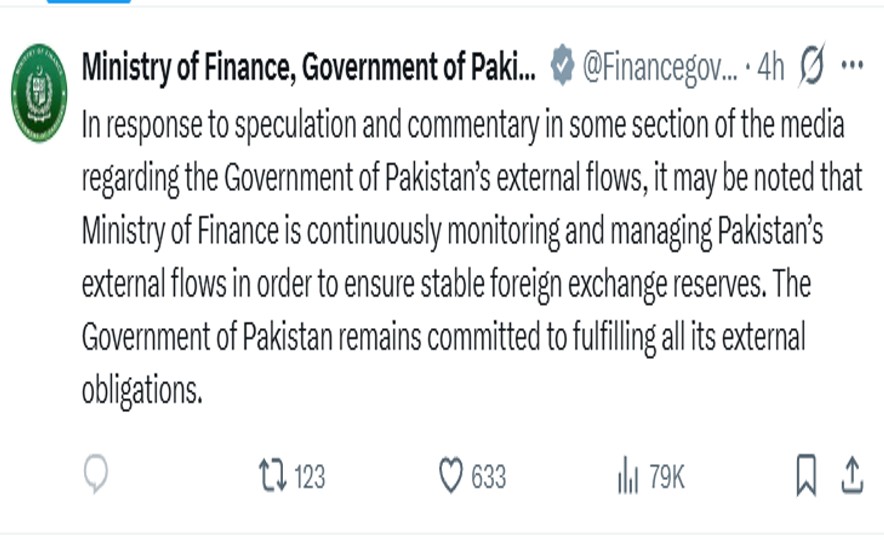
Pakistan’s foreign exchange reserves currently stand at about $16.3 billion, according to central bank data. Repayment of the UAE funds could reduce reserves by nearly one-fifth, significantly weakening the country’s external buffer and its capacity to finance imports. The reserves have already shown sensitivity to external repayments in recent months, underscoring the potential impact of a large outflow.
The development comes as Islamabad seeks to stabilize its external position, with the IMF recently reaching a staff-level agreement that could unlock about $1.2 billion in fresh funding, subject to approval. However, the Fund has urged Pakistan to maintain tight economic policies to safeguard reserves, particularly as rising global oil prices linked to the conflict add to inflationary pressures. The central bank has already adopted a cautious stance, pausing monetary easing amid concerns over price stability.
Officials acknowledged the risks to reserves but said the decision was shaped by evolving bilateral considerations and the UAE’s demand for repayment. No immediate arrangement for replacement financing has been disclosed.
Analysts warn that the outflow could increase pressure on the Pakistani rupee and complicate the country’s position under the IMF program if not offset by fresh inflows. More broadly, the episode highlights Pakistan’s continued reliance on external financial support from partner countries, a strategy that provides short-term stability but leaves the economy exposed to sudden funding shifts.

Muhammad Luqman is Associate Editor at Views News Now. He writes on wide-ranging issues including economy, South Asia, the Middle East, agriculture, economy and innovation. Luqman has worked some of the leading news organizations and won acclaim for his original and research-based works.