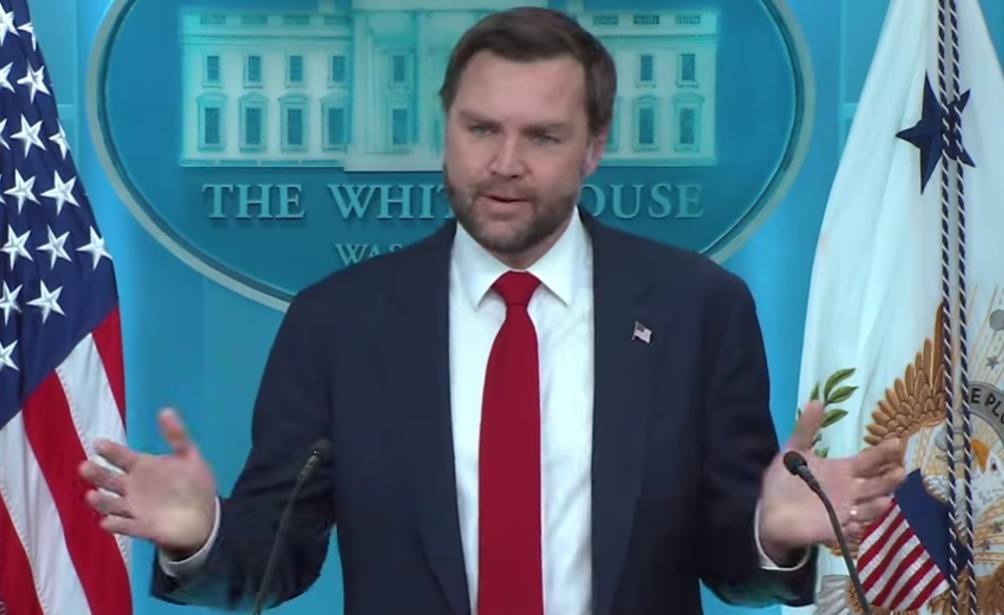
U.S. Vice President JD Vance left for Switzerland on Saturday for talks with Iran, aiming to make progress on key issues even as Israeli strikes against Iran-backed Hezbollah in Lebanon tested the nascent peace deal signed earlier this week.
The Iranian delegation was also en route to Switzerland to begin negotiations, days after President Donald Trump and Iranian President Masoud Pezeshkian electronically sealed the initial deal aimed at ending the conflict.
“I think we’re going to hopefully make progress on the nuclear issue and on the Lebanon ceasefire,” Vance said before his departure.
Getting things set up in the right way.”
Vice President JD Vance says success in Switzerland starts with establishing the structure of the negotiations as U.S. and Iranian officials begin the next phase of talks.
Vance adds the focus will be on making progress on Iran’s nuclear… pic.twitter.com/u11kDThk7H
— Fox News (@FoxNews) June 20, 2026
Hours before Vance embarked on the trip, Iran said it would close the Strait of Hormuz to international shipping over rising concerns related to Israeli actions in Lebanon.
Vance will lead the U.S. delegation as the talks open, with the agenda expected to include key issues such as the disposal of Iran’s stockpile of enriched uranium.
On Saturday, the Lebanon front saw renewed violence, with Israeli strikes against suspected Hezbollah targets. The fighting came despite a U.S.-announced ceasefire between Israel and Hezbollah.
Tehran, which secured a ceasefire across Middle Eastern fronts including Lebanon, views Israeli strikes in that country as a major source of friction that could erode prospects for productive negotiations.
White House advisors—including Special Envoy Steve Witkoff and Jared Kushner, President Trump’s son-in-law—engaged in technical discussions on Saturday.
“My understanding, talking to Steve and Jared this morning, is that things are going well,” Vance said.
Advertisement

The two sides are expected to confront violations of the Lebanon ceasefire as a pressing issue at the very outset of the negotiations.
The White House has pressured Israeli Prime Minister Benjamin Netanyahu to halt military actions against Hezbollah.
The situation on the ground remains tenuous, with thousands of Israeli troops deployed in southern Lebanon. Netanyahu has indicated he would likely keep Israeli forces in Lebanon despite the ceasefire and the U.S.-Iran peace deal.
As a follow-up to the signing of Islamabad Memorandum of Understanding, technical-level talks will be held in Bürgenstock, Switzerland, on 21 June 2026.
Prime Minister Muhammad Shehbaz Sharif and COAS & CDF Field Marshal Syed Asim Munir will participate in these talks.
The… pic.twitter.com/GTkR9hDFnz
— Prime Minister’s Office (@PakPMO) June 20, 2026
The initial deal has been named as “Islamabad Memorandum of Understanding” as a mark of recognition for Pakistan key mediation effort through the often difficult negotiations progress.
Pakistan’s Prime Minister Shehbaz Sharif, who signed the document as the mediator, Army Commander Field Marshal Asim Munir, will also attend the fresh round of talks scheduled to be held in Burgenstock, Switzerland.
Advertisement
Representatives from Qatar — which joined the active mediation in the last stage of talks peace deal talks –will also join the technical talks that will structure the future negotiations.
“I’m looking forward to starting the technical talks with the Iranians, the Pakistanis, and the Qataris,” Vance said.

Ali Imran is a Washington-based journalist, who has worked for leading world news organizations as a correspondent, expert and in editorial positions. He is a published author and poet.