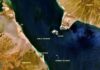
The United States said its recent military actions have “significantly degraded” Iran’s ability to threaten commercial shipping through the Strait of Hormuz, as a coalition of 22 countries including the United Arab Emirates — one of the states most exposed to Iranian retaliatory strikes—pledged to support efforts to safeguard freedom of navigation along the critical maritime corridor.
The U.S. military said the strikes targeted an underground facility used to store cruise missiles and other strategic weapons, alongside intelligence support sites and radar relay systems used to monitor vessel movements.
Admiral Brad Cooper, commander of US Central Command, said the Operation Epic Fury has reduced Iran’s operational capacity in and around the waterway, adding that Washington would continue to pursue similar targets.
“Iran’s ability to threaten freedom of navigation in and around the Strait of Hormuz is degraded as a result and we will not stop pursuing these targets,” Cooper said.
Update from CENTCOM Commander on Operation Epic Fury: pic.twitter.com/8yTLrVy4jk
— U.S. Central Command (@CENTCOM) March 21, 2026
The admiral also updated that Iran “has lost significant combat capability” in actions over the past three weeks, since President Donald Trump authorized operations on February 28.
Cooper said the U.S. has struck more than 8,000 military targets, including 130 Iranian vessels.
“Our progress is obvious,” he added.
The developments come amid renewed diplomatic pressure from President Trump, who has called on NATO members and key Asian allies to join a US-led initiative to reopen and secure the Strait of Hormuz.
European countries had initially resisted the call, but their inclusion in the latest 22-nation coalition marks a notable shift.
Trump had sharply criticized European governments for their earlier reluctance, describing them as “cowards” and warning they faced a “very bad future” without active participation in restoring safe passage through the vital trade route.
US Hits Military Targets Deep Within Iran, Deploys Marines in Middle East
The joint statement from the coalition strongly condemned attacks on commercial shipping and civilian infrastructure, including oil and gas facilities, and denounced what it described as the “de facto closure” of the strait.
Iran, for its part, has framed the disruption as a defensive measure. Supreme Leader Mojtaba Khamenei has indicated that restricting access to the Strait of Hormuz should be used as leverage against adversaries, describing it as a necessary tool to counter foreign military pressure and protect national security.
His remarks come as Tehran faces sustained US-led strikes on its military infrastructure and energy assets.
Iran War: EU, Japan and Canada Urge Moratorium on Energy Strikes, Hormuz Reopening
The United Arab Emirates has borne a significant share of Iran’s retaliatory actions, with key energy and infrastructure sites targeted in recent weeks. Iranian strikes have hit major Middle Eastern oil and gas facilities, including critical processing hubs, while UAE’s airports and related infrastructure have faced disruptions amid heightened security threats.
These attacks against energy sites in UAE, Qatar, Kuwait and Saudi Arabia have underscored the vulnerability of Gulf states and intensified calls for coordinated international protection of maritime routes.
Iran expanded its retaliatory strikes after Israel attacked its South Pars field -– the largest natural gas reserve in the world — last week. President Trump distanced the U.S. from the targeting after which Israeli Prime Minister Benjamin Netanyahu said it was holding off attacks on Iranian energy sites.
The Strait of Hormuz remains one of the world’s most strategically important chokepoints, linking the Persian Gulf to global markets. Roughly a fifth of global oil supply passes through the narrow waterway, making it indispensable to international energy security and trade.
Any prolonged disruption to shipping in the corridor could have far-reaching economic consequences. The near halt in tanker traffic has already driven oil prices above $100 per barrel, with peaks reaching even higher amid fears of sustained supply shortages. Analysts warn that a complete or prolonged blockade could trigger further price spikes, disrupt global supply chains, and fuel inflation across major economies.
Oil prices have fluctuated over the past 24 hours, hovering between $112 and $119 per barrel amid ongoing tensions around the Strait of Hormuz.
The scale of the disruption has been described as one of the most severe shocks to global energy markets in decades, highlighting the critical importance of keeping the passage open for energy exporters, importers and the shipping industry.

Ali Imran is a Washington-based journalist, who has worked for leading world news organizations as correspondent, expert and in editorial positions. He is a published author and poet.

Kiran Asim is a writer who covers the U.S., Europe, South Asia, and the Middle East. Her reports and analyses look at the geostrategic issues and contemporary developments and their economic and political implications. She also writes about society and education.