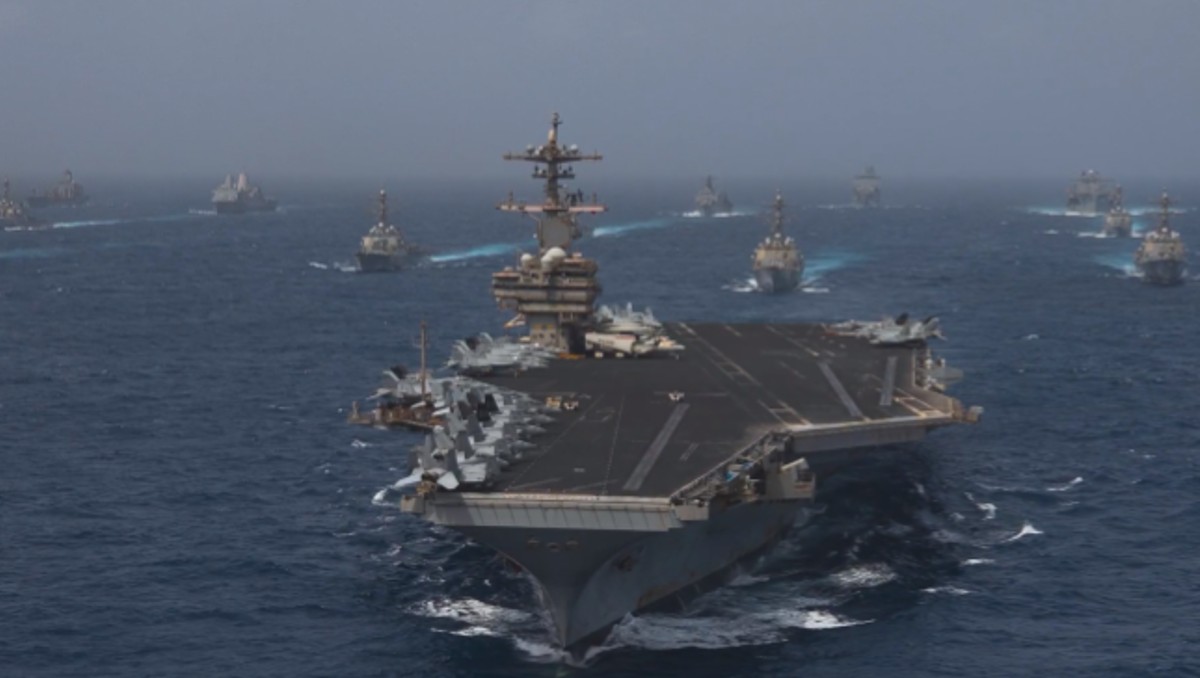
The United States has reinstated its naval blockade of Iranian ports in the Strait of Hormuz, as soaring tensions in the Middle East threaten to plunge the region back into the chaos that lasted for months before the two sides agreed to an interim peace deal last month.
“The Strait of Hormuz is open, and will remain open, with or without Iran,” President Donald Trump said in a statement posted on Truth Social after the United States launched waves of strikes against Iranian military targets in response to Iran’s attacks on commercial vessels passing through the Strait of Hormuz.
“We are reinstating the Iranian blockade, so named because it is only stopping Iran’s ships or customers from entering or leaving. All other countries will have fair and open use of the Strait,” Trump added.
According to Trump, the United States will serve as “the guardian of the Strait of Hormuz.”
The Hormuz Strait is OPEN, and will remain OPEN, with or without Iran. We are reinstating the THE IRANIAN BLOCKADE, so named because it is only stopping Iran’s ships or customers from entering or leaving. All other countries will have fair and open use of the Strait. The U.S.A.… pic.twitter.com/m81hb9Nl3p
— Commentary Donald J. Trump Truth Social Posts On X (@TrumpTruthOnX) July 13, 2026
The renewed confrontation has rattled global financial markets, with investors rushing into safe-haven assets amid fears of prolonged disruption to energy supplies through the Strait of Hormuz, a vital artery for roughly a fifth of global oil shipments.
Brent crude rose more than 4 per cent to around $79.4 a barrel, while U.S. benchmark West Texas Intermediate climbed to about $74.6 a barrel. Global equities also came under pressure, with the Dow Jones Industrial Average down about 0.2 per cent, the S&P 500 falling 0.4 per cent and the Nasdaq Composite shedding nearly 1 per cent, while several Asian and Gulf markets also retreated on concerns that higher energy costs could reignite inflation and weigh on global economic growth.
Iran has defended its attacks on commercial vessels as a response to what it describes as U.S. and allied military aggression and support for Israel, arguing that countries backing Washington’s campaign should not expect normal maritime trade through the Gulf while Iranian territory remains under attack.
Yesterday, using multiple one-way attack surface drones, CENTCOM forces successfully struck a submarine and ship maintenance facility in Iran. Three Corsair unmanned surface vessels hit the port at Bandar Abbas Naval Base, marking the first time American forces have employed sea… pic.twitter.com/bOM2kmgRxz
— U.S. Central Command (@CENTCOM) July 13, 2026
Washington has rejected that justification, accusing Tehran of endangering freedom of navigation and violating international law. U.S. Central Command (CENTCOM) said its latest operations were intended “to impose heavy costs” on Iran for “targeting and attacking commercial shipping crewed by innocent civilians in an international waterway,” adding that the strikes were carried out in response to attacks on three commercial vessels transiting the Strait of Hormuz.
In his statement, President Trump argued that, “as a matter of fairness,” the United States would be reimbursed through a 20 per cent levy on all cargo transiting the strategic waterway.
The United States, he said, will be reimbursed “for any and all costs necessary to do the job of providing safety and security to this very volatile section of the world.”
“The process and implementation will begin immediately,” Trump added.

Iftikhar Ali is a veteran Pakistani journalist, former president of UN Correspondents Association, and a recipient of the Pride of Performance civil award