The United States has imposed a fresh round of sanctions aimed at disrupting what it says is an international network involved in procuring weapons for Iran.
The U.S. Treasury Department announced sanctions against several individuals and entities accused of facilitating Iran’s military procurement activities. Those targeted include Iranian and Russian nationals, as well as companies based in Iran, Russia and Nigeria.
According to the Treasury, the sanctions target “exemplify Iran’s use of foreign aviation and transport firms, financial conduits, and travel coordinators to obscure the Islamic Revolutionary Guard Corps’ (IRGC) role in illicit procurement and to move material and personnel globally.”
The latest measures build on previous U.S. sanctions announced in May against individuals and companies, including several based in China and Hong Kong, accused of supporting Iran’s weapons sector. In June, Washington also sanctioned 11 individuals and entities for allegedly assisting weapons procurement efforts by the IRGC and the Iranian military.
.@POTUS has been clear that Iran must denuclearize. Treasury will continue to target and disrupt the illicit procurement networks that fund Iran’s weapons programs and war machine. https://t.co/TsV0MiWgYv
— Treasury Secretary Scott Bessent (@SecScottBessent) July 15, 2026
The sanctions come amid heightened military tensions between Washington and Tehran.
Iran’s state-run broadcaster reported that the country’s military had launched separate attacks on U.S. targets, while Iranian officials warned they could block additional regional trade routes if U.S. military operations continue.
The IRGC said the Strait of Hormuz would remain closed until the United States ends what it described as its “acts of aggression.” It also threatened to disrupt other regional oil and gas export routes, although it did not specify which ones.
The warning followed a fresh wave of U.S. military operations.
TRUMP again claims IRAN contacted him an hour ago and said they want to make a deal. pic.twitter.com/lYtuU5rAAn
— Acyn (@Acyn) July 14, 2026
The U.S. Central Command (CENTCOM) said it carried out drone, air and naval strikes on Iranian military targets on Wednesday, following another seven-hour operation overnight.
CENTCOM said the latest strikes were intended to further degrade Iran’s ability to threaten commercial shipping through the Strait of Hormuz. It added that a 90-minute operation targeted Iran’s coastal defense systems as well as cruise missile storage and launch sites on Greater Tunb Island.
The latest escalation has highlighted the strategic importance of the Strait of Hormuz, a vital global energy corridor, with disruptions to tanker traffic contributing to a sharp rise in international oil prices.
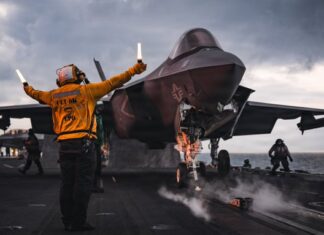
U.S. sailors conduct nighttime flight operations aboard USS George H.W. Bush (CVN 77) while transiting the Arabian Sea. pic.twitter.com/uzJcrfGFXO
— U.S. Central Command (@CENTCOM) July 15, 2026
On Tuesday, U.S. President Donald Trump warned that the United States could expand its military campaign if Iran refuses to return to negotiations.
“I’ll save the energy targets for last, but ultimately we’ll hit energy targets,” Trump said during an interview on Special Report with Bret Baier that aired Tuesday night. He also threatened to target Iran’s bridges and power plants if diplomatic efforts fail.
The comments followed Trump’s announcement that a previously proposed 20% toll on shipping through the Strait of Hormuz would instead be replaced by what he described as “massive” trade and investment agreements with Gulf states.
Iran attacked Kuwait, Bahrain and Jordan on July 14, claiming to have targeted the US Fifth Fleet’s command centre. The strikes followed US attacks on Iranian coastal cities and the collapse of talks. pic.twitter.com/B4pwQj43qE
— Al Jazeera English (@AJEnglish) July 15, 2026
Trump’s earlier threat in April to target Iran’s civilian infrastructure drew criticism from United Nations High Commissioner for Human Rights Volker Türk, who said that deliberately attacking civilians and civilian infrastructure constitutes a war crime under international law.
Separately, the United States reinstated a blockade on Iranian ports on Tuesday evening, preventing vessels from transiting to and from Iranian ports and coastal waters. The blockade had been lifted under a memorandum of understanding reached last month aimed at easing months of hostilities between the two countries.
The renewed blockade has further intensified tensions over the Strait of Hormuz, which has become a central point of dispute between Washington and Tehran.
Responding to the latest U.S. measures, the IRGC warned that Washington should “expect the closure of other oil and gas export routes that serve the interests of the United States and its allies,” without identifying the routes it could target.
Meanwhile, Iran’s state-run broadcaster reported that Iranian forces had launched separate attacks against U.S. targets in Jordan, Kuwait and Bahrain. U.S. allies in the region said they intercepted drones and missiles launched from Iran.

Muhammad Luqman is Associate Editor at Views News Now. He writes on wide-ranging issues including economy, South Asia, the Middle East, agriculture, economy and innovation. Luqman has worked some of the leading news organizations and won acclaim for his original and research-based works.