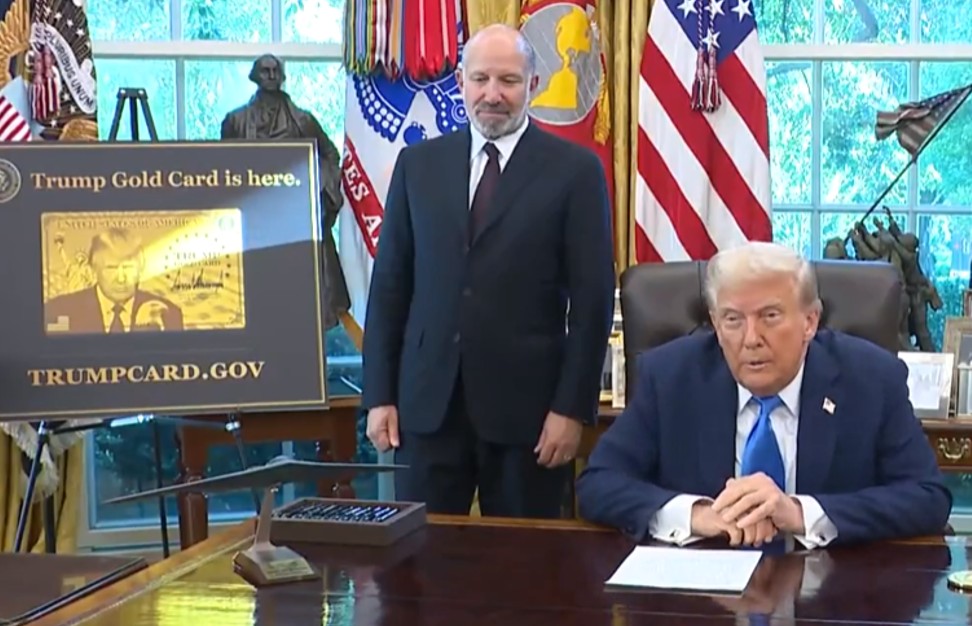
President Donald Trump on Friday signed a proclamation introducing sweeping changes to the H-1B visa program for high-skilled foreign workers, including the imposition of a new annual $100,000 application fee.
The move is part of the administration’s broader efforts to overhaul U.S. immigration policies and address what it views as exploitation of the system by major corporations.
The new fee will apply to all H-1B visa applications and must be paid annually by employers seeking to hire foreign talent. Additionally, under the executive order signed by Trump, H-1B workers will be barred from entering the U.S. unless the payment has been made.
Commerce Secretary Howard Lutnick confirmed the fee and noted that “all big companies” are supportive of the change.
Tech giants such as Amazon, Google, Microsoft, and IBM—among the largest users of the H-1B program—are expected to be significantly impacted. The program was originally designed to help companies fill specialized roles with top international talent, but critics, including the Trump administration, argue it has been used to hire cheaper foreign labor in place of American workers.
“The companies are going to pay a lot of money for this, and they’re very happy about it,” Trump said, insisting that the tech industry supports the move.
Major firms including Amazon, Apple, Google, Meta and Microsoft have not publicly commented on the move yet.
In a separate announcement, Trump revealed two new visa offerings aimed at wealthy foreigners: the “Trump Gold Card” and “Trump Platinum Card.”
The Trump Gold Card offers a potential pathway to U.S. citizenship and will require a processing fee plus a $1 million contribution from individuals, or $2 million from companies, following a vetting process.
The Trump Platinum Card, which replaces a previously announced $5 million “Gold Card” from February, will require a $5 million contribution. It allows holders to stay in the U.S. for up to 270 days annually without being subject to U.S. taxes on non-U.S. income.
These new visa tiers are designed to attract high-net-worth individuals and investors as an alternative to traditional immigration and residency programs.
The latest measures signal a sharp shift in U.S. immigration policy, with the Trump administration focusing on monetizing visa access while tightening restrictions on existing employment-based pathways.
Follow for more: Twitter (X) | Facebook | Instagram | LinkeIn

Huma Nisar is Associate Editor at Views News Now. She also writes opinion articles on health, society and diet.