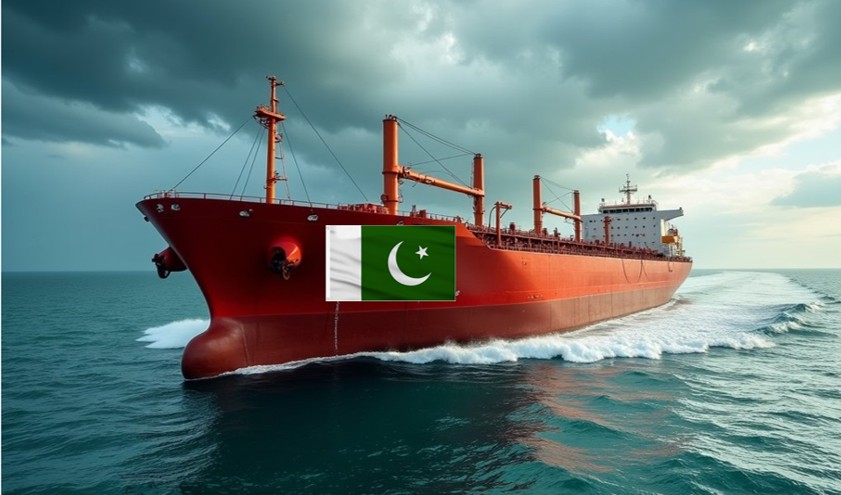
A Pakistan-bound oil tanker carrying diesel from Kuwait has successfully exited the Strait of Hormuz, marking a rare transit through the recently disrupted waterway.
The vessel, Khairpur, operated by Khairpur Shipping Private Limited, began its voyage on Thursday via a Tehran-approved northern route near the Qeshm and Larak islands, according to vessel-tracking data cited in the report. The tanker is currently en route to Karachi and is expected to dock on May 4.
Data from energy intelligence firm Kpler indicates that Khairpur loaded around 511,000 barrels of diesel at Kuwait’s Mina Al Ahmadi port before setting sail.
In a similar development last month, another Pakistani-flagged tanker, Shalamar, transited the Strait of Hormuz carrying approximately 440,000 barrels of Abu Dhabi’s Das Blend crude.
Global Oil Markets Under Pressure
Global oil markets have remained volatile since late February, when US and Israeli strikes on Iran led to disruptions in the Strait of Hormuz, affecting nearly one-fifth of global oil and liquefied natural gas supplies. Brent crude prices surged by about 50% in March amid the crisis.
Pakistan’s Energy Security Push
Against this backdrop, Pakistan is exploring plans to establish strategic oil storage facilities in partnership with Saudi Arabia to strengthen energy security and mitigate supply disruptions during geopolitical crises, The Business Recorder reported.
Currently, Pakistan lacks strategic oil reserves and maintains stocks sufficient for only 20 to 30 days—levels widely considered inadequate in emergency scenarios. A proposal under discussion at a recent high-level meeting suggests inviting Saudi Arabia to invest in developing such infrastructure.
Earlier offers from Azerbaijan and the United Arab Emirates to assist Pakistan in building oil storage facilities did not materialize due to bureaucratic delays. A proposed “oil city” project also failed to progress.
Officials say a government committee has now been formed to evaluate options for establishing strategic reserves, after recent regional tensions exposed vulnerabilities in Pakistan’s petroleum supply chain.
Gwadar and Regional Energy Ambitions
The discussions also include the potential revival of a $10 billion Saudi-backed oil refinery project in Gwadar. Experts believe that developing storage facilities in Gwadar could not only strengthen Pakistan’s energy resilience but also provide regional partners, including China, with an alternative route that bypasses the Strait of Hormuz.
Regional Connectivity and Crisis Response
During the recent conflict, Pakistan facilitated trade by opening all six border routes with Iran to clear around 3,000 stranded containers, underscoring the strategic importance of regional connectivity.
In addition to oil storage, authorities are also considering reviving plans to develop gas storage facilities in depleted oil and gas fields to address recurring energy shortages. Pakistan faced a power crisis during the conflict due to limited LNG availability, highlighting structural weaknesses in its energy infrastructure.
Industry experts emphasize that expanding both oil and gas storage capacity is essential for ensuring long-term energy security and economic stability, particularly in a region repeatedly affected by geopolitical disruptions.

Muhammad Luqman is Associate Editor at Views News Now. He writes on wide-ranging issues including economy, South Asia, the Middle East, agriculture, economy and innovation. Luqman has worked some of the leading news organizations and won acclaim for his original and research-based works.