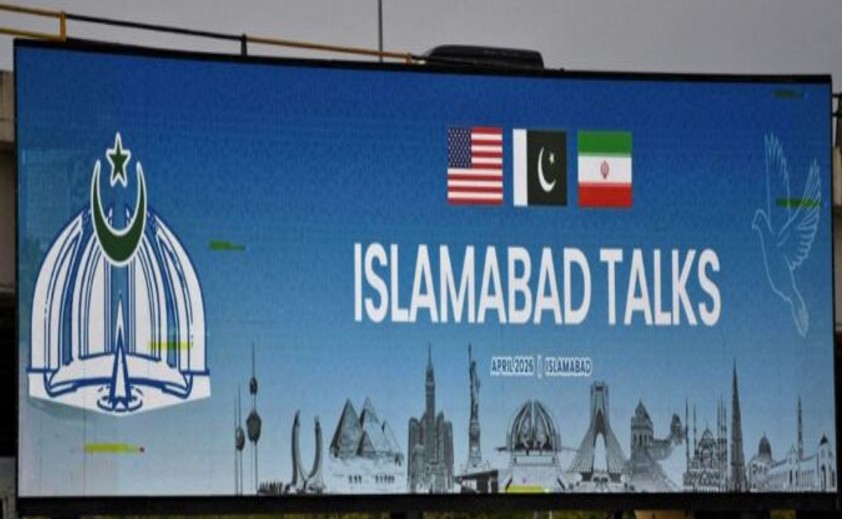
As U.S.-Iran tensions simmer in the Gulf, Pakistan has stepped up its diplomatic efforts to position itself as a mediator for a crucial second round of negotiations between Washington and Tehran.
With a two-week ceasefire set to expire in the coming days, the capital is on high alert for the arrival of American negotiators.
Elaborate Security Arrangements
On Monday, Pakistan’s Interior Minister Mohsin Naqvi held detailed discussions on security preparations for the planned second round of talks in Islamabad with the United States’ ambassador to Pakistan, Natalie Baker.
Islamabad on Virtual Lockdown Ahead of High-Stakes Iran–US Talks
According to the Ministry of Interior, officials “discussed in detail the regional situation.” The interior minister briefed Ambassador Baker on measures already in place, stating that “special security arrangements have been made for all guests.”
Senior officials, including Director General of the Federal Investigation Agency (FIA) Dr. Usman Anwar, Islamabad Chief Commissioner Sohail Ashraf, Inspector General of Police Ali Nasir Rizvi, and Deputy Commissioner Irfan Memon, attended the meeting.
Trump Confirms US Delegation Travel
The latest push for a second round came from the White House on Sunday, following Pakistan’s recent diplomatic engagements in the region, including with Tehran.
President Donald Trump said U.S. representatives were heading to Islamabad and would be “there tomorrow evening” for talks with Iran.
Trump Thanks Pakistan as US-Iran Talks Show Signs of Progress
The planned discussions follow an initial round hosted by Pakistan on April 11–12, which ended without a breakthrough but also without a collapse.
Capital Prepares
Islamabad, known for its greenery in the spring season, appears to be gearing up for the talks.
The city’s Red Zone has been closed to regular traffic as authorities prepare to receive foreign delegations, police said. Local administrators have implemented alternate traffic plans to manage disruptions.
Fragile Ceasefire, Rising Stakes
The first round of direct U.S.-Iran talks marked a rare diplomatic engagement between the two sides, but key differences remain unresolved.
Iran’s Mixed Signals on Planned US Talks: Posturing or Policy?
Washington and Tehran continue to disagree over the closure of the Strait of Hormuz and the U.S. naval blockade of Iranian ports. Iran said it would keep the strategic shipping route closed until the blockade is lifted.
The two-week ceasefire, brokered by Pakistan, began on April 7 after more than a month of conflict and is set to expire on April 22.
Pakistan’s Key Role
With the deadline approaching and tensions still elevated, uncertainty persists over whether a second round of talks will materialize.
Islamabad not only has high stakes for ensuring stability on its long border with Pakistan, it also buys an enormous share of oil and gas from the energy-rich Gulf nations, that have been embroiled in the conflict since it broke out on February 28.
Pakistan in the Middle as US Delegation Heads to Islamabad for High-Stakes Iran Talks
On top of all geopolitical considerations, Pakistan has a defense agreement in place with Saudi Arabia, the leader of the Muslim world and one of Islamabad’s closet allies.
Pakistan’s role as a mediator is once again under scrutiny, with Washington and Tehran still far apart on key issues and Iran sending mixed signals about its participation.

Kiran Asim is a writer who covers the U.S., Europe, South Asia, and the Middle East. Her reports and analyses look at the geostrategic issues and contemporary developments and their economic and political implications. She also writes about society and education.

Ali Imran is a Washington-based journalist, who has worked for leading world news organizations as a correspondent, expert and in editorial positions. He is a published author and poet.