After two weeks of intense military strikes, Washington has abruptly hit the pause button on its bombing campaign, creating a high-stakes operational opening.
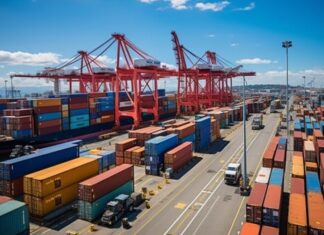
While President Donald Trump expresses cautious optimism that back-channel contacts could yield a breakthrough, the sudden shift in posture exposes a delicate friction between maximalist diplomatic ambitions and hard military realities on the ground and risks to shipping through the Strait of Hormuz.
The move coincides with stepped-up diplomatic work by Pakistan, the chief mediator and signatory to June 17 ceasefire between the U.S. and Iran, and Qatar, while both sides stick to familiar positions on how—and whether—talks should proceed.
Trump’s Dual Track: Diplomacy with a Deadline
President Donald Trump has made clear that he prefers a diplomatic outcome over prolonged warfare, publicly confirming that indirect and intermediary contacts between Washington and Tehran are underway.
“We are having good talks with Iran,” Trump said, signaling that he believes a peaceful resolution remains reachable and noting there is “a good chance that something could happen.”
At the same time, the White House is maintaining a firm boundary against drawn-out negotiations. Trump emphasized that the U.S. will not participate in endless talks and that Iran will never be allowed to acquire a nuclear weapon.
Should diplomatic efforts fall through, the president cautioned that he remains prepared to authorize severe military force.
A MH-60R Sea Hawk delivers supplies to guided-missile destroyer USS Mason (DDG 87) in the Arabian Sea. pic.twitter.com/GuzLKdap7G
— U.S. Central Command (@CENTCOM) July 26, 2026
Strategic Limits in the Strait of Hormuz
The immediate catalyst for the current halt in military operations appears to have come directly from senior U.S. commanders. According to sources familiar with internal administration discussions, Adm. Brad Cooper, commander of U.S. Central Command (CENTCOM), formally recommended bringing the bombing campaign around the Strait of Hormuz to pause. Adm. Cooper advised leadership that two weeks of sustained strikes had largely accomplished their operational aims and reached the limits of their strategic effectiveness.
His assessment, delivered alongside recommendations from civil and military advisers, played a central role in President Trump’s decision on Friday to pause attacks.
According to FOX News, beyond operational limits in the Strait, military leadership raised severe warnings regarding the broader liabilities of resuming major combat operations:
General Dan Caine, Chairman of the Joint Chiefs of Staff, raised critical concerns regarding the depletion of U.S. weapons inventories. U.S. Ambassador to the United Nations Mike Waltz addressed this constraint directly on Fox News, acknowledging the strain left by prior commitments.
“We inherited a difficult situation with many of our munitions having been given over in Ukraine,” Waltz said. “A lot of them expended in the Houthis, but we are rebuilding with cheaper, faster, more technologically capable [weapons] as we are conducting this campaign.”
Advisers warned that escalating to broader combat operations would inevitably cause massive civilian casualties inside Iran.
Senior aides cautioned President Trump against striking Iranian civilian infrastructure, warning that doing so could constitute war crimes and trigger widespread humanitarian suffering, leaving millions without food and essential services.
Mediator Pakistan Faces Challenge as Saudi Arabia Faces Attacks
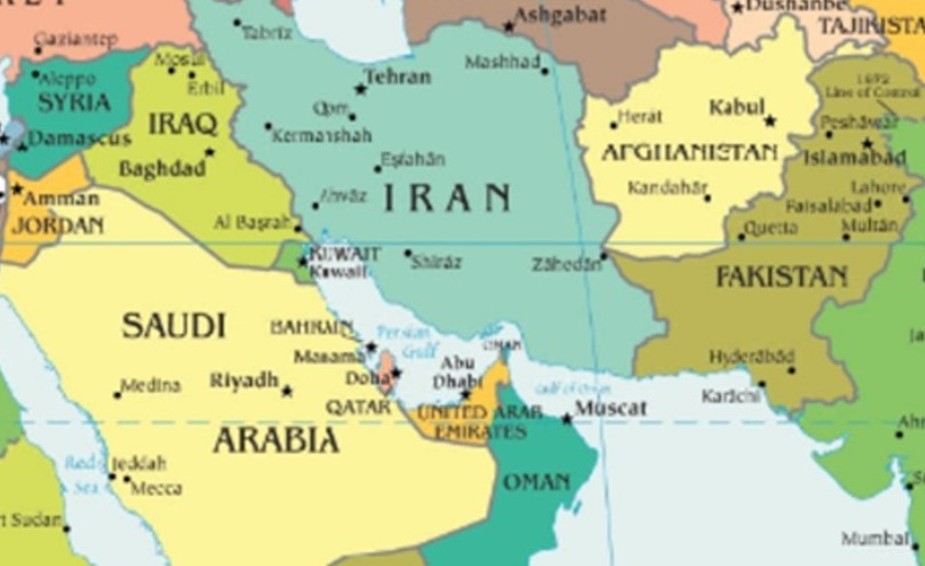
Islamabad and Doha have intensified their joint mediation efforts. The two countries are urging Tehran and Washington to halt hostilities and return to implementing an earlier peace deal known as Islamabad Memorandum of Understanding.
Iranian officials confirmed they have received new mediation proposals.
High-level contacts continue, including a visit by Iran’s Interior Minister to Islamabad carrying a message from President Masoud Pezeshkian. Pakistani and Iranian foreign ministers also met on the margins of an international summit last week.
⚡️BREAKING: Yemen’s Houthis have announced a Naval Blockade on Saudi Arabia from the Red Sea
This move essentially Cuts OFF Saudi oil exports through the Bab al-Mandeb Strait pic.twitter.com/gqV8E5hfq1
— Iran Observer (@IranObserver0) July 20, 2026
Pakistani and Qatari mediators have held separate meetings with American and Iranian negotiators, most recently in Doha, and reported “positive progress” on implementation questions.
However, Islamabad again faces a test of its diplomatic skills as Iran-backed forces based in Yemen and Iraq target Saudi Arabia. Riyadh has countered some of the strikes but some missiles reportedly hit an energy infrastructure.
Pakistan has a mutual defense pact with Saudi Arabia and is obliged to come to Riyadh’s aid in the case of aggression by a third country. Islamabad has sent an explicit message to Tehran on stopping all attacks against Saudi Arabia.
The attacks from Yemen and Iraq follow the Houthi-claimed attacks on Saudi oil tankers in the Red Sea — upping the stakes for Islamabad.
🔈 PR No. 1️⃣9️⃣1️⃣/2️⃣0️⃣2️⃣6️⃣
Pakistan Condemns Drone Attacks Against the Kingdom of Saudi Arabia
🔗⬇️ pic.twitter.com/iL1ymildlq
— Ministry of Foreign Affairs – Pakistan (@ForeignOfficePk) July 27, 2026
The Pause and the Conditions Attached
The Pentagon has not detailed the operational reasons for the pause. U.S. Ambassador to the United Nations Mike Waltz told Fox News that President Trump is “giving talks some space” and “a little bit of room” for diplomacy. Waltz noted that negotiators from Oman, Iran, and other parties have been engaged at senior and technical levels in recent days.
A senior Iranian official, speaking anonymously to Reuters, stated that Tehran’s position “remains ‘attack for attack’: If the attacks stop, Iran will also halt its operations.”
The official added that this message has already been conveyed to the United States. Iran’s army spokesperson separately told state television that since the U.S. halted attacks for two nights, Iran has done the same.
No Direct Talks, Only Through Mediators
According to Al-Jazeera Tehran continues to reject direct negotiations with the United States.
Officials in Tehran insist all discussion must take place through mediators—primarily Pakistan and Qatar.
President Trump has said the two sides are talking and that Iran is “being by far the most serious that we’ve seen them,” while cautioning that Tehran is “not yet ready for a deal.”
He has framed the current pause as giving diplomacy time to work, even as he has previously spoken of considering a “massive attack.”
US-Iran Conflict: Can a Fragile Pause Become a Diplomatic Opportunity?
Iran’s Supreme Leader Mojtaba Khamenei has taken a harder public stance.
According to IRNA News, In a written statement read on state television, he called Trump’s signature “utterly worthless and invalid,” and accused Washington of repeatedly violating the earlier memorandum of understanding. Khamenei warned that Iran and the “Resistance Front” hold “unforgettable lessons” if attacks continue. He has also pledged revenge for the killing of his father, the previous supreme leader.
Broader Context and Remaining Issues
The recent exchange of fire was tied to Iranian attacks on commercial vessels in the Strait of Hormuz and subsequent U.S. responses.
Casualties among American service members at bases in the region have been reported. Hardliners inside Iran continue to voice opposition to negotiations even as mediators press for de-escalation.
While Washington frames the pause as an opportunity for diplomacy, statements from Tehran reflect a far colder reality. Iranian Foreign Ministry spokesperson Esmail Baghaei confirmed that third-party channels remain active but firmly denied that direct negotiations are taking place.
“Mediators were conveying messages to us from the American side regarding ongoing developments in the region,” Baghaei stated during a news conference.
“But at present, we have no negotiations with the American side.”
Baghaei added that while Iran has engaged in constructive discussions with neighboring Oman regarding regional shipping management, Tehran will not allow Washington to dictate the terms or timing of war and peace.
A Fragile Pause
A fragile mutual pause is in place. Pakistan and Qatar are actively trying to convert that pause into renewed implementation of prior understandings. Iran refuses direct talks and conditions any halt on reciprocal U.S. restraint. The American side is publicly giving diplomacy more room while keeping military options available. Iran’s proxies from Yemen and Iraq continue to target Saudi Arabia. The nuclear stockpile, the Strait of Hormuz, and the durability of any ceasefire arrangement remain the core unresolved questions. The region is still in fragile phrase.

Kiran Asim is a writer who covers the U.S., Europe, South Asia, and the Middle East. Her reports and analyses look at the geostrategic issues and contemporary developments and their economic and political implications. She also writes about society and education.