Pakistan continued to target militant targets in Afghanistan while also intercepting drones fired from across the volatile border, as multi-sector border clashes that have resulted in significant casualties.
The conflict extended beyond conventional battlefields, when the Afghanistan-based militants attempted to hit three Khyber Pakhtunkhwa cities with drones.
According to Information Minister Ataullah Tarar, the Tehreek-e-Taliban Pakistan militants, who are operating from their bases in Afghanistan, attempted drone attacks targeting Abbottabad, Swabi and Nowshera.
Pakistan’s anti-drone systems, he said, intercepted all incoming devices without casualties.
He argued that these incidents underscored direct links between the Afghan Taliban regime and terrorist activity inside Pakistan. Tarar’s remarks referred to the Afghan Taliban being in cohorts with the TTP in carrying out terror attacks in Pakistan. Islamabad has long asked the Afghan Taliban regime to stop the TTP from operating on the Afghan soil.
The last few weeks saw a string of terror attacks including one on a Shiite Mosque in capital Islamabad and against security personnel Khyber Pakhtunkhwa province bordering Afghanistan. Pakistani officials traced these bombings to Afghanistan.

Pakistani armed forces have initiated “Operation Ghazab lil-Haq” in retaliation to what they term “unprovoked aggression” by Afghan Taliban forces along the border.
What began as border exchanges has now evolved into a multi-sector military confrontation, accompanied by sweeping claims of territorial gains, aerial strikes, and mounting casualties.
According to officials, the clashes began with aggressive actions from the Afghan side, prompting a “befitting reply” from Pakistani security forces. Pakistan’s Information Minister, Attaullah Tarar, confirmed that two Pakistani security personnel lost their lives and three others were injured in the clashes.
He stated that at least 36 Afghan Taliban operatives were killed in the early phase of fighting, while several individuals were reportedly wounded on the Afghan side.
Tarar accused the Afghan Taliban authorities and Indian-linked social media networks of spreading “false and baseless propaganda” to distort the reality on the ground, asserting that Pakistan’s armed forces had delivered a decisive and professional response.
UN Chief Urges Diplomacy as Afghanistan–Pakistan Border Tensions Escalate
Islamabad formally announced the launch of “Operation Ghazab lil-Haq,” framing it as a counteroffensive against Taliban aggression. Pakistani forces reportedly destroyed ammunition depots, battalion and sector headquarters, and significant military hardware, including tanks, artillery guns and armored personnel carriers. PTV News later claimed that more than 30 such assets had been neutralized.
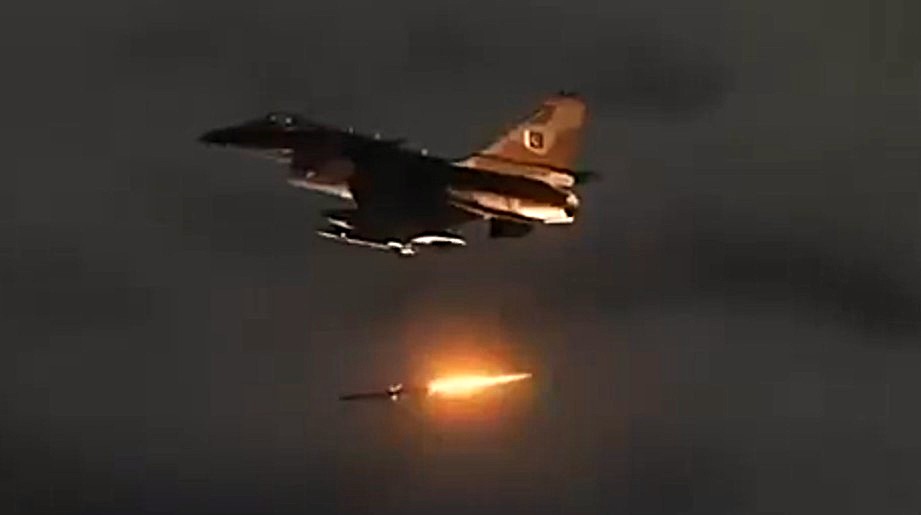
In a significant escalation, PTV News reported that Pakistani forces conducted air strikes targeting key Afghan Taliban installations deep within Afghanistan, specifically in Kabul, Kandahar, and Paktia.
These strikes reportedly destroyed: Two brigade headquarters in Kabul. One corps headquarters, one brigade headquarters, an ammunition depot, and a logistics base in Kandahar. One corps headquarters in Paktia.
According to state broadcaster PTV News, Pakistani forces launched targeted operations against militant hideouts near the Nawapas sector and other border regions. Security sources cited by the channel reported that Taliban positions were destroyed and fighters forced to retreat. Engagements were reported across multiple sectors, including Bajaur, Mohmand, Tirah in Khyber, Arandu in Chitral, and areas near Kurram.
Pakistani Defense Minister Khawaja Asif:
After NATO forces withdrew, it was expected that peace would prevail in Afghanistan and that the Taliban would focus on the interests of the Afghan people and regional stability.
However, the Taliban turned Afghanistan into a colony of… pic.twitter.com/WLTEpExV08
— Clash Report (@clashreport) February 26, 2026
As the confrontation widened, official casualty figures shifted. Initial reports of 44 Afghan casualties were followed by statements from the Prime Minister’s spokesperson on foreign media, Mosharraf Zaidi, who claimed that 72 Afghan Taliban combatants had been killed and over 120 injured.
He further stated that 16 Afghan posts were destroyed and seven captured. In subsequent updates, the toll was revised upward to 133 Afghan Taliban operatives killed and more than 200 injured, alongside the destruction of 27 posts and the capture of nine others. Reports indicate the destruction of over 30 tanks, artillery guns, and armored personnel carriers, along with a major ammunition depot and a sector headquarters.
Following the retaliatory strikes, security sources claim that Afghan Taliban fighters have been forced to flee their positions, with some posts reportedly waving “white flags” in surrender.
In the South Waziristan Lower sector, Pakistani forces reportedly took control of five key checkposts, raising the Pakistani flag over them. Security sources claimed that Taliban fighters abandoned vehicles and retreated. Meanwhile, infiltration attempts in Bajaur were allegedly thwarted, with one suspected “Fitna al-Khawarij” militant captured alive.
Air power marked a significant escalation. Pakistani strikes reportedly targeted installations in Kabul, Kandahar, and Paktika, with additional operations in Paktia.
According to state media, brigade and corps headquarters, logistics bases, and ammunition depots were destroyed. The Taliban government’s spokesperson, Zabiullah Mujahid, acknowledged that air strikes had occurred in Afghan territory.
Political leadership in Islamabad echoed the military’s resolve. Prime Minister Shehbaz Sharif declared that Pakistan’s armed forces were fully prepared to defend the country’s sovereignty and territorial integrity, emphasizing that while Pakistan seeks peace, it would not compromise on national security. President Asif Ali Zardari similarly warned that any miscalculation of Pakistan’s restraint as weakness would invite a “strong and far-reaching response.”
Defense Minister Khawaja Asif went further, asserting that following NATO’s withdrawal from Afghanistan, expectations of regional stability had not materialized. Instead, he accused the Taliban of turning Afghanistan into a proxy for India and exporting terrorism into Pakistan — a claim likely to deepen geopolitical fault lines.

Kiran Asim is a writer who covers the U.S., Europe, South Asia, and the Middle East. Her reports and analyses look at the geostrategic issues and contemporary developments and their economic and political implications. She also writes about society and education.