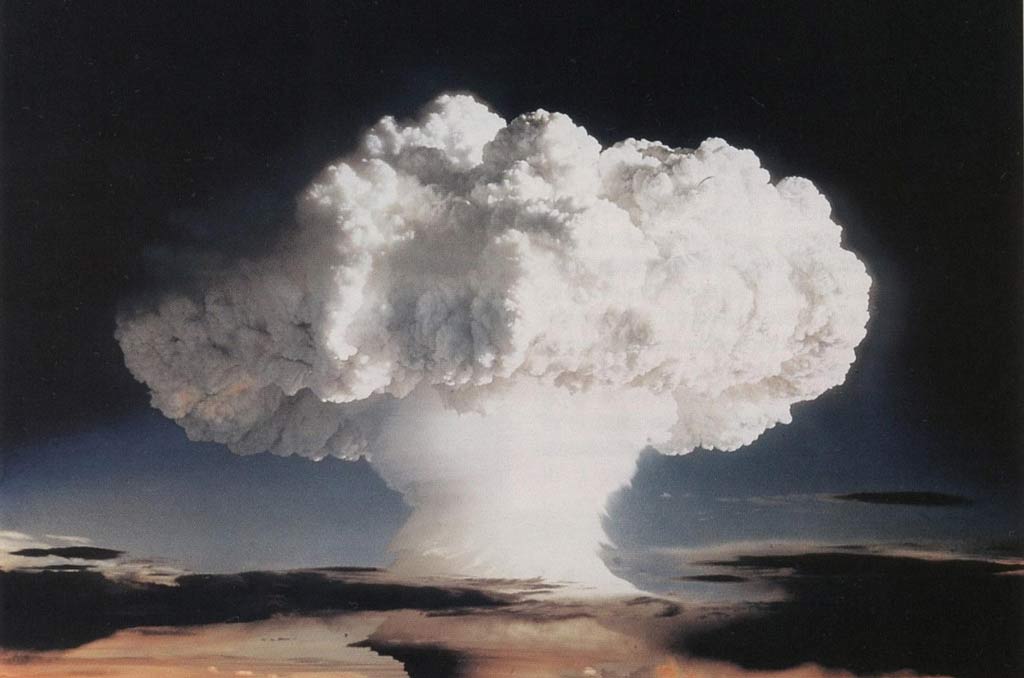
Nuclear risks grow as new arms race looms – The world appears to be heading toward a new era of nuclear arms race as nuclear-armed states—the United States, Russia, the United Kingdom, France, China, India, Pakistan, the Democratic People’s Republic of Korea (North Korea) and Israel—pursued intensive nuclear modernization programs in 2024, according to a new report.
Stockholm International Peace Research Institute said in its latest report that nearly all nine nuclear capable countries upgraded their existing weapons and added newer versions.
Since the end of the cold war, the gradual dismantlement of retired warheads by Russia and the USA has normally outstripped the deployment of new warheads, resulting in an overall year-on-year decrease in the global inventory of nuclear weapons, the report says.
This trend is likely to be reversed in the coming years, as the pace of dismantlement is slowing, while the deployment of new nuclear weapons is accelerating. Nuclear risks grow as new arms race looms
‘The era of reductions in the number of nuclear weapons in the world, which had lasted since the end of the cold war, is coming to an end,’ said Hans M. Kristensen, Associate Senior Fellow with SIPRI’s Weapons of Mass Destruction Program and Director of the Nuclear Information Project at the Federation of American Scientists (FAS).
‘Instead, we see a clear trend of growing nuclear arsenals, sharpened nuclear rhetoric and the abandonment of arms control agreements.’

Of the total global inventory of an estimated 12 241 warheads in January 2025, about 9614 were in military stockpiles for potential use). An estimated 3912 of those warheads were deployed with missiles and aircraft and the rest were in central storage. Around 2100 of the deployed warheads were kept in a state of high operational alert on ballistic missiles. Nearly all of these warheads belonged to Russia or the USA, but China may now keep some warheads on missiles during peacetime.
Russia and the United States together possess around 90 per cent of all nuclear weapons. The sizes of their respective military stockpiles (i.e. useable warheads) seem to have stayed relatively stable in 2024 but both states are implementing extensive modernization programs that could increase the size and diversity of their arsenals in the future, the SIPRI said.
“If no new agreement is reached to cap their stockpiles, the number of warheads they deploy on strategic missiles seems likely to increase after the bilateral 2010 Treaty on Measures for the Further Reduction and Limitation of Strategic Offensive Arms (New START) expires in February 2026.”
The research institute estimates that China now has at least 600 nuclear warheads. China’s nuclear arsenal is growing faster than any other country’s, by about 100 new warheads a year since 2023. By January 2025, China had completed or was close to completing around 350 new ICBM silos in three large desert fields in the north of the country and three mountainous areas in the east.
Depending on how it decides to structure its forces, China could potentially have at least as many ICBMs as either Russia or the USA by the turn of the decade. Yet even if China reaches the maximum projected number of 1500 warheads by 2035, that will still amount to only about one third of each of the current Russian and US nuclear stockpiles.
Although the UK is not thought to have increased its nuclear weapon arsenal in 2024, its warhead stockpile is expected to grow in the future, after the 2023 Integrated Review Refresh confirmed earlier plans to raise the ceiling on warhead numbers.
France continued its programs last year to develop a third-generation SSBN and a new air-launched cruise missile, as well as to refurbish and upgrade existing systems, including an improved ballistic missile with a new warhead modification.
India is believed to have once again slightly expanded its nuclear arsenal in 2024 and continued to develop new types of nuclear delivery system. India’s new ‘canisterized’ missiles, which can be transported with mated warheads, may be capable of carrying nuclear warheads during peacetime, and possibly even multiple warheads on each missile, once they become operational.
Pakistan also continued to develop new delivery systems and accumulate fissile material in 2024, suggesting that its nuclear arsenal might expand over the coming decade.
North Korea continues to prioritize its military nuclear programe as a central element of its national security strategy. SIPRI estimates that the country has now assembled around 50 warheads, possesses enough fissile material to produce up to 40 more warheads and is accelerating the production of further fissile material. South Korean officials warned in July 2024 that North Korea was in the ‘final stages’ of developing a ‘tactical nuclear weapon’. In November 2024 the North Korean leader, Kim Jong Un, called for a ‘limitless’ expansion of the country’s nuclear program.
Israel—which does not publicly acknowledge possessing nuclear weapons—is also believed to be modernizing its nuclear arsenal. In 2024 it conducted a test of a missile propulsion system that could be related to its Jericho family of nuclear-capable ballistic missiles. Israel also appears to be upgrading its plutonium production reactor site at Dimona.
Follow for more: Twitter (X) | Facebook | Instagram | LinkeIn

Muhammad Luqman is Associate Editor at Views News Now. He writes on wide-ranging issues including economy, South Asia, the Middle East, agriculture, economy and innovation. Luqman has worked some of the leading news organizations and won acclaim for his original and research-based works.