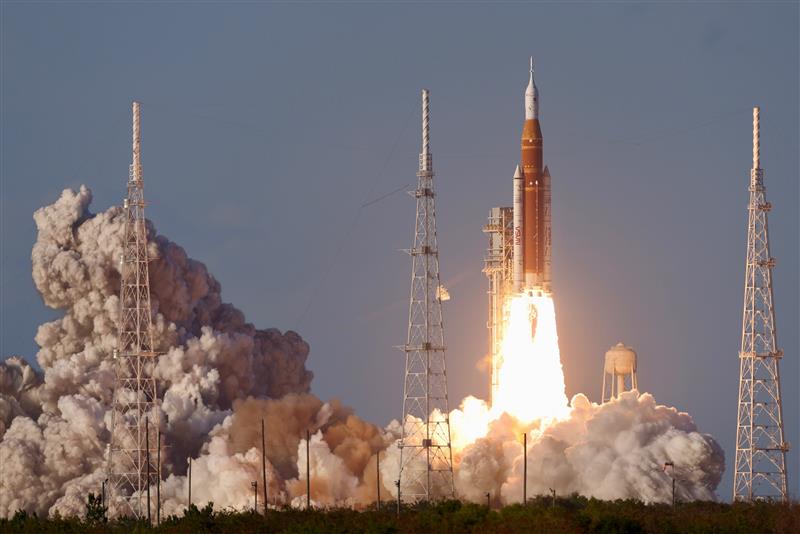
The National Aeronautics and Space Administration on Wednesday launched its Artemis II mission, sending four astronauts into space aboard the Orion spacecraft for the first American crewed journey around the Moon in more than five decades.
The Space Launch System (SLS) rocket lifted off from Kennedy Space Center in Florida at 6:35 p.m. EDT, marking a major milestone in the United States’ return to human lunar exploration since the Apollo era.
“This launch marks a defining moment for our nation and for all who believe in exploration,” NASA Administrator Jared Isaacman said, describing the mission as the beginning of a broader effort to establish a sustained human presence on the Moon and prepare for future missions to Mars.
LIVE: Artemis leaders are discussing the successful launch of NASA’s Artemis II mission and the next steps for the astronauts headed on their journey around the Moon. https://t.co/U1Bt9FPNc1
— NASA (@NASA) April 2, 2026
The approximately 10-day mission includes NASA astronauts Reid Wiseman, Victor Glover and Christina Koch, along with Canadian astronaut Jeremy Hansen.
As the first crewed flight under the Artemis program, the mission aims to test critical systems, including life support, and validate the spacecraft’s performance in deep space.
Shortly after launch, Orion successfully deployed its solar arrays and began transitioning into flight operations. The spacecraft is expected to enter a high Earth orbit before undertaking a key engine burn to send it toward the Moon.
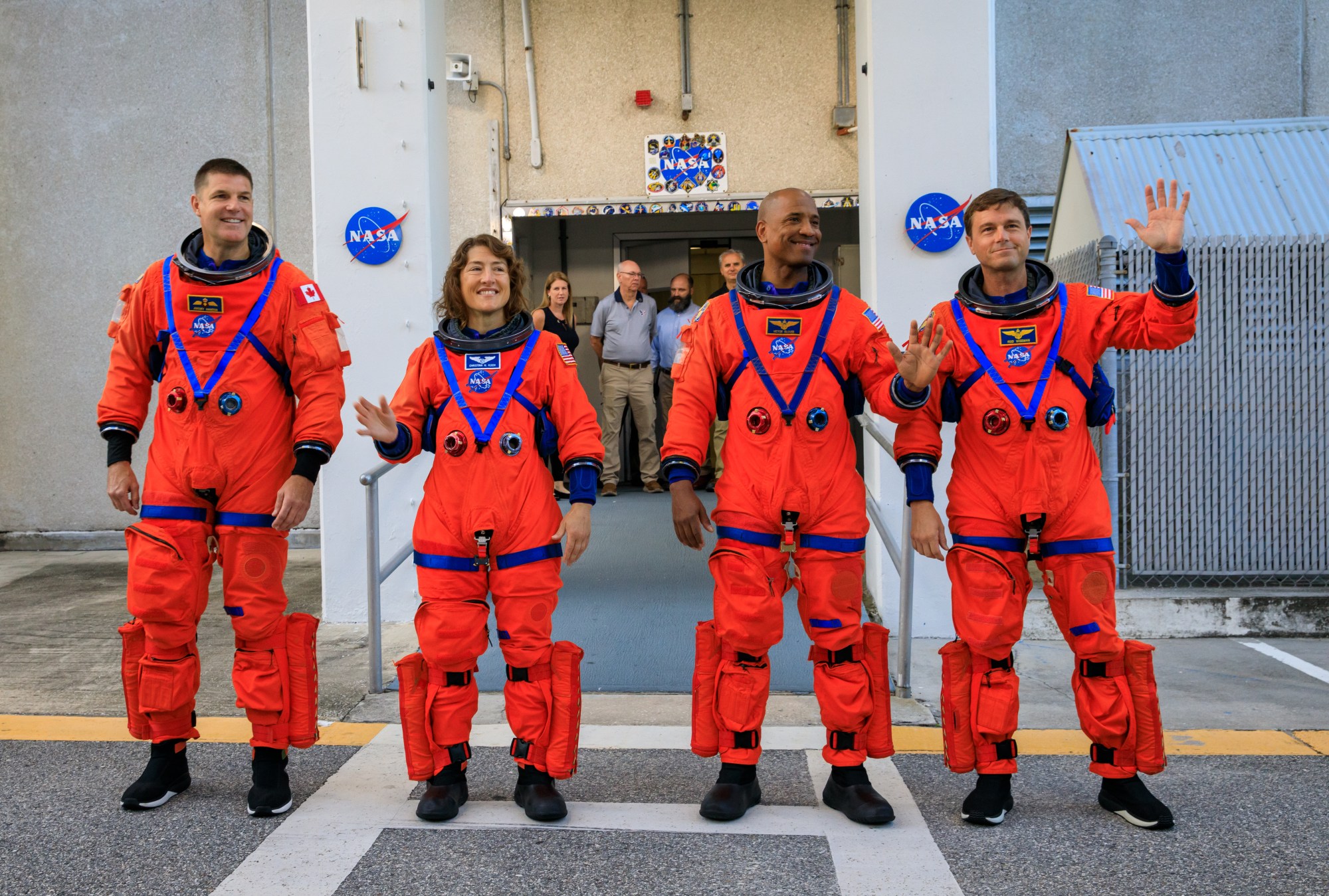
If all systems perform as planned, Orion will execute a translunar injection maneuver, carrying the crew on a trajectory around the Moon before using its gravity to return to Earth.
During the flyby, scheduled for early next week, astronauts will observe and photograph the lunar surface, including parts of the far side rarely seen by humans.
Liftoff.
The Artemis II mission launched from @NASAKennedy at 6:35pm ET (2235 UTC), propelling four astronauts on a journey around the Moon.
Artemis II will pave the way for future Moon landings, as well as the next giant leap — astronauts on Mars. pic.twitter.com/ENQA4RTqAc
— NASA (@NASA) April 1, 2026
The mission will also deploy several small satellites for scientific and technological experiments, while astronauts conduct in-flight tests and research to support future deep-space missions.
Following the lunar flyby, the crew is expected to return to Earth with a splashdown in the Pacific Ocean. NASA officials say Artemis II is a critical step toward future missions that aim not only to revisit the Moon, but to establish a long-term human presence and lay the groundwork for eventual crewed missions to Mars.

Huma Nisar is Associate Editor at Views News Now. She also writes opinion articles on health, society and diet.