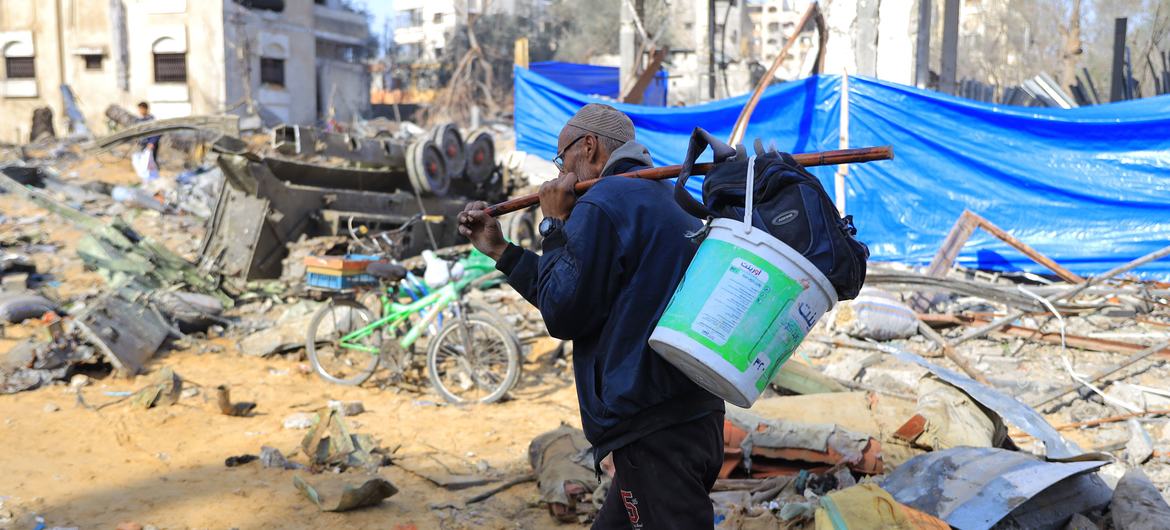
Sweltering heat, raw sewage and overflowing trash are worsening the situation for displaced families in southern Gaza as they face an escalating public health crisis while aid and medical supplies dwindle, the United Nations said Wednesday.
In the makeshift coastal encampments of Al Mawasi, families have no choice but to live in unsanitary conditions that are rapidly turning deadly, Louise Wateridge, Senior Emergency Officer at Palestine refugee agency, said.
The official spoke as people in the war-ravaged Gaza Strip wait for enough food supplies. Supplies have been disrupted by an Israeli blockade while there has been no progress toward resuming talks between Israel and Hamas on ceasefire and return of hostages taken on October 7, 2023 – when a militant attack triggered the war.
Since then, Israeli military actions have displaced a large part of Gaza’s population and killed more than 60,000 Palestinians including a large number of children and women, according to Gaza Health officials in the Hamas-ruled area.
The October 7 Hamas attack killed around 1200 people in Israel. In addition, Hamas kidnapped around 250 people and kept them as hostages in Gaza.
UN officials said Humanitarian space continues to be shut down, OCHA said. Vital humanitarian aid has not entered Gaza for 52 consecutive days.
The United States, Egypt and Qatar brokered the talks between Israel and Hamas, which led to two ceasefires and release of Israeli hostages as well as Palestinian prisoners. Washington has designated Hamas as a terrorist organization.
UN official Louise Wateridge described an increasingly dire situation in Gaza with malnourished children and families, already worn down by months of war, unrelenting heat, unsanitary conditions, a lack of clean water and limited access to healthcare.
“The trash is just out of control. The sewage, the rodents, the pests, the rats, the mice – all of these animals are going between the structures that people are sheltering in,” she said.
She said “disease is spreading. There is not enough medicine.”

Iftikhar Ali is a veteran Pakistani journalist, former president of UN Correspondents Association, and a recipient of the Pride of Performance civil award