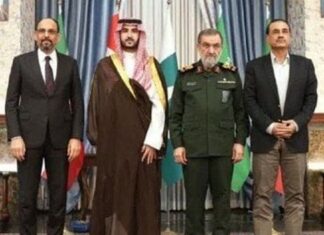
In a last-ditch diplomatic effort to avert further escalation across the Arabian Peninsula and the wider Middle East, senior officials from Pakistan, Saudi Arabia and Türkiye are due to meet Iranian leaders in Tehran on Monday, marking the first high-level engagement between Iran and all three Makkah Pact members.
The region faces multiple, overlapping threats, including persistent attacks by Iran-aligned Houthis on Saudi airports and oil facilities, disruptions to shipping through the Strait of Hormuz and the growing risk of a renewed US-Iran conflict.
Tehran has retaliated against US attacks by targeting neighboring Gulf countries, which it accuses of assisting Washington’s strikes against Iran. President Donald Trump has warned Tehran of severe consequences if it fails to accept proposals to reopen the Strait of Hormuz and renounce its nuclear ambitions.
Saudi Arabia will be represented by Defense Minister Prince Khalid bin Salman, Pakistan by Chief of Army Staff Field Marshal Asim Munir, and Türkiye by intelligence chief Ibrahim Kalin, according to Saudi and Iranian officials.
The diplomatic initiative comes as Yemen’s Saudi-backed government steps up operations against Houthi militants, while the United States and Iran have reportedly drawn up contingency plans for a possible resumption of the wider war, potentially after the US midterm elections on November 3.
عاجل:
وزير الدفاع الأمير خالد بن سلمان يرأس اليوم وفد المملكة في اجتماعات تستضيفها طهران، بين دول اتفاقية مكة للدفاع المشترك والمسؤولين الإيرانيين، لبحث جهود خفض التصعيد وتعزيز أمن المنطقة.
– https://t.co/rJrTYsa0az
— أخبار السعودية (@SaudiNews50) October 26, 2026
Pakistan has reportedly played a major role in persuading Saudi Arabia and Iran integrate into the Makkah Alliance to defuse their long-running mutual tensions and ensure security for the region.
The Saudi Foreign Ministry said in a statement shared on X: “In continuation of the role of the Kingdom of Saudi Arabia in establishing regional and international dialogue and peace, the Ministry of Foreign Affairs affirms that the visit being undertaken by His Royal Highness Prince Khalid bin Salman bin Abdulaziz Al Saud, Minister of Defense, and representatives of the states party to the Mecca Agreement for Joint Defense, to the Iranian capital Tehran to meet with senior Iranian officials, comes within the framework of the ongoing efforts of the states party to the Mecca Agreement for Joint Defense to de-escalate between the parties to the current crisis, encourage dialogue and diplomatic solutions, and support the mediation efforts being carried out by the State of Qatar and the Islamic Republic of Pakistan.”
Iranian Foreign Ministry spokesperson Esmaeil Baghaei said the discussions would address “Israel’s expansionist policies, developments in the Palestinian territories and Lebanon, and the repercussions of US and Israeli military action against Iran.”
Baghaei said the initiative, proposed during Munir’s visit to Tehran last week, could lay the groundwork for regional security arrangements that reflect the interests of countries in the region.
⚡️JUST IN: Iran’s Foreign Ministry has explained why High-Level Delegations from Pakistan, Turkey, and Saudi Arabia are arriving in Tehran
The meeting has been requested by Pakistan
Several topics will be discussed:
– Regional Security
– Israel
– Lebanon
– Palestine
– Yemen— Iran Observer (@IranObserver0) October 26, 2026
During the visit, Munir met Iranian President Masoud Pezeshkian and other senior officials. A senior Iranian official said Pakistan had initiated the latest diplomatic effort. Iranian media reported that Tehran had told Munir it would not negotiate with Washington until its demands were met.
Ali Baqeri-Kani, deputy secretary of Iran’s Supreme National Security Council, said the three visitors would hold regional security consultations with the council.
The Tehran initiative follows a meeting between Qatari mediators and Iranian officials on Sunday. Doha has sought to facilitate dialogue between Tehran and Washington for months.
Saudi Deputy Minister for Public Diplomacy Rayed Krimly said the planned talks reflected the Makkah Pact countries’ commitment to de-escalation and diplomatic solutions, including mediation efforts led by Qatar and Pakistan.
“The visit also underscores the pivotal role of the Makkah Pact states in fostering regional security and stability, and their commitment to working with all nations in the region toward achieving this goal,” Krimly said in a post on X.
Meanwhile, Saudi Arabia intercepted another wave of missiles and drones on Sunday as Houthi hostilities continued. Earlier this month, Makkah Pact ministers meeting in Riyadh agreed to ensure the “rapid deployment” of military forces and capabilities in Saudi Arabia.
The risks extend beyond attacks on Saudi territory. Iranian officials have openly said Tehran had prepared plans to target undersea cables in the Gulf in the event of further US and Israeli strikes. A U.S. intelligence memo issued this week separately warned that Iranian plots targeting American personnel had reached “advanced stages”.
Trump has threatened further military action against Iran, while Iranian leaders have warned of a stronger response to any renewed U.S. campaign. The conflict, now approaching its eighth month, also presents a political challenge for Trump ahead of the November midterm elections.

Muhammad Luqman is Associate Editor at Views News Now. He writes on wide-ranging issues including economy, South Asia, the Middle East, agriculture, economy and innovation. Luqman has worked some of the leading news organizations and won acclaim for his original and research-based works.