The Rev. Jesse Jackson, one of the most prominent civil rights figures in the United States after Martin Luther King Jr., died Tuesday at his home in Chicago, surrounded by family, his daughter Santita Jackson confirmed. He was 84.
Jesse Jackson, who gave voice to the voiceless through his lifelong commitment to the civil rights movement and twice ran for the White House, not only urged Americans to “keep hope alive” but also helped shape the political path that would lead to the rise of Barack Obama, the nation’s first African American president.
In many ways, Jackson’s journey — from young protégé of the Rev. Martin Luther King Jr. to two-time presidential candidate — embodied the transformative power of the civil rights movement. His lived experience, advocacy and direct engagement in politics reflected the movement’s evolution from protest to political participation.
Jackson rose from humble beginnings in segregated Greenville, South Carolina, to become a global advocate for racial justice, economic equality and political empowerment. Born Jesse Louis Jackson on October 8, 1941, he excelled as a student-athlete before immersing himself in the Civil Rights Movement while attending North Carolina A&T. By 1965, he had joined King’s voting rights march from Selma to Montgomery and soon after was selected to lead Operation Breadbasket in Chicago.

Jackson was with King at the Lorraine Motel on April 4, 1968, when King was assassinated. In the years that followed, he emerged as a leading torchbearer of King’s legacy, dedicating his life to expanding civil rights activism into politics, corporate accountability and international diplomacy.
In 1971, he founded Operation PUSH (People United to Save Humanity), later merging it into the Rainbow/PUSH Coalition. He pushed major corporations to diversify workforces and invest in Black communities. His message of dignity and empowerment resonated widely, captured in his often-repeated affirmation: “I am Somebody.”
An ordained Baptist minister, Jackson became known for his slogans such as “Keep Hope Alive.” His abiding activism extended internationally, including negotiating humanitarian releases, such as securing U.S. Navy Lt. Robert Goodman from Syria in 1984 and Americans held by Yugoslavia in 1999.

On the broader national plane, Jackson altered and set a new tone for future electoral politics – one that would be more inclusive and also affect the Democratic Party’s progressive course.
When Jackson entered the 1984 Democratic presidential race, the move was widely viewed as symbolic at best and politically unrealistic at worst. Black youth unemployment was soaring, the country was in the grip of the Reagan era, and few believed a Black candidate could mount a credible national campaign. Even respected allies such as Coretta Scott King worried that a failed bid might weaken progressive influence within the party.
Instead, Jackson chose to go ahead vigorously and ultimately his participation changed the political equation.
Framing his candidacy around what he called the “Rainbow Coalition,” Jackson united constituencies that rarely acted together: Black voters, Latinos, labor groups, struggling farmers, urban progressives and disaffected white working-class communities. He argued that these groups, though divided by race and geography, shared economic grievances under Ronald Reagan’s policies. His 1984 convention speech emphasized national pluralism — insisting America’s diversity was not a weakness but its democratic foundation.

Though he did not win the nomination, Jackson captured more than 3 million votes and finished third in the primaries. For the first time, a Black candidate demonstrated the ability to compete seriously across regions, accumulate delegates and command sustained media attention. His campaign shifted perceptions of political viability within party leadership and voters alike.
Jackson’s second bid in 1988 proved even more consequential. He won nearly 7 million votes, secured over 1,000 delegates, and briefly led the Democratic field before losing to Michael Dukakis. By then, his candidacy was no longer improbable but a formidable force. His coalition-building had matured into a disciplined national operation capable of shaping platform debates and party rules.
Jackson used his campaigns to bring progressive policies to the Democratic mainstream — from universal healthcare and economic redistribution to nuclear disarmament and expanded voting rights. Whether embraced or resisted, these issues gained national visibility.
His bids also helped democratize the party’s nomination process. Reforms following the 1988 race made it easier for grassroots and insurgent candidates to compete without relying solely on establishment backing. In that sense, Jackson not only ran within the system — he helped reshape it.
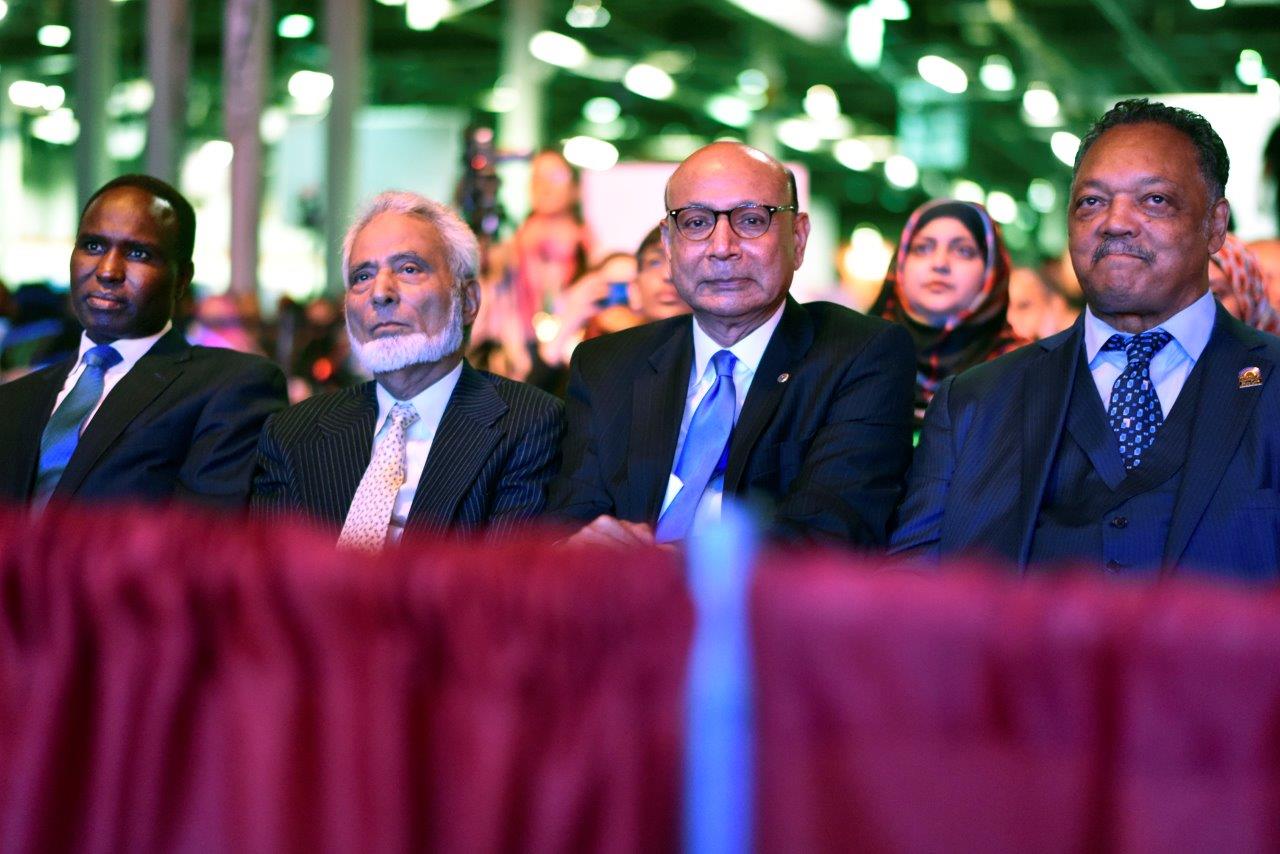
The long-term impact became clearer with the election of Barack Obama. While Obama built his own coalition, he benefited from the political landscape Jackson had helped redefine. The notion of a Black presidential contender had moved from implausible to precedented. Jackson expanded minority participation and demonstrated that multiracial alliances could win nationwide delegates.
Beyond the presidency, Jackson’s lifelong role as a civil rights advocate and active participation in politics are seen as encouraging African Americans to seek governorships, Senate seats, mayoralties and congressional offices with greater confidence. His bids for the White House widened the pathway to political power.
In retrospect, Jackson’s most enduring political achievement may not have been the offices he won, but the barriers he cracked. By contesting the presidency twice — and doing so competitively — he converted aspiration into precedent, and then precedent into possibility.
Some of his expressions became widely known, capturing the quintessential American spirit. At the 1984 Democratic National Convention, Jackson declared: “Our flag is red, white, and blue, but our nation is a rainbow — red, yellow, brown, black, and white.” Though he did not win the nomination, he captured more than 3 million votes and finished third in the primaries.
He was influential in pushing the Democratic Party leftward. In 1984, he elevated issues such as universal healthcare, economic justice, nuclear disarmament, defense spending cuts, reparations for descendants of enslaved people and support for a Palestinian state — positions bold and controversial during the height of the Cold War. By forcing debate on these policies, he gave progressive causes visibility and traction.
Jackson faced criticism for some of his views, including remarks in 1984 and 2008. Yet he often described his work as part of a broader mission to break barriers and expand opportunity.
In 2000, Bill Clinton awarded him the Presidential Medal of Freedom, recognizing his decades of activism at home and abroad.
In later years, Jackson battled serious health challenges, including Parkinson’s disease and progressive supranuclear palsy, which affected his mobility and speech. Even after losing the ability to speak, he continued communicating with loved ones by holding their hands.
Jackson is survived by his wife, Jacqueline Lavinia Brown, whom he married in 1963, their children — including U.S. Rep. Jonathan Jackson and former U.S. Rep. Jesse L. Jackson Jr. — and a global network of supporters who regarded him as both leader and symbol.

Ali Imran is a Washington-based journalist, who has worked for leading world news organizations as a correspondent, expert and in editorial positions. He is a published author and poet.