Iranian President Masoud Pezeshkian has said that Tehran remains open to a “balanced and fair agreement” with the United States aimed at securing lasting peace and stability, as the two sides concluded their marathon engagement in Islamabad without any accord on Sunday.
U.S. President Donald Trump said Sunday, after Vice President JD Vance wrapped up Pakistan-mediated negotiations in Islamabad, that he wants a definitive Iranian commitment to renouncing its nuclear weapons ambitions.
The Iranian president’s remarks came during a phone conversation on Sunday with Vladimir Putin, as the two leaders reviewed regional developments following the recent Iran–U.S. talks in Islamabad, held under a Pakistan-mediated two-week ceasefire between Washington and Tehran.
Pezeshkian identified what he described as U.S. “double standards” as the principal obstacle to reaching an agreement.
“Iran is fully prepared to reach a balanced and fair agreement that guarantees lasting peace and security in the region,” he said, according to Tasnim News Agency, adding that such an outcome would be achievable “if Washington adheres to international legal frameworks.”
Pakistan Urges US, Iran to Uphold Ceasefire After Talks End Without Breakthrough
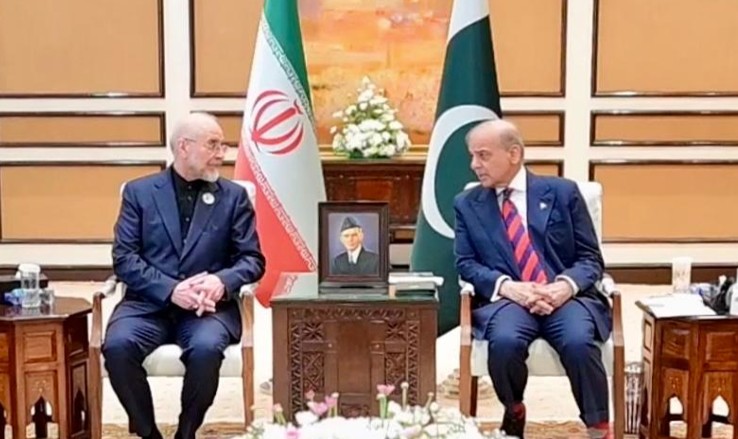
The diplomatic engagement between Iran and the United States concluded in Islamabad without any breakthrough, despite marathon negotiations lasting more than 21 hours. The talks, mediated by Pakistan, brought together senior delegations led by Iran’s Parliament Speaker Mohammad Bagher Ghalibaf and U.S. Vice President JD Vance.
According to officials present, the discussions were structured across three formal sessions, during which expert teams from both sides exchanged written proposals after each round.
J D Vance Statement After Talks
Despite sustained engagement, the U.S.-Iran process ended in deadlock on Sunday morning.
U.S. Vice President JD Vance, speaking at a press briefing in Islamabad, confirmed the failure to reach consensus, stating that both sides had engaged in “a number of substantive discussions.” He added, “Unfortunately, we were unable to make any headway.”
Vance further remarked, “The bad news is that we have not reached an agreement, and I think that’s bad news for Iran much more than it’s bad news for the USA.” He also asserted that Tehran’s leadership had “chosen not to accept our terms.”
Iran Cites Lack of Trust
Following the breakdown of talks, Iran’s Parliament Speaker Mohammad Bagher Ghalibaf issued a strongly worded statement on social media platform X, outlining Tehran’s position and framing the outcome as a matter of trust deficit rather than negotiation failure.
Ghalibaf said, “America has understood our logic and principles, and now it’s time for it to decide whether it can earn our trust.” He reiterated that Iran entered the talks in good faith but without illusions about the opposing side.
Before the negotiations began, he noted, “We have the necessary good faith and will, but due to the experiences of the two previous wars, we have no trust in the opposing side.”
He further added that while Iranian negotiators “raised forward-looking initiatives,” the opposing side ultimately failed to secure Tehran’s confidence during the discussions.
‘Diplomacy of Authority’ and Iran’s Strategic Position
In a more assertive political framing, Ghalibaf emphasized that diplomacy remains one of several tools available to Tehran.
He stated, “We certainly consider diplomacy of authority to be another method, alongside military struggle, for achieving the rights of the Iranian people, and we will not stop for a moment from trying to consolidate the achievements of the 40 days of Iranian national defense.”

His remarks underscored Tehran’s dual-track posture—keeping diplomatic channels open while simultaneously asserting readiness to rely on strategic deterrence and military capability.
Acknowledgment of Pakistan’s Mediation Efforts
Ghalibaf also extended appreciation to Pakistan for its role in facilitating the high-level engagement. Referring to Islamabad as a “friendly and brotherly country,” he thanked Pakistani leadership for hosting and enabling the negotiation process and conveyed his regards to the Pakistani people.
He also highlighted Iran’s national unity during the recent period of tension, describing the country as a “body with 90 million souls.” He expressed gratitude to the Iranian public, saying they had supported the delegation “following the advice of the Supreme Leader and by taking to the streets,” offering what he described as moral backing and prayers for the negotiators.
21 Hours of Intense Negotiations Yield No Breakthrough
Reflecting on the intensity of the talks, Ghalibaf praised his negotiating team, saying, “To my colleagues in these intense 21-hour negotiations, I say: well done. May God strengthen you. Long live and enduring be our dear Iran.”
Despite prolonged discussions, the core disagreements remained unresolved. According to Iran’s Foreign Ministry spokesperson Esmaeil Baqaei, both sides did manage to reach an “understanding” on several issues. However, he confirmed that “on two to three important issues, views were far apart, and ultimately, the talks did not lead to an agreement.”
Diplomatic Fallout and Diverging Narratives
While both sides acknowledged Pakistan’s diplomatic role and efforts in hosting the talks, the outcome highlighted the deep mistrust that continues to define U.S.-Iran relations. The delegations departed Islamabad on Sunday morning shortly after the conclusion of negotiations.
Iranian officials framed the outcome as a continuation of principled resistance in the face of unresolved historical grievances, while the U.S. delegation emphasized Iran’s unwillingness to accept proposed terms. Despite the failure, the very fact that direct, high-level engagement took place in Islamabad marks a significant moment in regional diplomacy—though one that, for now, ends in stalemate rather than settlement.

Asim Tanveer is a seasoned journalist working for TV and electronic and print media outlets. He has been working for some of the world’s leading news organizations including Associated Press (AP), Reuters, BBC, CNN, CNBC, Star TV, Voice of America and The New York Times for more than 20 years. He has won several awards for his live coverage of events that include a Reuters News Agency World Award and the Pride of Performance award in 2010.